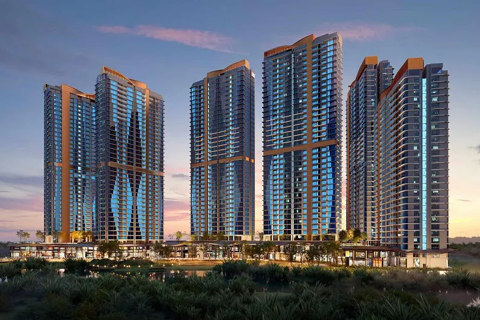
Real estate market in eastern Hanoi heats up
Over the past five years, the real estate market in eastern Hanoi has experienced strong growth, attracting domestic and foreign investors.
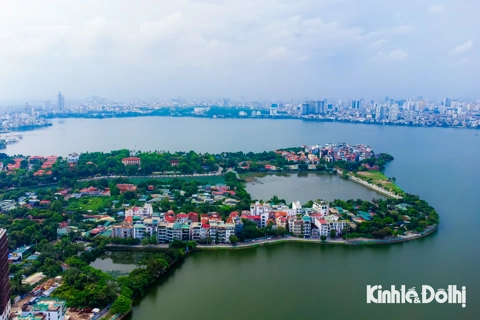
After a period of rapid westward development since the expansion of Hanoi's administrative boundaries, the Eastern region has now emerged as the city's primary real estate market.
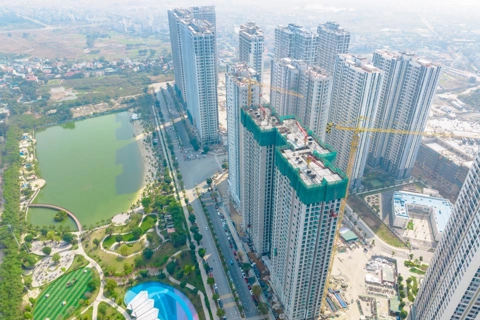
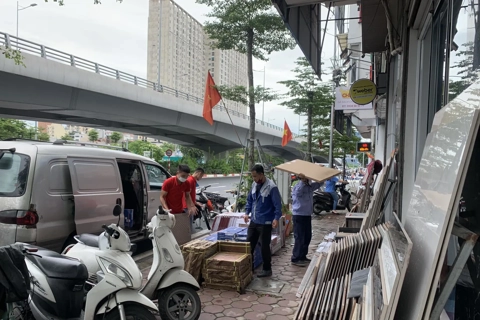
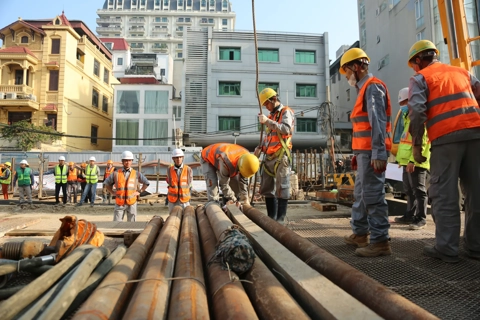
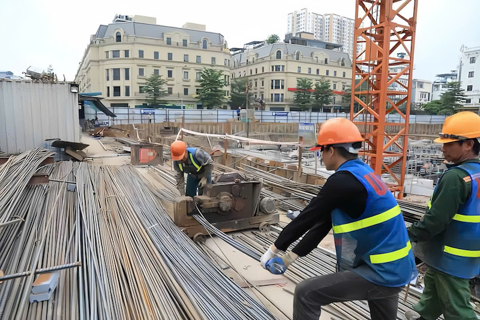
| Housing projects are underway in Hanoi's eastern region. Photo: Doan Thanh/The Hanoi Times |
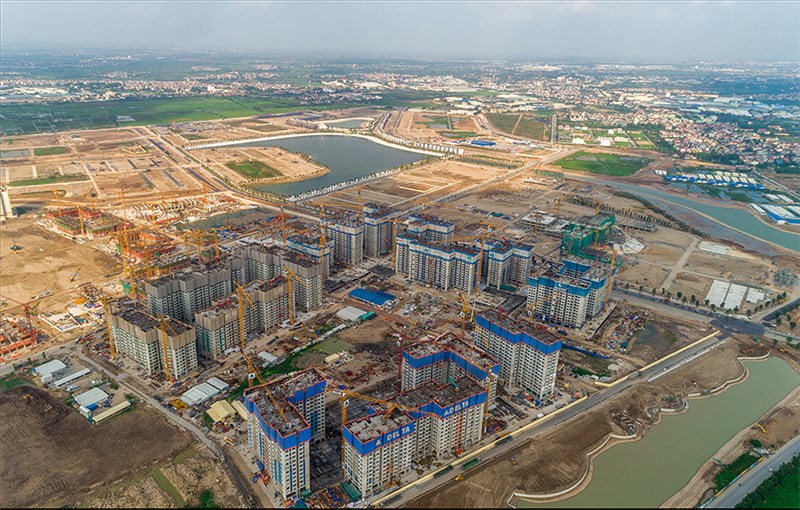
This shift has attracted the attention of many reputable domestic and foreign investors, including prominent real estate developers such as Vingroup, Ecopark, Masterise, T&T, BRG Group, and Eurowindow.
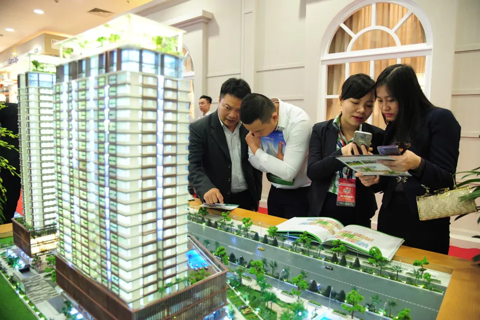
These companies are actively involved in developing major projects such as Vinhomes Ocean Park, Eurowindow Twin Parks, and Masteri Waterfront, serving as key contributors to the market by introducing new supplies despite the ongoing challenges faced by the real estate sector.
East Hanoi's appeal to these real estate giants can be attributed to several factors, including its alignment with the vision of the Capital Region Plan, which emphasizes the expansion of close links with nine neighboring provinces and cities.
In particular, the eastern region shares borders with several industrially prosperous northern provinces such as Hung Yen, Bac Ninh and Hai Duong and Haiphong City.
In this context, both the Government and the authorities in Hanoi are prioritizing the allocation of resources to enhance transport infrastructure, with a focus on regional connectivity.
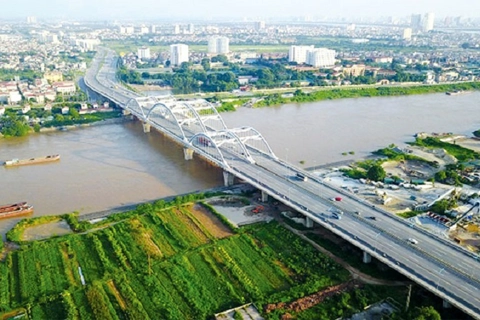
Several key national projects in the area have been completed and put into operation, including Vinh Tuy Bridge Phase 1, Dong Tru Bridge, Nhat Tan Bridge, Hanoi-Haiphong Highway, and Co Linh Intersection. In addition, ongoing projects such as Vinh Tuy Bridge Phase 2 and the accelerated progress of Tran Hung Dao Bridge further contribute to the area's development.
The future development plan includes the construction of 10 bridges over the Red River and Ring Road No.4, providing vital links between the metropolitan areas of Hanoi and the provinces and cities in the northern key economic region.
This comprehensive connectivity system is expected to stimulate trade and economic activities.
Research studies on market trends and prospects from 2023 to 2025 by various real estate developers indicate that about 70 real estate projects will be launched in East Hanoi, resulting in a new supply of over 90,000 properties.
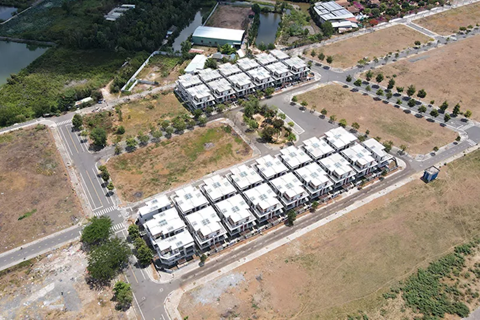
| Dong Anh District in Eastern Hanoi from above. Photo: Cong Hung/The Hanoi Times |
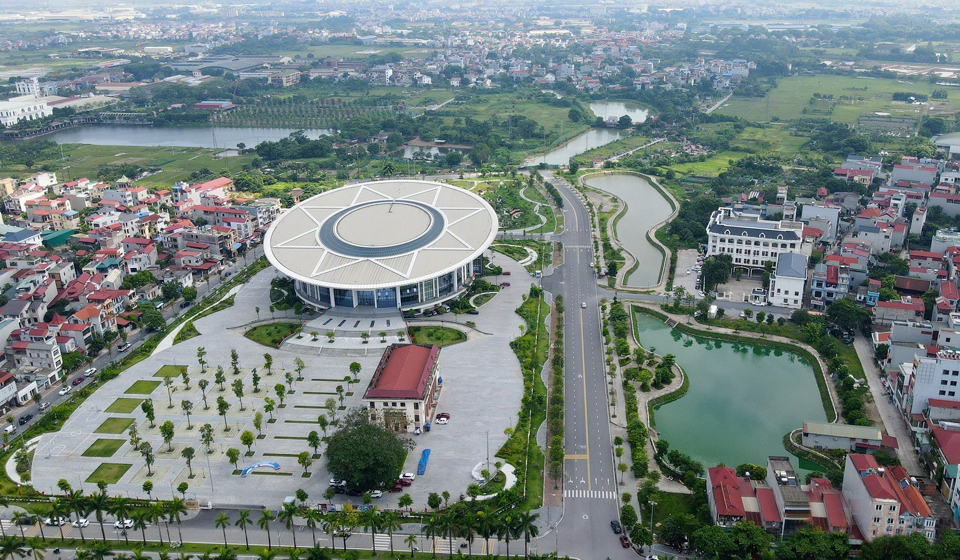
The report also highlights that eastern Hanoi, including Long Bien and Gia Lam districts, has experienced the highest growth in property prices, averaging around 16% per year since 2017. In comparison, the western and northern regions have seen an average annual increase of 7%.
According to data from the Vietnam Association of Realtors (VARS), around 11,500 new properties will be sold in eastern Hanoi in 2022. This number is double that of the western region and five times higher than other areas.
In addition, Eastern Hanoi has experienced the highest price increase rate, especially for low-rise properties, with an average primary price of VND155 million (US$6,553) per square meter.
This can be attributed to the presence of high-quality mega-urban projects in the area.
Vice Chairman Nguyen Chi Thanh of VARS predicted that in the short term, the housing market in eastern Hanoi would continue to move positively, showing an upward trend in property prices without any downward fluctuations or profit-driven sales.
"Hanoi's Eastern region would remain highly attractive for the next 3-5 years," Thanh said.
Cautious approach required
At a recent conference discussing the possible establishment of a new urban area in eastern Hanoi, experts stressed that the region is an attractive and promising destination for real estate investors due to its significant potential and room for development.
Over the past five years, the real estate market in the East has experienced strong growth, attracting the interest of domestic and foreign investors who are actively exploring investment opportunities.
Major urban projects that prioritize landscaping, living environment, and residents' utilities, coupled with robust infrastructure development, have contributed to the region's fresh and captivating image in the real estate market.
Recognizing the favorable development prospects and impressive price increases in existing real estate projects, Nguyen Van Dinh, Vice Chairman of the Vietnam Real Estate Association, acknowledged that eastern Hanoi would become a new focal point in the capital's real estate market, offering significant potential for future growth.
Echoing similar sentiments, Associate Professor Tran Dinh Thien, former director of the Vietnam Institute of Economics, stressed that western Hanoi had seen robust development following the merger of Ha Tay with Hanoi under the latter's administrative boundary expansion program. However, the east of the city is now emerging as a potential market and is poised to become an attractive destination for investors.
"Eastern Hanoi has a clear development vision, focusing on sustainable and integrated growth rather than short-term, volatile spurts," Thien said.
With significant support for infrastructure development, Gia Lam rural district, which will become an urban district by the end of the year, is expected to develop rapidly and become an ideal investment destination not only in the capital but also in the key northern region and the entire country, he added.
However, a survey by The Hanoi Times showed that property prices in the East had experienced a "hot" rise, not only within projects but also in surrounding residential areas.
From 2020 to 2022, prices for low-rise products within projects have grown significantly, with popular increases of 100-150% and reaching 3-4 times higher than the initial sales period.
At the same time, land prices in residential areas have also seen an increase of 20-30% compared to the end of 2022. In Long Bien District, for example, prices in Ngoc Thuy Commune have reached around VND40-50 million ($1,700-2,100) per square meter, while areas near the soon-to-be-built Tran Hung Dao bridge have reached VND240 million ($10,147) per square meter, and Co Linh area hovers around VND210 million ($8,879) per square meter.
A similar trend can be observed in Gia Lam District, where the highest price increases can be seen on main roads, near the city center, and near major projects such as Da Ton, Kieu Ky, Duong Xa, Dang Xa, and Trau Quy, with average increases ranging from VND40-90 million ($1,700-3,800) per square meter. In particular, Ngo Xuan Quang Road has reached an astonishing threshold of VND230 million ($9,725).
Given the high property prices in the Long Bien and Gia Lam areas, VARS's Thanh advised investors to be cautious and avoid excessive expectations based solely on planning information.
"For now, planning information in East Hanoi and other areas is more suitable for individuals with real housing needs or long-term investors with idle funds," Thanh said, urging those to refrain from speculative investments or using financial leverage to seek short-term gains.
| "The eastern Hanoi holds the key to Hanoi's future, especially with the establishment of the northern economic triangle of Hanoi, Haiphong and Quang Ninh. The region's development will be further enhanced by the connection of major infrastructure projects such as the Hanoi-Haiphong Highway and the Haiphong Expressway, linking urban development with coastal areas," said Vu Dinh Anh, former Deputy Director of the Price Market Research Institute under the Ministry of Finance, adding that with economic growth oriented towards the sea, focusing on urban development in the east will maximize the benefits of this connectivity. |