Property
Real estate sector going through reform
A booming real estate sector has helped fuel Vietnam`s rapid GDP growth in recent years, but the country`s reliance on high credit growth also means that the sector poses significant economic risks, said a recent report by HSBC.
For now, it appears that risks to the real estate market are well- contained thanks in large part to recent government reforms, stated the report.
The State Bank of Vietnam (SBV), in particular, has implemented a series of macro-prudential measures that have helped curb lending to the sector, particularly to developers. However, this remains a balancing act, as the government also aims to develop the mortgage market and incentivize domestic home ownership.
Real estate activities account for around 5% of Vietnam's GDP, and it has been a consistent positive contributor to GDP growth since 2013. And yet, the report noted that it is one of the biggest domestic risks to Vietnam, alongside the public debt-to-GDP ratio breaching the country's 65% limit.
That is because real estate loans have historically been a large chunk of banks' balance sheets, and Vietnam's growth model continues to rely on high credit growth to fuel business and consumer activity. Indeed, the authorities are targeting credit growth of 17% this year, down from around 18% in 2017.
Moreover, credit going to primarily real estate is a risk, given the country's recent history. The real estate market experienced rapid growth in the late 2000s due partly to speculative investing, which created a bubble that eventually burst in 2011. This led to a rise in non- performing loans (NPLs) and eventually a banking crisis, which stymied the country's economic activities and eventually growth. And, with Vietnam's growth momentum now back in full swing, the real estate market must be kept for any signs of trouble that could sour the mood, the report stressed.
However, for now, Vietnam's real estate market appears to be on stable ground due in large part to recent government reforms to curb lending to the sector. For instance, the State Bank of Vietnam (SBV) in 2016 announced Circular 06, which raised the risk weighting of real estate loans from 150% to 200% of banks' balance sheets beginning in 2017. The SBV also lowered the ratio of short-term funds that banks could use to fund medium- to long-term projects (including mortgages) from 60% in 2016 to 40% by 2018. This has funneled credit away from real estate developers and toward more productive sectors, including transportation and telecommunication.
The SBV in January 2018 also issued Document No. 563 requesting all credit institutions and foreign bank branches to restrict lending to real estate and construction and to shift lending toward "priority fields", such as SMEs and high-tech industries.
According to HSCB, these recent reforms are positive, as they incentivize the discovery of responsible and trusted property developers in the market, which could limit the probability of creating another property bubble. And, despite the lack of quantitative restrictions in Document 563, it signals that the SBV could implement more detailed and restrictive measure should the need arise.

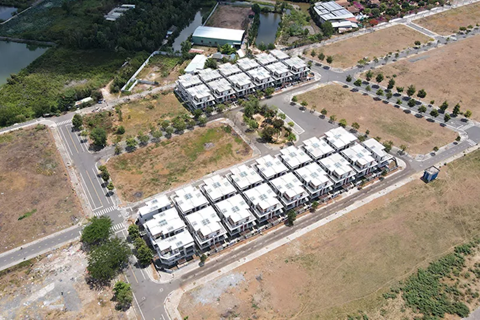
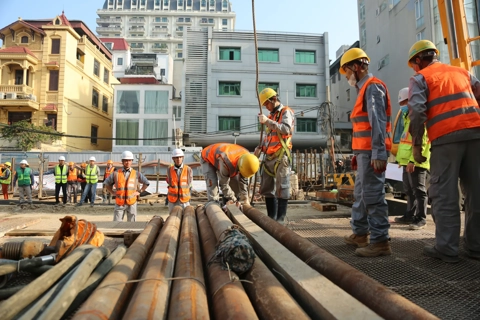
Illustration photo.
|
Real estate activities account for around 5% of Vietnam's GDP, and it has been a consistent positive contributor to GDP growth since 2013. And yet, the report noted that it is one of the biggest domestic risks to Vietnam, alongside the public debt-to-GDP ratio breaching the country's 65% limit.
That is because real estate loans have historically been a large chunk of banks' balance sheets, and Vietnam's growth model continues to rely on high credit growth to fuel business and consumer activity. Indeed, the authorities are targeting credit growth of 17% this year, down from around 18% in 2017.
Moreover, credit going to primarily real estate is a risk, given the country's recent history. The real estate market experienced rapid growth in the late 2000s due partly to speculative investing, which created a bubble that eventually burst in 2011. This led to a rise in non- performing loans (NPLs) and eventually a banking crisis, which stymied the country's economic activities and eventually growth. And, with Vietnam's growth momentum now back in full swing, the real estate market must be kept for any signs of trouble that could sour the mood, the report stressed.
However, for now, Vietnam's real estate market appears to be on stable ground due in large part to recent government reforms to curb lending to the sector. For instance, the State Bank of Vietnam (SBV) in 2016 announced Circular 06, which raised the risk weighting of real estate loans from 150% to 200% of banks' balance sheets beginning in 2017. The SBV also lowered the ratio of short-term funds that banks could use to fund medium- to long-term projects (including mortgages) from 60% in 2016 to 40% by 2018. This has funneled credit away from real estate developers and toward more productive sectors, including transportation and telecommunication.
The SBV in January 2018 also issued Document No. 563 requesting all credit institutions and foreign bank branches to restrict lending to real estate and construction and to shift lending toward "priority fields", such as SMEs and high-tech industries.
According to HSCB, these recent reforms are positive, as they incentivize the discovery of responsible and trusted property developers in the market, which could limit the probability of creating another property bubble. And, despite the lack of quantitative restrictions in Document 563, it signals that the SBV could implement more detailed and restrictive measure should the need arise.