South Thang Long Heritage Road: Exploring the heart of southern Hanoi
Travel beyond the city’s modern hum to explore southern Hanoi’s villages and temples, where centuries-old crafts and stories vividly bring the past to life.
THE HANOI TIMES — Amid the bustling hum of modern Hanoi, the “South Thang Long Heritage Road” winds gently through the southern suburbs, guiding travelers on a journey through time.
Here, craft villages, sacred temples and living traditions merge like threads in a tapestry, connecting the present with echoes of the past. Each step along the South Thang Long Heritage Road is not just forward, but a journey into the heart of Vietnam’s cultural memory.
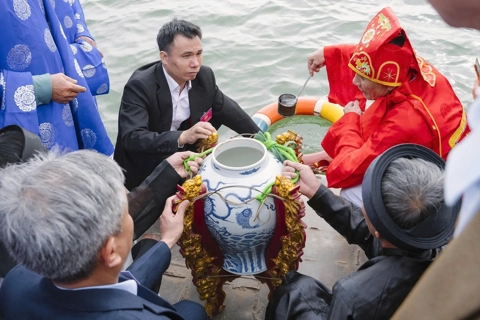
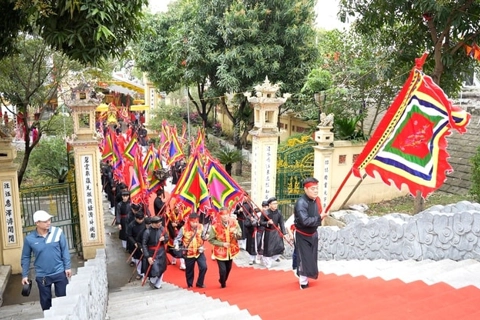
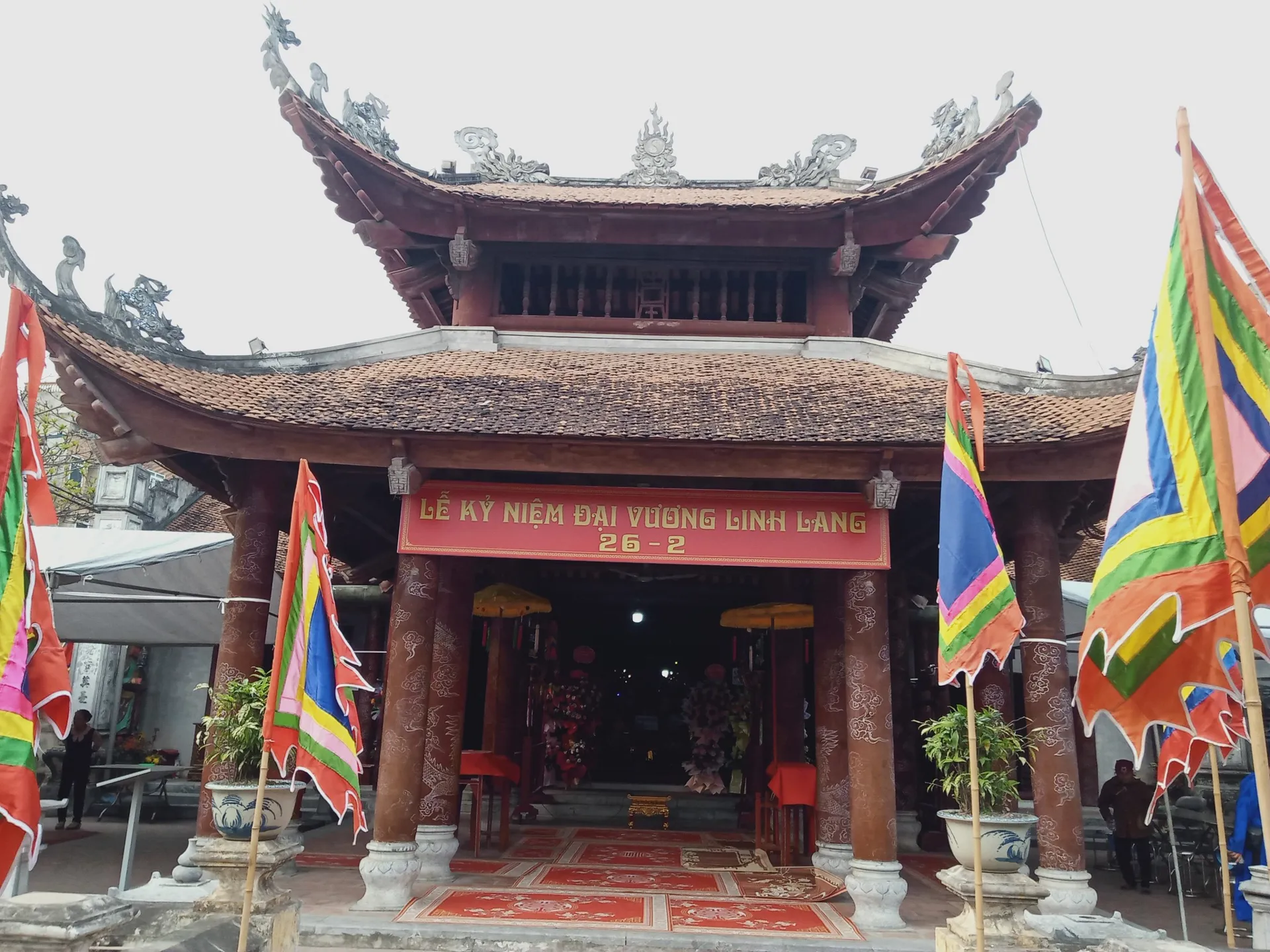
The route begins at Noi Binh Da Temple in Binh Minh Commune, a sanctuary dedicated to Lac Long Quan, the legendary patriarch celebrated alongside Au Co as the ancestor of the Vietnamese people. The temple’s quiet solemnity evokes history itself, reminding visitors that myths are more than stories, they embody the soul of the nation.
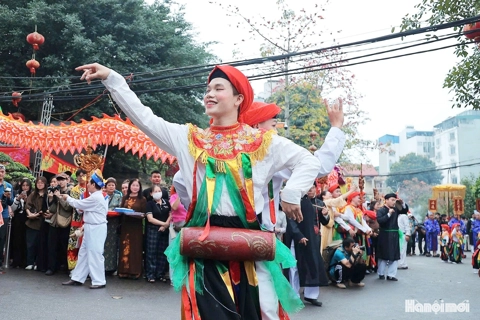
Recognized as a National Relic in 1985 and a National Historical and Cultural Heritage in 1991, the temple preserves treasures spanning centuries, including a relief of Lac Long Quan designated a National Treasure in 2015. Every year, the Binh Da Festival, held from the 25th of the second lunar month to the 6th of the third, draws crowds honoring the national progenitor.
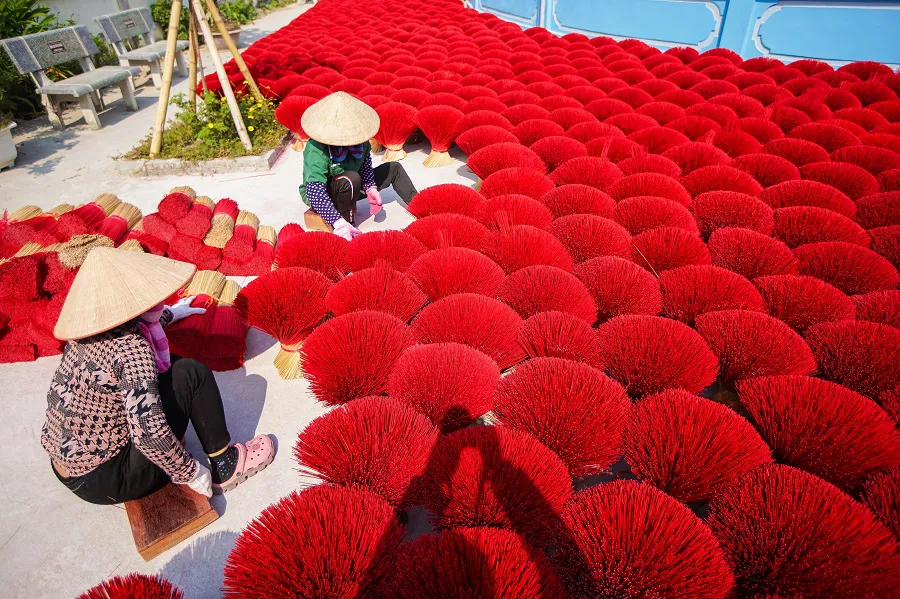
Quang Phu Cau Village, a centuries-old incense-making village located in the suburban commune of Ung Thien in Hanoi. Photo: Huy Pham/ The Hanoi Times
Head custodian of the temple, Nguyen Chinh Trinh, said that the festival is more than a ritual; it connects generations and keeps our traditions alive. Amid incense smoke and whispered prayers, visitors sense a dialogue between past and present.
The route then leads to Quang Phu Cau Village, where drying incense sticks glow red, and tradition is tangible in scent, touch and the skilled hands shaping each stick.
While the village’s incense reaches markets nationwide and abroad, its true charm lies in experiential tourism, allowing visitors to craft incense into maps, flowers and more. Nguyen Dinh Dam, Director of the village’s Tourism Service Cooperative, said: “Through our craft, we share the beauty of our hometown with international friends.”

With its vibrant colors and fragrant air, Quang Phu Cau Village captivates the hearts of international travelers. Photo: Huy Pham/ The Hanoi Times
For Alexandra, a tourist from Poland, the visit was transformative: “The village is serene and vibrant. Watching people continue their traditional craft is inspiring. It makes history feel alive.”
Travelers then reach Phung Xa Weaving Village in My Duc Commune, where centuries-old silk traditions unfold amid the rhythmic clatter of reels and looms, echoing through alleys and courtyards.
Visitors can witness and participate in every stage of silk-making, regardless of mulberry cultivation, spinning and weaving. Meritorious Artisan Phan Thi Thuan, known for lotus-fiber weaving, said: “Every product carries a story, a history and a livelihood.”
While worm silk is globally prized, lotus silk is a rare Vietnamese creation. She transforms discarded lotus stems into high-end and eco-friendly textiles, each piece reflecting cultural heritage and sustainable values.
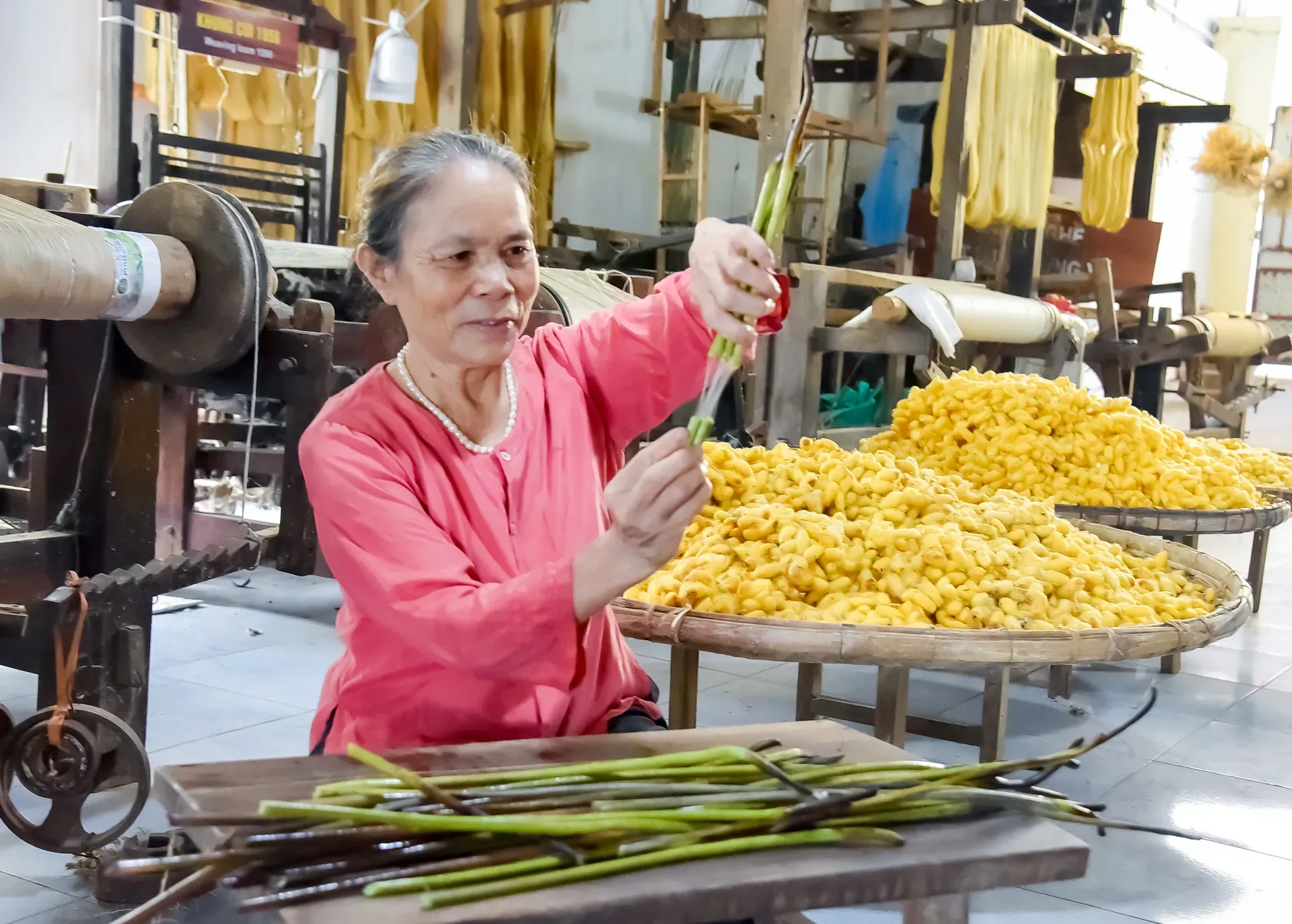
Vietnam’s lotus silk is unique, with Hanoi artisan Phan Thi Thuan elevating the craft with her creativity. Photo: Hoang Van Nam/The Hanoi Times.
In 2019, the artisan transformed Vietnam’s textile heritage with her first lotus-silk collection, producing lightweight, fragrant, and breathable scarves, shirts and dresses that are now prized diplomatic gifts.
Each strand is hand-extracted without chemicals, creating a luxurious fabric that evokes the serenity of lotus-filled landscapes. Vu Van Tuyen, CEO of Travelogy Vietnam, said: “The Heritage Road is not just sightseeing. It is a living heritage experience where centuries-old craft villages are revived, merging memory with creativity.”
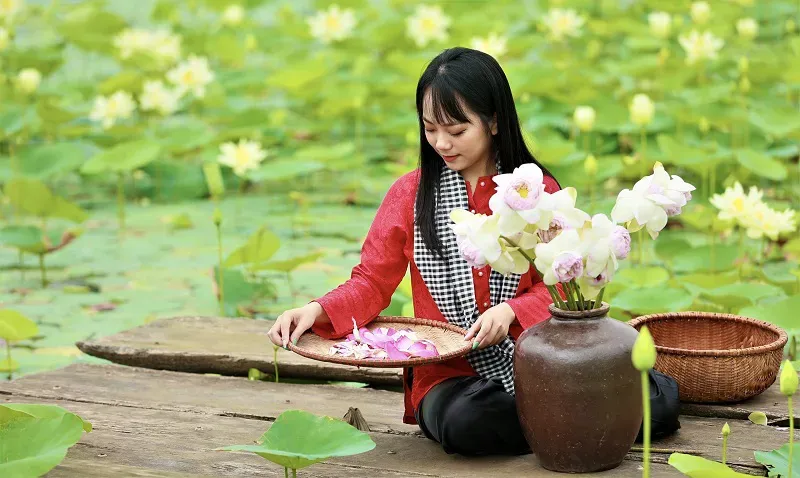
Lotus is also a unique raw material for crafting Vietnam’s special lotus silk. Photo: Duy Khanh/ The Hanoi Times
Pham Hai Quynh, Director of the Asian Tourism Development Institute, emphasized: “The route links Hanoi’s suburban cultural spaces with the city center, diversifying tourism and offering new experiences while easing congestion in the Old Quarter and Hoan Kiem Lake.”
The South Thang Long Heritage Road is part of Hanoi’s “2025 - Convergence of Essence” tourism package, which includes three curated itineraries: “Quintessence of Vietnamese Craft Villages,” “The Path of Learning,” and “The Colors of Flowers of Tuong Phieu.”
Each route immerses visitors in Hanoi’s cultural and human heritage, offering experiences that linger through the rhythms, scents and textures of life on the capital’s outskirts.
Traversing the South Thang Long Heritage Road is a journey through time, where visitors step into history, as the heartbeat of tradition pulses through every village, temple and artisan’s hand.