Tech provides new solutions to tackle Hanoi’s smog
Thoroughly addressing pollution from peri-urban craft villages, together with the use of smart monitoring technologies, are seen as two key pillars in the effort to bring back a blue sky for Hanoi.
THE HANOI TIMES — Experts and environmental managers stress that smart monitoring systems and comprehensive urban planning are essential for Hanoi to tackle persistent smog and achieve a cleaner, healthier city in the coming decade.
Blackspots at “recycling villages”
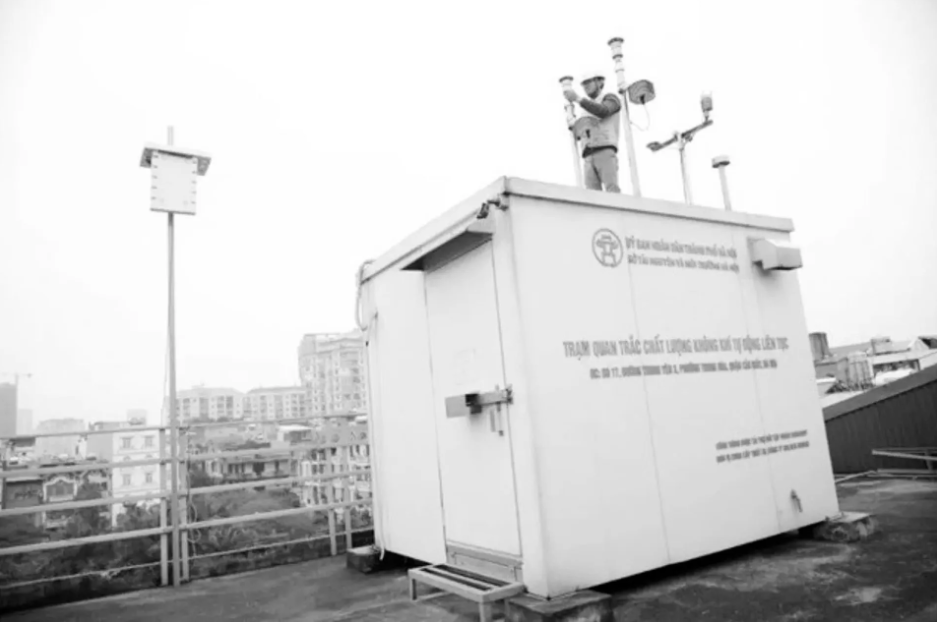
An air quality monitoring station in Hanoi. Photos: The Hanoi Times
Hanoi faces a significant challenge as air pollution is no longer a seasonal concern but an urgent public issue that affects the quality of life and the city’s path toward sustainable development.
In recent years, the idea of a “pollution season” has become an unfortunate norm as AQI levels often reach purple and red, especially on still winter days, showing that Hanoi’s air is under severe pressure.
Traditional environmental management has long focused on the urban core, yet a recent roundtable on urban air quality highlighted a more alarming reality.
The “pollution belt” formed by craft villages on the outskirts is intensifying and sending emissions back toward the city center.
Experts explained that emissions from recycling villages that process plastics, scrap metal or wood are more than dust. Outdated technology, handmade furnaces and cheap fuels like coal, firewood or even industrial waste create fumes that contain dangerous toxins such as heavy metals, dioxins and furans.
The core issue is that air pollution does not follow administrative boundaries. Scientific modeling shows these toxins disperse widely and drift into central Hanoi.
Under unfavorable weather conditions, the city becomes a vast glass chamber that traps pollutants from surrounding areas and creates a layer of harmful smog.
Dr Hoang Duong Tung, Chairman of the Vietnam Clean Air Network, stressed the need to correctly identify the sources.
He said the term “recycling villages” should be used instead of “craft villages” because not all craft villages cause severe air pollution. He noted that pollution from these sites has been recognized and addressed for years but results remain limited.
“A more precise and targeted approach is needed to pinpoint which villages and which facilities are causing pollution instead of treating the issue as a broad category,” Tung said.
Experts emphasized that improving Hanoi’s air quality requires addressing the craft village problem at its roots.
This is ultimately a matter of planning and economic restructuring rather than simple administrative fines.
As long as polluting production sits inside residential areas, measures like street cleaning or limiting motorbikes in the city center will have little impact because external emissions continue to flow in.
Production facilities must be relocated to dedicated industrial clusters with proper emission treatment systems.
“This is a difficult transition but a necessary one to separate living space from production space and to restore clean air for rural and urban areas alike,” Tung said.
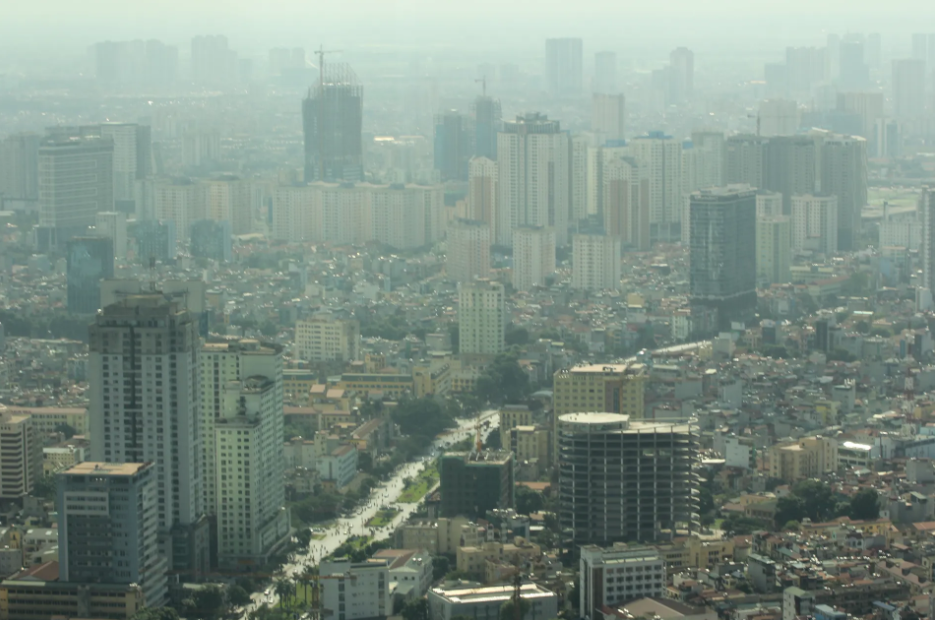
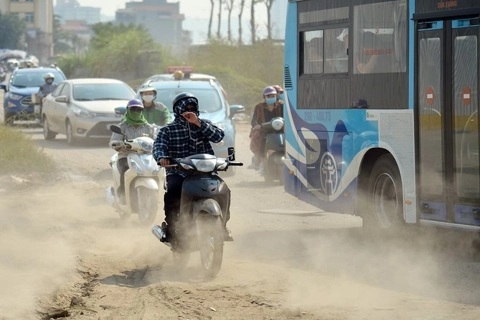
Air pollution in Hanoi leaves the sky wrapped in a thick haze in the past. Photo: Cong Hung/The Hanoi Times
Technologies as leverage
If planning is the foundation, then technology is the most powerful tool to achieve clean air. Manual monitoring systems no longer meet the demands of modern environmental management, especially with limited data and a lack of continuous observation.
Technology experts highlighted the need for Hanoi to build a smart air quality management system based on Big Data and IoT.
Associate Professor Ly Bich Thuy of Hanoi University of Science and Technology noted that authorities have a broad picture of air quality but lack the detailed information needed for targeted solutions.
“The only way to get accurate emission data, especially from transport, is to combine different assessment methods. Science, technology and digital tools are therefore vital to diagnose the problem and guide effective solutions,” said Thuy.
The role of technology becomes even more important given current infrastructure gaps, she continued.
Experts pointed out that one of the biggest weaknesses is the lack of monitoring stations in suburban areas and craft village clusters. Without comprehensive monitoring, the city cannot manage what it cannot measure. Proposed solutions focus on deploying low-cost but effective sensors across pollution hotspots and strengthening emission treatment technologies to help craft villages operate more sustainably.
“Although small-scale producers face cost barriers, modern technical support can gradually resolve these challenges,” Thuy added.
|
According to Associate Professor Nguyen Thi Nhat Thanh, University of Engineering and Technology, Vietnam National University Hanoi, air quality forecasting plays a critical role because it helps authorities respond in a timely way and gives the public reliable guidance to protect their health. An AI-based forecasting tool is already in place. It is still in the testing phase and early results are promising. To strengthen forecasting capacity, several actions need to be taken at the same time. Monitoring stations should be expanded with more advanced technologies. A solid emissions inventory needs to be developed. Cooperation with scientists should be scaled up to design high-accuracy forecasting models. Data sharing between ministries and agencies must improve. Public awareness also needs to grow so that people develop the habit of checking air quality forecasts in the same way they check daily weather reports. Only then will the public be able to keep up with changing pollution levels and take timely and appropriate action. |