The revival of Hang Long Street: A forgotten name returns to Hanoi’s heart
The reappearance of “Hang Long” enriches the city map and revives a part of Hanoi’s Old Quarter soul.
THE HANOI TIMES — Strolling the streets of Hanoi, visitors are immersed in layers of history, where every corner holds echoes of the past. One such echo, once faint and nearly forgotten, has now been revived with the restoration of an old street name: Hang Long.
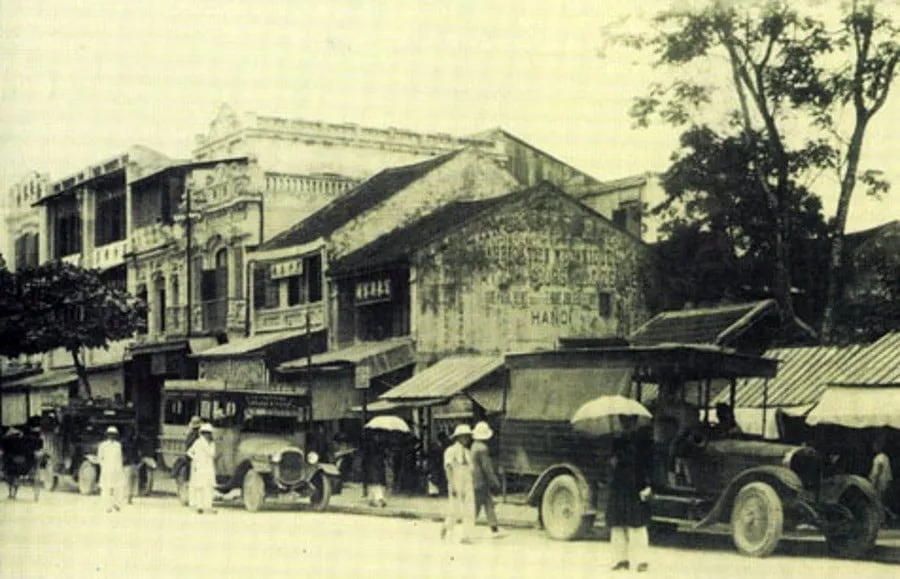
Hang Long Street, once located where today’s Le Duan Street runs, was known for crafting and selling palanquins, umbrellas and parasols for mandarins and pagodas. File photo
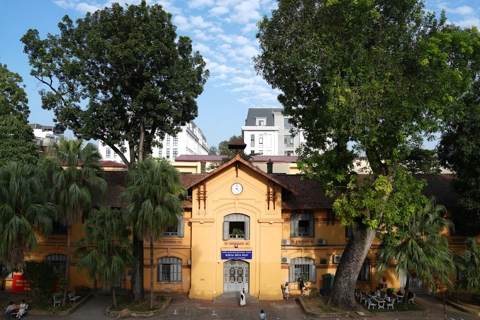
Tucked away in the bustling Cua Nam Ward, near landmarks like the Vietnam-Soviet Friendship Cultural Palace and the Indochina University of Fine Arts, this newly restored street has drawn the attention and stirred the memories of many Hanoians.
Its revival awakens a deep sense of nostalgia, weaving together generations of stories, from personal memories to family recollections of a city defined by craft, commerce and community.
Memory in a name
The name “Pho Hang Long” ( Hang Long Street ) is now visible at intersections with Le Duan, Yet Kieu and Tran Binh Trong, signifying not only a physical space but also the revival of a once-forgotten cultural landmark.
The term “Hang”, meaning “guild” “row” or “line of shops”, is emblematic of Hanoi’s Old Quarter, where streets were traditionally named after the goods sold or the craft practiced there.
In modern times, most new streets names honor national figures or historical heroes, marking the appearance of a “Hang” name particularly striking.
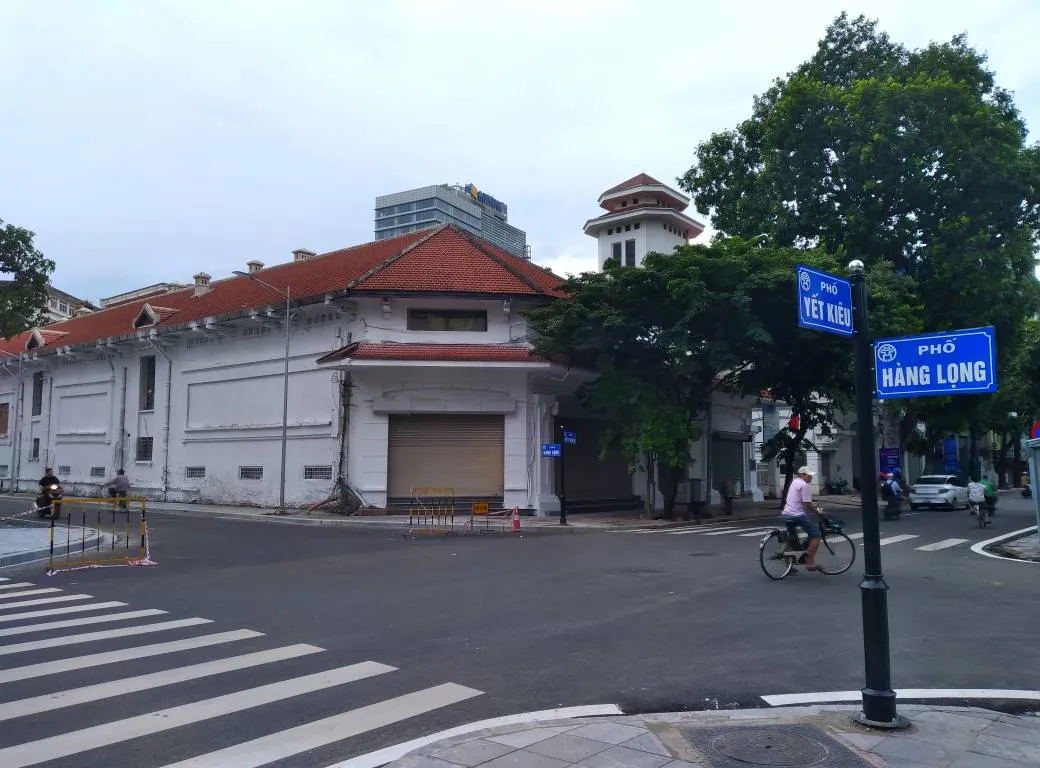
Today Hang Long Street is located on the intersections with Le Duan, Yet Kieu and Tran Binh Trong streets, Cua Nam Ward. Photo: VOV
For younger residents, like Lan Phuong, who works nearby, the return of Hang Long sparked curiosity.
“When the sign first went up, I was puzzled and wondered: ‘Where did this street come from?’ I asked my mom, who used to live in Kham Thien Market Alley and she told me that it was once called Hang Long Alley. Now that it’s officially recognized as a street, it feels as though it has been given new dignity.”
This rekindled curiosity has revived family conversations, and with them, a deeper appreciation for Hanoi’s lesser-known heritage.
The return of Hang Long is not merely an administrative act but an emotional one, reconnecting generations of residents to a street that was once a modest alley.
Cultural connector
Once a narrow passage used mainly by locals as a shortcut from Yet Kieu and Le Duan, Hang Long was barely noticed, a back lane hidden in plain sight.
But through the restoration and development efforts, it has transformed into a wider and more inviting avenue that links four major streets: Le Duan, Yet Kieu, Tran Binh Trong and Tran Quoc Toan.

During the French colonial period, Hang Long Street ran along the side of the Indochina College of Fine Arts, with its main façade facing Yet Kieu Street. File photo
Resident Nguyen Van Thanh, whose house faces the newly named street, said it used to be such a small alley, you could hardly ride a bike through. Now it’s bright, wide and feels like a proper street. Yet, it still feels familiar because the name, Hang Long never disappeared.”
This blend of continuity and renewal lies at the heart of Hanoi's urban charm.
Hang Long is more than a name, it tells a story. Historically part of what is now Hoan Kiem Ward, the area dates back to the late Later Le Dynasty (1428-1789) or early Nguyen Dynasty (1802-1945).
In earlier times, the neighborhood was renowned for its artisans who crafted palanquins, parasols and ceremonial umbrellas - luxury items for mandarins, temples and pagodas.
The word “long” refers to these ornate parasols. A small temple once stood here, dedicated to the guardian deity of parasol-making and embroidery, traces of a rich craft tradition now mostly lost.
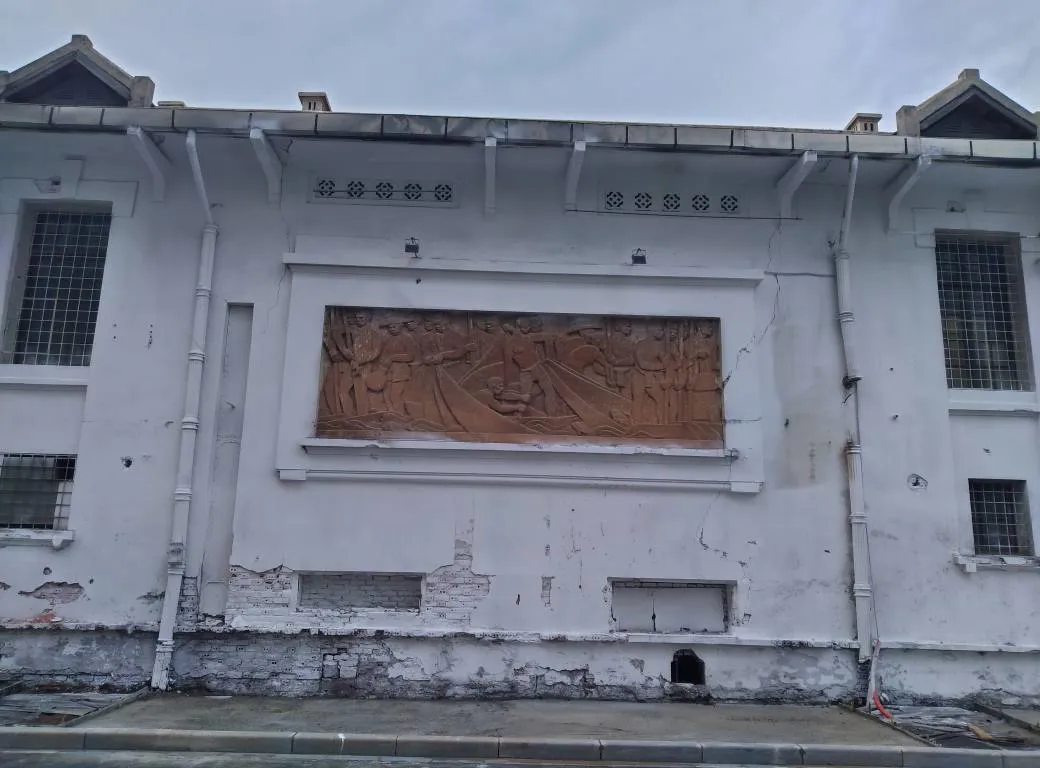
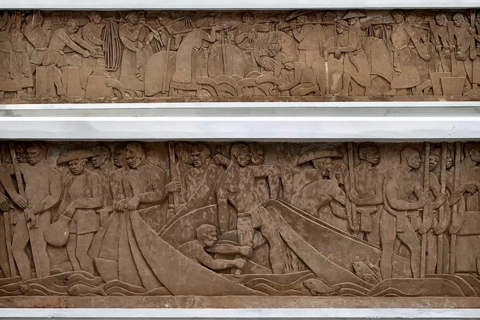
The striking relief, titled “Fishery” by Vietnamese painter Georges Khanh adorn the wall of the Fine Arts School of Indochina on the newly restored Hang Long Street. Photo: Xuan
Echoes of a bustling trade hub
Though modest in scale, Hang Long Alley was once a bustling commercial lane, particularly during the 1990s and early 2000s. Its proximity to Hanoi Railway Station made it a prime destination for shops selling military uniforms, pith helmets, sportswear and other goods.
Resident Nguyen Van Thanh recalls the scene with nostalgia: “Back then, if you wanted to buy pith helmets, this was the place. They were genuine, old-style helmets, expensive and sought-after. Some people were so stylish, they preferred the battlefield kind.”
While the bustling trading has long faded, memories of the era remain vivid among long-time residents.
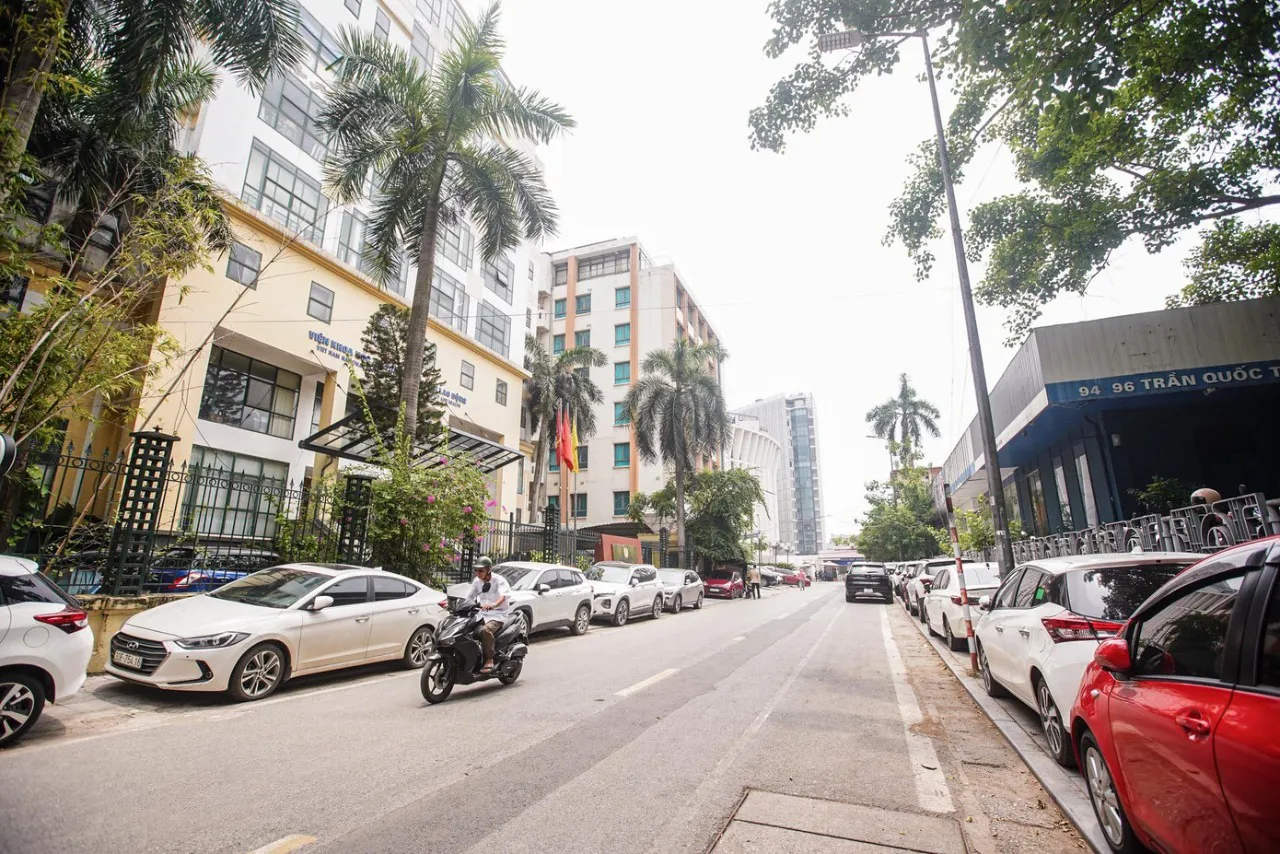
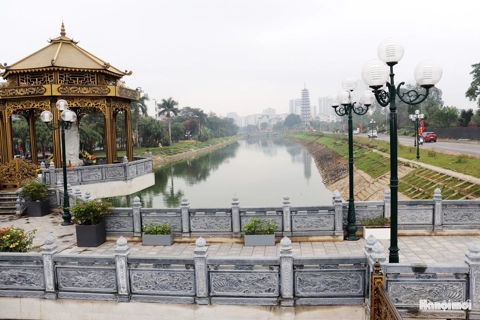
The vibrant Hang Long Street of today. Photo: Tienphong.vn
The revival of a “Hang” street is more than a nod to history. Many residents see this restoration as a necessary gesture to preserve Hanoi’s distinctive street-naming culture, where each name reflects a legacy of trade, craftsmanship and community life.
In a city where modern towers stand beside centuries-old temples, the quiet return of Hang Long Street serves as a reminder that Hanoi is not just a place to visit, but a city to feel - one step at a time.