Transport projects steer Hanoi’s real estate in 2026
Ring roads and urban railways will continue to steer Hanoi’s real estate market toward more sustainable growth and wider socio-economic gains.
THE HANOI TIMES — Transport infrastructure is set to become a strategic lever shaping Hanoi’s real estate market in 2026, as the capital emerges from a prolonged slowdown and enters a new growth cycle, according to experts.
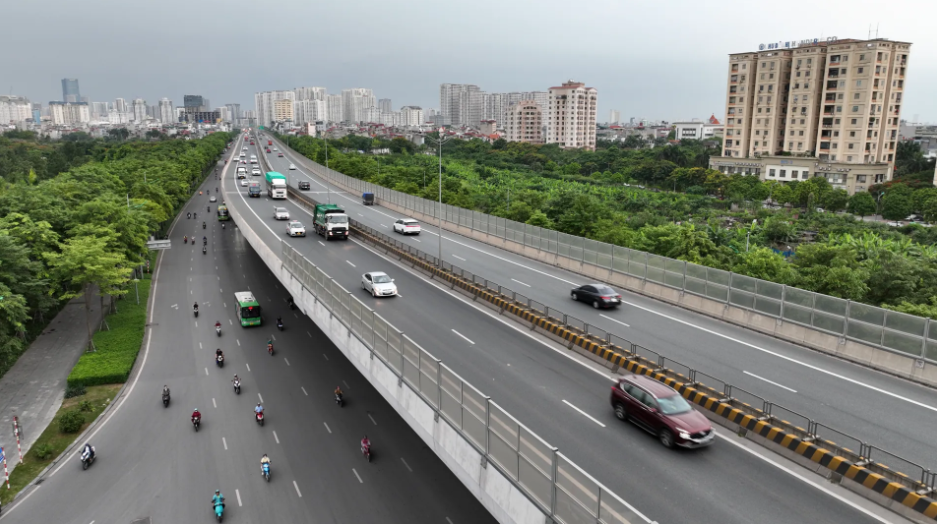
Ring road No.3 in Hanoi. Photos: Pham Hung/The Hanoi Times
A wave of major transport projects is being rolled out in parallel, laying the groundwork for a clearer and more sustainable phase of market growth next year.
Improved connectivity is expected to drive the city’s spatial expansion, influence development patterns and determine momentum across key real estate segments.
Associate Professor Tran Dinh Thien, former Director of the Vietnam Institute of Economics, said after a prolonged slowdown and a period of sharp market correction, recent months have seen a gradual return of activity.
In that process, transport infrastructure has once again proven its role of paving the way, not only supporting recovery but also defining Hanoi’s long-term urban development trajectory.
“Areas with well-coordinated infrastructure investment have consistently recorded stronger and more stable property values,” Thien noted.
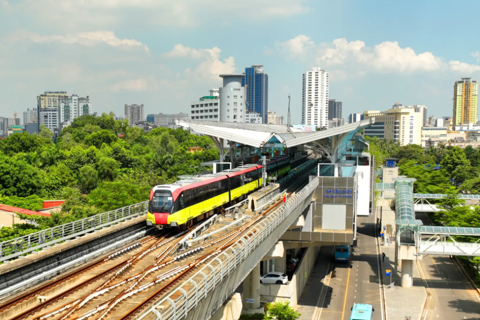
In recent years, the city has mobilized substantial resources for key transport projects. Ring roads, radial corridors, Red River bridges and the urban railway network are taking shape, creating an increasingly complete connectivity framework.
Notably, the Ring Road 4 project for the Hanoi Capital Region, with total investment exceeding VND85 trillion (US$3.4 billion), is expected to open up new development space across northern, western and southern Hanoi once completed, while strengthening links with neighboring provinces.
“Transport infrastructure is not only a necessary condition but a decisive factor for Hanoi’s real estate market to enter a sustainable growth cycle,” said Thien.
According to the expert, Hanoi is shifting strongly toward a multi-center development model. To achieve this, transport must go first and create pathways for investment flows, residents and economic activities.
Market data show that areas benefiting directly from infrastructure investment have recorded positive growth.
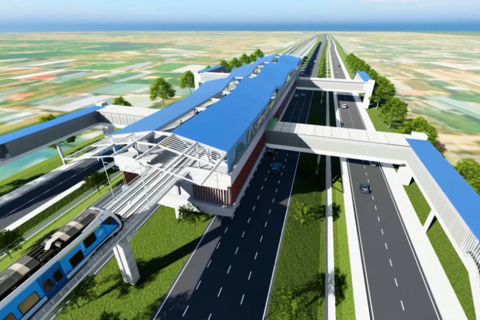
Western Hanoi is emerging as a new hub for housing urban developments and services, supported by key corridors such as Thang Long Boulevard, Ring Road 3 and 3.5 and the upcoming Urban Railway Line No. 5 linking Van Cao, Ngoc Khanh, Lang and Hoa Lac.
Meanwhile, strong market interest is also building in eastern Hanoi, where projects such as Vinh Tuy Bridge Phase 2, Thanh Tri Bridge and planned additional Red River crossings are strengthening connectivity.
According to several market research firms, during 2023 and 2024, property prices in areas aligned with major infrastructure corridors in Hanoi continued to rise by an average of 5% - 8% per year while liquidity gradually improved.
Capital flows are therefore shifting toward locations with clear infrastructure fundamentals rather than short-lived speculative spikes.
Nguyen Van Dinh, Chairman of the Vietnam Association of Realtors, said Hanoi’s property market will not grow in an overheated manner but will expand based on infrastructure and real demand.
“Areas linked to well-planned large-scale transport projects will be the main drivers of the market,” he said.
Driving force
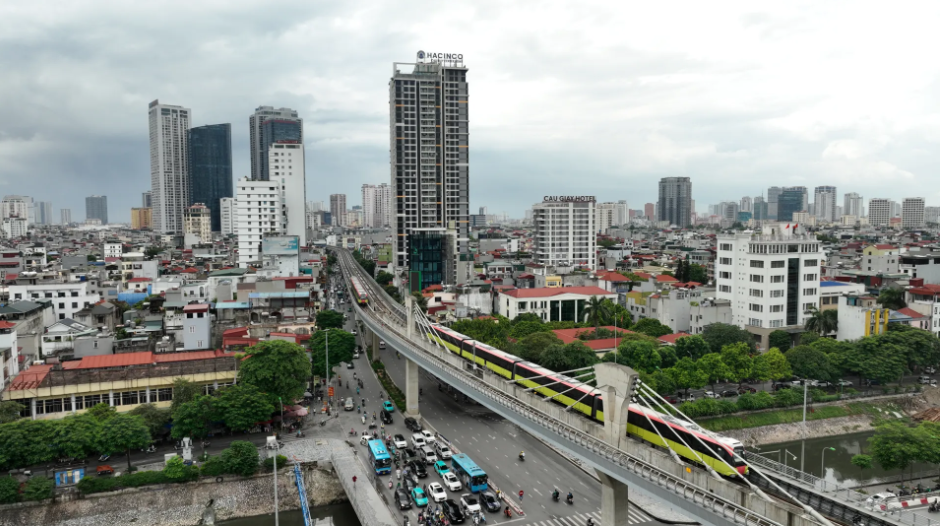
Hanoi's metro line.
A notable feature in the coming period is Hanoi’s simultaneous rollout of multiple large projects with total estimated investment exceeding VND1 quadrillion (US$40 billion) over the 2025 to 2035 period. These projects focus on key areas such as transport, urban development, interregional connectivity, urban renewal and public space development.
Among them, Urban Railway Line No. 5 connecting Van Cao, Ngoc Khanh, Lang and Hoa Lac is expected to become a critical corridor linking the city center with the western area where new urban zones, high-tech parks and education hubs are emerging.
The Red River scenic boulevard project, once implemented, is expected to reshape both riverbanks while opening new opportunities for modern and well-planned riverside real estate.
At the same time, projects to rehabilitate the To Lich River corridor interregional road links airport connections and synchronized technical infrastructure are expected to gradually improve living standards and enhance the overall value of the real estate market.
Dr. Doan Van Binh, Vice Chairman of the Vietnam Real Estate Association, said the implementation of major infrastructure projects carries special significance.
Binh added that it sends a strong signal of commitment from both the central government and Hanoi to infrastructure-led development. As projects are launched in parallel, the property market gains greater confidence and a firmer foundation for sustainable recovery.
Experts agree that projects deployed during this phase will lay the groundwork for a more stable growth cycle for Hanoi’s real estate market.
This approach helps avoid mismatched development or overheated expansion. Rather than chasing short-term waves, the market is expected to move toward a path anchored in planning infrastructure and genuine housing demand.
From ring roads and urban railways to comprehensive urban renewal initiatives, transport infrastructure is set to continue guiding Hanoi’s real estate market toward sustainable breakthroughs and contributing positively to the city’s socio-economic growth in the years ahead.