Under pressure and prepared: Vietnam’s students face landmark high school exam
More than just a final exam, Vietnam’s 2025 high school graduation test marks a turning point in education reform, testing not only knowledge, but students’ ability to think, adapt, and apply under pressure.
THE HANOI TIMES — Every night before bed, Nguyen Ngoc Anh sets her alarm for 4:30 a.m. The 12th grader at Phan Dinh Phung High School starts her day with a biology practice test, followed by literature review, then extra math classes until dusk. Late into the night, she flips through her notes again, both determined and exhausted.
“This exam will decide my entire future,” she said quietly, her eyes fixed on a color-coded mind map taped to the wall above her desk. “Sometimes I feel like I can’t breathe.”
Ngoc Anh is just one of more than 1.17 million students nationwide, including nearly 125,000 in Hanoi, preparing for Vietnam’s 2025 national high school graduation exam, set to take place at the end of June. But unlike in years past, this isn’t just a final test but a landmark moment in the nation’s education reform.
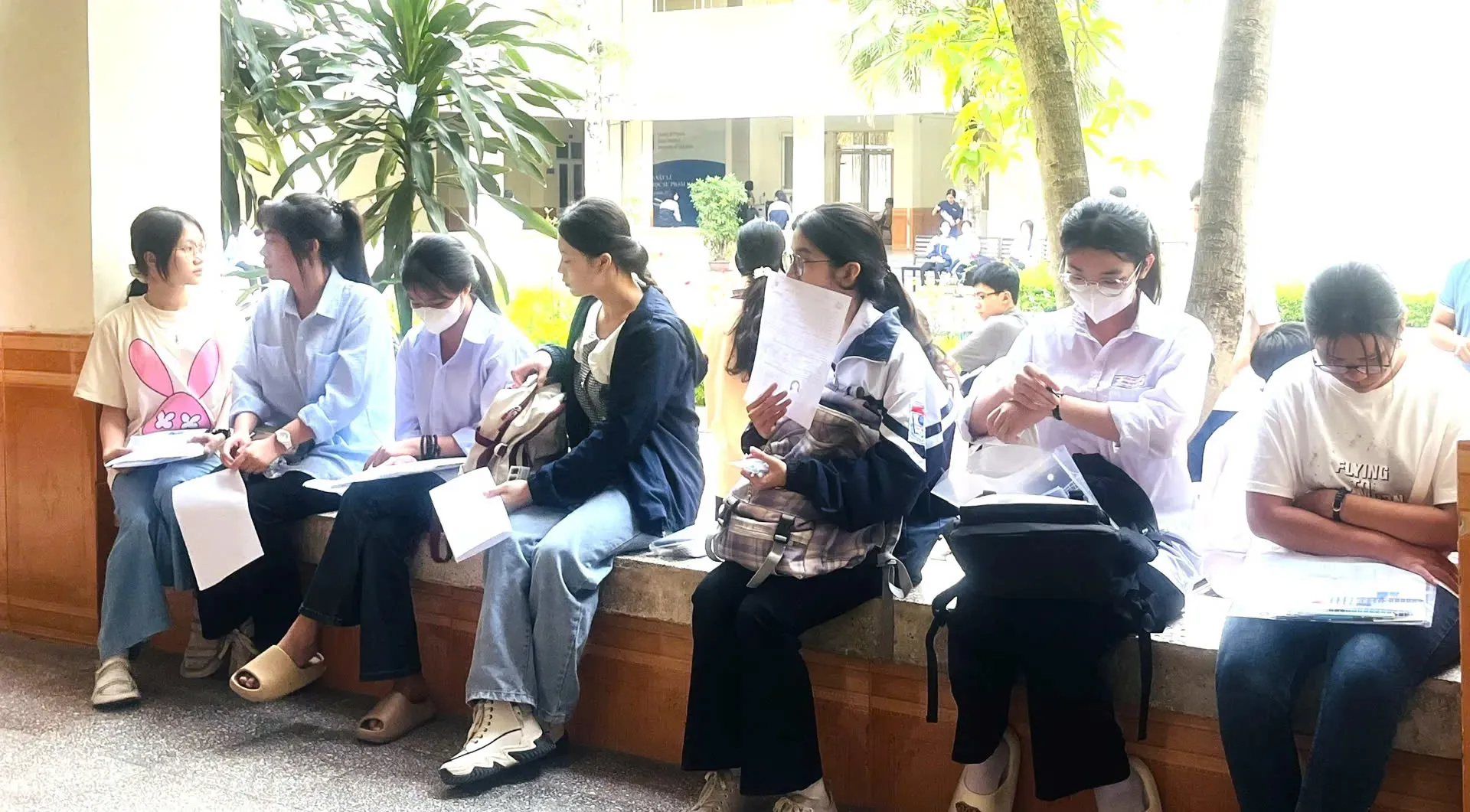
12th grade students face the pressures of exams and university admissions. Photo: Kinh te & Do thi Newspaper
For the first time, the exam will be conducted entirely under the 2018 General Education Program, with a new focus on applied knowledge, flexible thinking, and real-life problem solving, the reform aims to reshape how students learn and how they’re evaluated. In doing so, it has also reshaped the pressure on students, teachers, and families.
A shift from memory to mastery
“The new exam requires students to truly understand core concepts,” said Nguyen Van Duc, a mathematics teacher at Phan Dinh Phung High School. “Rote memorization won’t be enough anymore. Only those with strong analytical skills and real comprehension will succeed.”
This year’s test will be the most competitive yet, with nearly 90,000 more candidates than in 2024, the highest number ever recorded. The intense competition for top university spots has only deepened the stress.
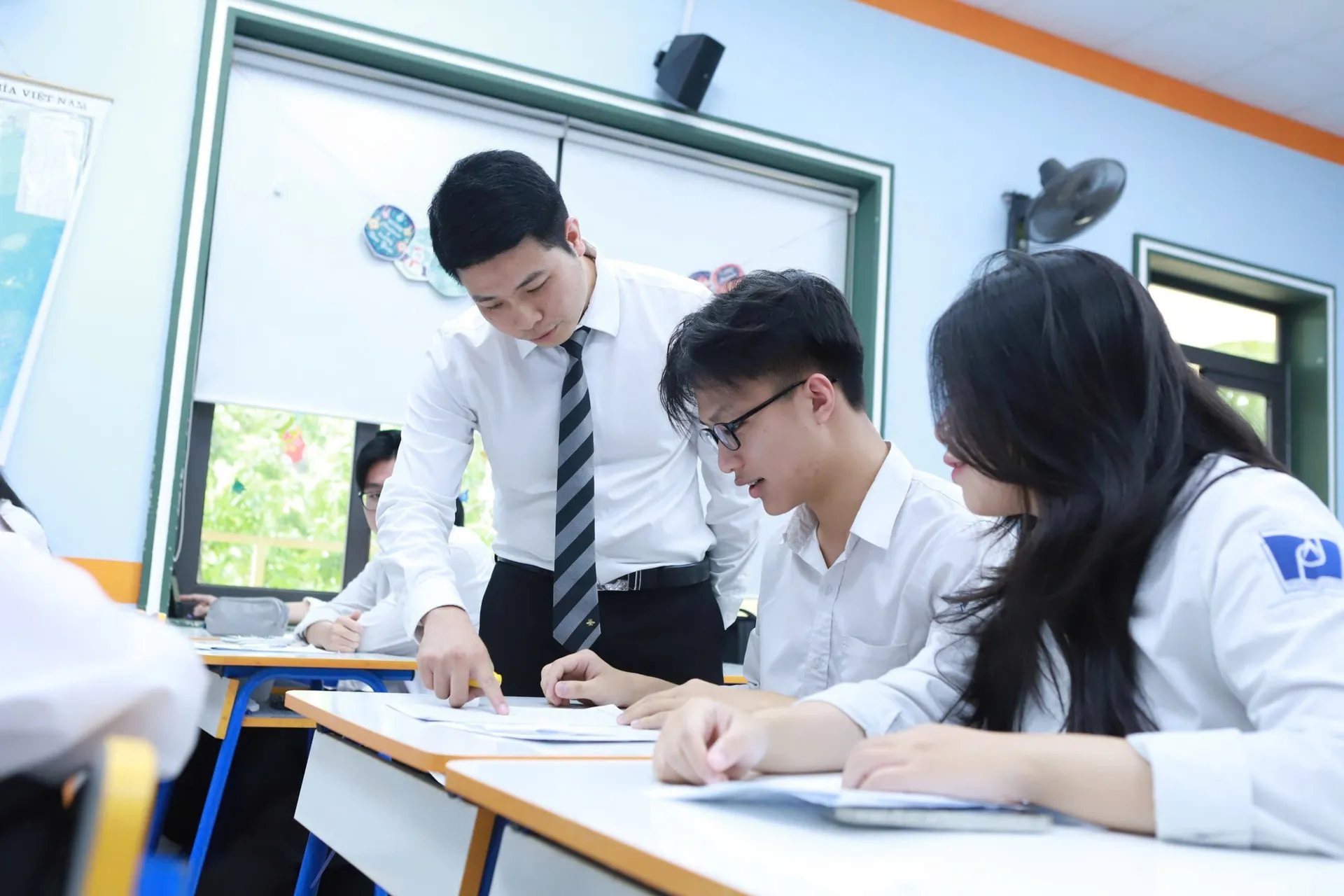
Teacher Duc patiently guides students through advanced application question types for the high school graduation exam. Photo: VGP
Students must take two compulsory subjects, math and literature, and choose two others from their 12th-grade coursework based on career orientation. This replaces the previous system where students sat for all subjects. But what makes the 2025 exam especially complex is its dual-track audience: while most students have been taught under the new program, around 25,000 are still studying the older curriculum.
That’s posed a major challenge for educators designing an exam that’s fair and functional for both groups.
Schools across Hanoi have overhauled how they prepare students.
At Hanoi National University of Education’s High School for the Gifted, biology teacher Nguyen Thanh Cong told The Hanoi Times that this year’s questions are far more situational. “Students need to analyze data, not just remember facts. The shift is clear, fewer rote-learning questions, more real-world application.”
His advice? “Don’t just focus on grade 12 content. Review knowledge from grades 10 and 11. Build mind maps. Organize concepts. Study smart.”
At Luong The Vinh Secondary and High School, mathematics teacher Vu Thi Thu said her school groups students by ability level for more tailored review sessions. “Weaker students receive extra help, even one-on-one tutoring if needed.”
The school’s principal, Nguyen Quoc Binh, said the exam prep is divided into three phases: revisiting past material, covering new lessons, and a final stretch focused on practice tests. “Grouping students this way lets us adapt teaching methods and meet them where they are,” he said.
Technology also plays a key role. Nguyen Van Duc, the math teacher from Phan Dinh Phung, noted that students do extra assignments online, freeing up class time for guided problem solving.
Anxiety in the air
Despite these efforts, anxiety remains high.
Nguyen Duc Anh, a student from Long Bien District, said he studies day and night but still feels unsure. “University entry is so competitive now. I’ve done everything I can, practice tests and extra classes, but the pressure keeps growing.”
For students like him, family support is a lifeline. Vo Thi Nhung, mother of student Ngoc Anh, said she avoids comparing her daughter to others. “I don’t care about her rank. I just want her to stay healthy and confident,” she said. “I cook her favorite meals. I remind her to rest. That’s more important than any score.”
Experts warn that the relentless pressure could backfire. “Excessive stress weakens students’ ability to retain knowledge and perform under pressure,” said Pham Manh Ha, a psychologist at Vietnam National University in Hanoi.
“What they need is a balance, a structured schedule, breaks, support, and most importantly, emotional space.”
Ha said that parents should encourage open conversations, not just focus on outcomes. “Ask how your child feels, not just how they scored,” he said.
Schools are also stepping in to monitor emotional well-being. At Dong Da High School, Principal Tran Thi Bich Hop said her staff, from homeroom teachers to counselors, track each student closely. “No one is left behind,” she said. “We constantly adapt the plan to meet students’ academic and emotional needs.”

Students are also closely supported by teachers through an online learning system, which helps answer difficult questions promptly. Photo: VGP
As the exam date approaches, students like Ngoc Anh continue pushing forward, one practice test at a time. The reformed exam may be raising the bar, but it’s also revealing the immense strength of Vietnam’s young generation and the quiet heroism of the parents and teachers walking beside them.
Whether the results will fulfill expectations remains to be seen. But one thing is already certain: for this year’s graduating class, the exam is not just a gateway to higher education, it’s a defining chapter in their journey of growth.