Vietnam approves major population, health reforms to address ageing
The two laws signal Vietnam’s shift toward enhancing population quality and strengthening healthcare services as the country enters a period of rapid ageing.
THE HANOI TIMES — Vietnam’s National Assembly on December 10 approved the new Population Law with 94.71% support, marking the country’s most significant shift in population policy in two decades as it moves from family planning toward a broad population-and-development approach.
The legislature also passed the Preventive Health Law, with both laws taking effect on July 1, 2026.

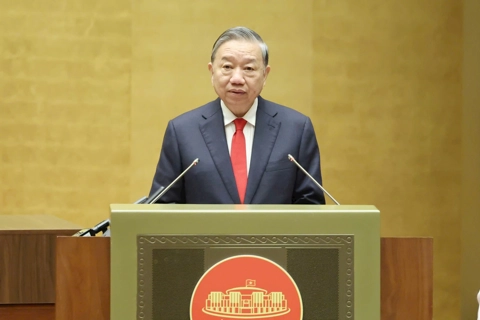
Vietnam's National Assembly passes the Population Law on December 10 with 94.71% of votes in favor. Photo: Duy Linh/Nhan Dan
The Ministry of Health said the two laws together create a comprehensive policy framework to manage population change and strengthen preventive health in the new period.
The new Population Law is expected to strengthen the 2003 Population Ordinance and provide a firmer legal basis for national policy as Vietnam confronts low fertility, rapid ageing and the need to improve human capital.
Speaking at the NA, Minister of Health Dao Hong Lan said the new law establishes a unified framework to manage population size, structure and quality while preparing for rapid ageing and guiding future social, labor and health policies toward a more sustainable path.
The law sets targeted measures to maintain replacement fertility. Women giving birth to a second child will receive seven months of maternity leave, up from six, while men will receive ten days of paternity leave when their spouse gives birth.
It expands financial support for ethnic minority women in very small populations, women in low-fertility areas and women having two children before age 35. Families with two or more biological children will receive priority access to social housing.
The law also includes stronger efforts to reduce sex imbalance at birth, together with requirements to expand communication and education on gender equality and the value of girls.
It also outlines measures for adapting to rapid ageing. People are encouraged to prepare early for old age through better health, financial planning and lifelong learning, while the law promotes broader participation in social and health insurance.
A multi-tiered aged care system, including home-based, community-based and specialized institutional care, will be expanded. The government will train and support a caregiver workforce in both formal and informal sectors.
To improve population quality, it calls for more diverse funding for free periodic health checks and screening services. Alongside State budget and social contributions, the Health Insurance Fund will begin covering these services in line with its capacity.

Minister of Health Dao Hong Lan at the NA on December 10. Photo: Duy Linh/Nhan Dan
The Preventive Health Law reinforces these provisions by guaranteeing free nationwide health checks and screening. It adds measures to prevent non-communicable diseases, mental health conditions and malnutrition, and updates infectious disease control based on Covid-19 lessons.
Shortly after the vote, the United Nations Population Fund (UNFPA) congratulated the National Assembly and reaffirmed its commitment to supporting reproductive rights, strengthening sexual and reproductive health care, advancing gender equality, helping Vietnam adapt to ageing and contributing to sustainable development.
Address Vietnam’s ageing
Regarding Vietnam’s ageing and efforts to improve population quality, the UNFPA in November 2025 released a report applying foresight to curate a care economy for older persons in Vietnam.
The report was developed by the UN Resident Coordinator and UNFPA, prepared through close collaboration between UNFPA and the UNRCO, with guidance from UNFPA Representative Matthew Jackson and UN Resident Coordinator Pauline Tamesis, and expert input from Professor Giang Thanh Long and Aarathi Krishnan.
The team acknowledges the valuable contributions of older persons, caregivers, government partners, UN agencies and experts, including ILO, UN Women, UNDP, UNICEF and WHO.
Vietnam is still in its “demographic window of opportunity” or “demographic dividend” defined as a period when the rate of children under 15 is lower than 30% of the population and those aged 65 and above account for less than 15%.
The country’s demographic window will close by 2039 as rapid ageing accelerates. The proportion of people aged 60 and above, which was 10.1% in 2011, is expected to reach 20% by 2036 and more than 21% by 2039, while the child population will drop to 19.2%.
Rising life expectancy, low fertility at 1.91 children per woman and broader shifts in urbanization, migration and family structures are driving the transition.
These changes will reshape growth, labor markets and social policy, making healthy and active ageing essential for Vietnam to avoid the middle-income trap.
Demand for care will surge as nearly 45% of older persons already struggle with daily activities and more than 60% live with chronic diseases. Most prefer home-based support.
Meeting this demand requires major investment in care infrastructure, services and personnel. The current system is limited and will need coordinated, cross-sectoral expansion to keep pace with a rapidly ageing society.

The Population Law is expected to improve Vietnam's population as the country enters the phase of fast ageing. Photo: UNICEF Vietnam
Vietnam’s rapidly ageing population is reshaping national care needs. Therefore, the study applies a strategic foresight approach to assess the emerging care economy and guide policymaking for a smooth demographic transition.
Its findings also help shape the United Nations Sustainable Development Cooperation Framework for 2027-2031.
The demographic dividend will close by 2039 as the share of older persons rises. The proportion of people aged 60 and above is set to double between 2011 and 2036, creating both challenges and opportunities as Vietnam targets high-income status by 2045.
Demand for aged care is increasing quickly, yet the current system, spanning institutional, community-based and home-based models, cannot keep pace.
Meanwhile, institutional capacity is limited, community-based care reaches only a fraction of older persons and home-based care is becoming less sustainable due to migration and smaller family structures.
The study highlights major gaps, including limited access to formal services, shortages of trained caregivers, persistent gendered care burdens and uneven rural provision.
Notably, emotional and social needs are often overlooked, and policy implementation remains weak.
The study outlines an ideal aged care system based on holistic and tech-enabled care, a professional care workforce and innovative financing. Public–private partnerships, broader pension coverage and gender-responsive policies are central to this approach.
To move forward, the study recommends six priorities: early preparedness, infrastructure investment, new financing models, caregiver training, stronger social protection and better policy coordination.
Overall, the Population Law and Preventive Health Law are expected to anchor Vietnam’s long-term population strategy as the country enters a period of fast ageing and rising care needs.