Vietnam breaks ground on first semiconductor chip plant in Hanoi
The facility will provide semiconductor products for high-value industries including aerospace, telecommunications, the Internet of Things (IoT), automotive manufacturing, medical devices and industrial automation.
THE HANOI TIMES — Vietnam officially entered the chip manufacturing arena on January 16, breaking ground on its first semiconductor fabrication plant at Hoa Lac Hi-Tech Park in Hanoi, a project seen as critical to building a national semiconductor ecosystem.
The project, launched by Party General Secretary To Lam and Prime Minister Pham Minh Chinh, marks the first time Vietnam will establish in-country chip fabrication capacity, a segment widely regarded as the most complex and capital-intensive stage of the semiconductor value chain.

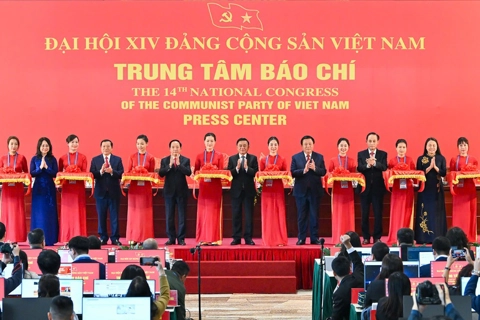
Party General Secretary To Lam (center) and Prime Minister Pham Minh Chinh (third from left) kick off the construction of Vietnam's first semiconductor chip manufacturing plant on January 16. Photos: VGP
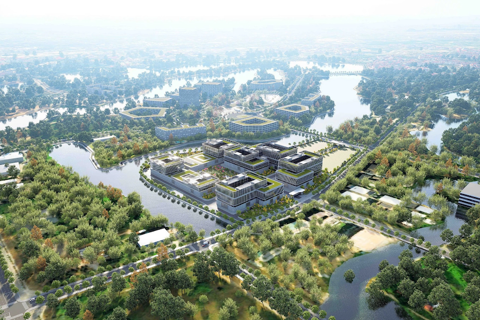
Developed by military-run telecommunications and technology group Viettel, the facility will be built on a 27-hectare site and is designed to support semiconductor research, design, testing and production, forming infrastructure for Vietnam’s emerging chip industry.
The event also represents the first time Vietnam has established domestic chip manufacturing capacity. It lays a critical foundation for mastering core technologies and developing a national semiconductor ecosystem.
Once operational, the plant will support strategic industries including aerospace, telecommunications, the Internet of Things (IoT), automotive manufacturing, medical devices and industrial automation.
A complete semiconductor chip passes through six main stages: product definition, system design, detailed design, chip fabrication, packaging and testing and integration and validation.
Vietnam has gradually participated in five of these stages. Chip fabrication, the most complex and decisive phase, has remained beyond domestic capability.
The new plant is expected to close this gap, enabling Vietnam to complete the full semiconductor production cycle within its borders.
Chip fabrication ranks among the most demanding technological processes globally. Engineers transform silicon wafers with near-perfect purity into chips through roughly 1,000 consecutive steps over a three-month period.
Any minor error can disrupt the entire production line, requiring exceptional discipline, management capacity and technological mastery.
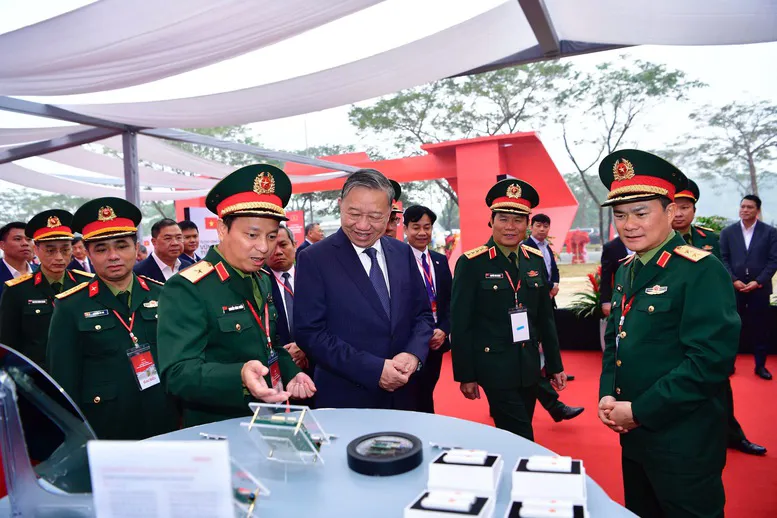
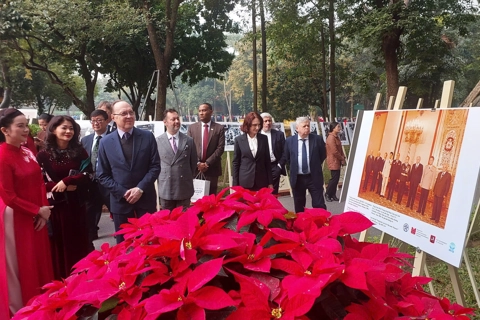
Party General Secretaray To Lam tours an exhibition showcasing military tech products.
“The launch of this high-tech semiconductor manufacturing plant shows that Vietnam can gradually master advanced technologies and complete a critical link in the global semiconductor value chain,” Prime Minister Pham Minh Chinh said.
“The project marks a shift from participation to mastery, from assembly to creation, strengthening Vietnam’s capacity and position in the digital era,” he said.
The prime minister said the project demonstrates Vietnam’s determination to implement the National Semiconductor Industry Development Strategy to 2030, with a vision to 2050.
Semiconductor chips, though small, determine core national capabilities and hold strategic importance across economic development, industrial strength, national defense and security, daily life and scientific and technological progress, he said.
The global semiconductor industry has reached a scale of $2.3 trillion and has become a geopolitical issue closely tied to national security and technological power, Chinh added.
According to the prime minister, the Party and the government have identified the semiconductor industry as a major breakthrough and have pursued consistent, long-term policies with clear roadmaps.
Based on government proposals, the National Assembly has passed 12 laws to promote science and technology, innovation and digital transformation, creating a critical legal framework for semiconductor development.
The prime minister has also issued the Semiconductor Industry Development Strategy to 2030, with a vision to 2050, along with strategic technology programs and a national program to develop semiconductor human resources.
After years of effort, Vietnam now has nearly 60 chip design enterprises, including 13 domestic companies capable of independently designing certain types of chips.
Vietnam has emerged as a global center for chip packaging and testing, ranking third worldwide in chip exports to the United States. The country has also built a core workforce of nearly 6,000 semiconductor engineers and expanded research infrastructure at key universities.

Prime Minister Pham Minh Chinh delivers his remarks at the groundbreaking ceremony.
Many global technology corporations have invested and partnered in Vietnam, including Intel, NVIDIA, Samsung, Qualcomm, Marvell, Amkor and most recently ASML of the Netherlands.
Prime Minister Chinh instructed the Ministry of National Defense and Viettel to coordinate closely with other ministries and Hanoi authorities to ensure the project maintains progress and quality.
He said stakeholders must build a strong domestic semiconductor business sector, complete the national value chain and connect effectively with foreign-invested enterprises and global supply chains.
Vietnam must expand semiconductor human resources in both scale and quality across all stages, from design and fabrication to packaging, testing and research, he added.
By 2030, Vietnam aims to have at least 100 chip design companies, one fabrication plant and about 10 manufacturing, packaging and testing facilities. The country also targets training more than 50,000 engineers and graduates and preparing high-quality talent for the 2030-2050 period.
By that time, semiconductor revenue should exceed $25 billion annually, domestic value-added should reach 10%-15% and electronics industry revenue should surpass $225 billion per year.
The prime minister called on ministries and regulatory agencies to intensify efforts to connect domestic firms with foreign-invested enterprises in the global semiconductor value chain.
He also urged stronger efforts to master core technologies by 2030 and build a self-reliant ecosystem capable of leading in selected stages and segments by 2045.
For Viettel, the prime minister directed the group to maintain its leading role in implementing the national semiconductor strategy and complete construction and operation of the high-tech manufacturing plant on schedule.
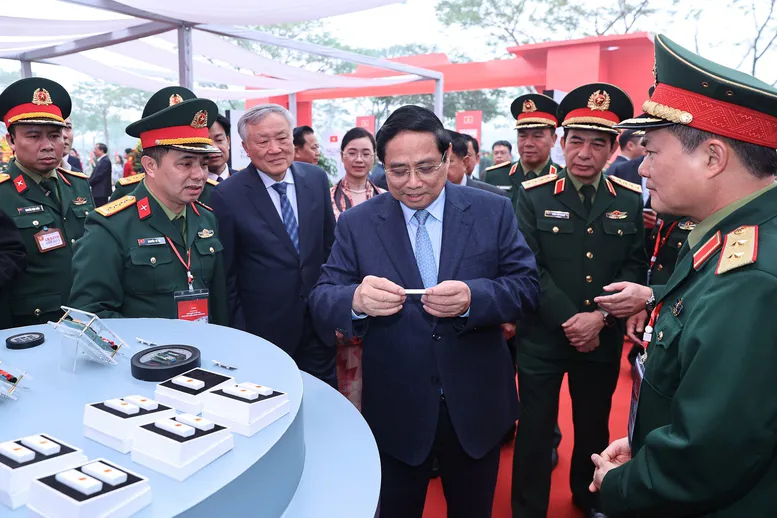
Prime Minister Pham Minh Chinh tours an exhibition showcasing military tech products.
Viettel is expected to master chip fabrication technology to support research, design and production of high-tech products, assist startups, universities and research institutes in rapid prototyping, testing and technology refinement and foster the broader semiconductor ecosystem.
Tao Duc Thang, Chairman and CEO of Viettel Group, said the group will begin project implementation immediately after the groundbreaking ceremony.
"Viettel aims to complete construction, receive technology transfers and begin pilot production by the end of 2027, before moving to process optimization and efficiency upgrades between 2028 and 2030, laying the groundwork for more advanced chip technologies," said Thang.