Vietnam resilience will drive nation to new successes: Deputy Prime Minister
The 13th Party Congress term began with unprecedented challenges that tested the resolve of the Party, the State and the people, yet it also created the conditions for Vietnam to move confidently into a new stage of development.
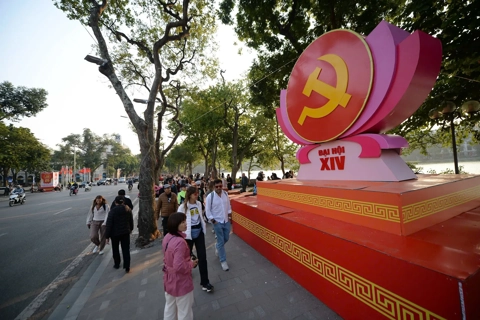
THE HANOI TIMES — As the 13th National Party Congress term (2021-2026) draws to a close with notable achievements, Politburo member and Standing Deputy Prime Minister Nguyen Hoa Binh outlined its key results and the main priorities for effectively implementing the resolutions of the 14th Party Congress, which is scheduled to take place in Hanoi from January 19-25.
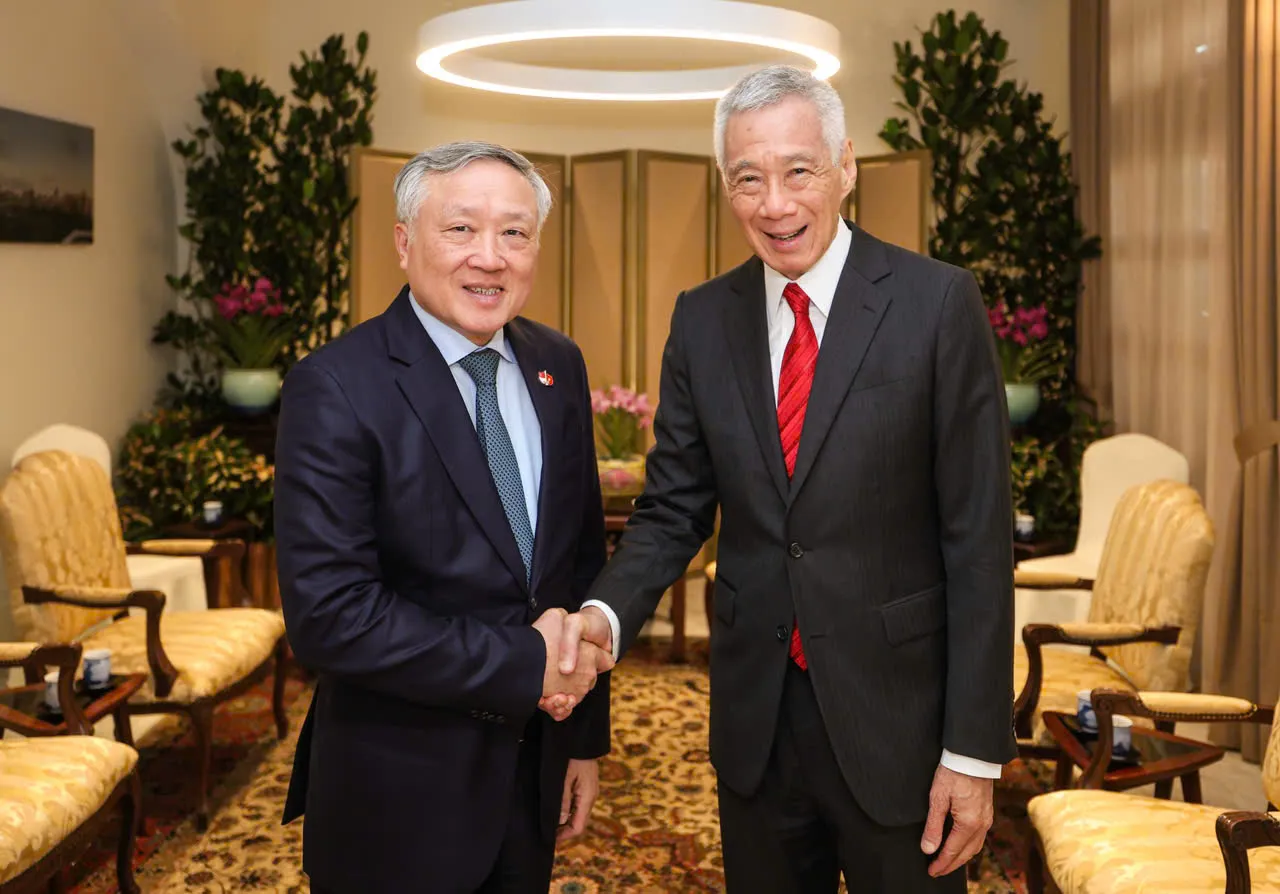
Standing Deputy Prime Minister Nguyen Hoa Binh meets Senior Minister Lee Hsien Loong in Singapore. Photo: MDDI (Singapore)
The 13th National Party Congress term unfolded under exceptionally harsh conditions, with challenges outweighing opportunities. How do you assess Vietnam’s overall performance during this demanding period and what factors made these achievements possible?
The 13th Congress term was exceptional, unfolding amid the Covid-19 pandemic, supply chain disruptions, rising inflation and escalating geopolitical tensions that hit economies worldwide, including Vietnam.
These challenges underscored Vietnam’s resilience, as clear Party leadership, firm and flexible government management and strong public support helped the country overcome major shocks and deliver broad-based results.
Macroeconomic stability was maintained as growth accelerated, with GDP expanding by 8.02% in 2025, among the highest rates in the region.
Average growth for the 5-year term reached about 6.3%. Economic output exceeded USD 514 billion, ranking 32nd globally, while per capita income rose above US$5,000. Inflation stayed under control and public debt declined to 34.4% of GDP. State budget revenue hit a record VND2.65 quadrillion (US$104.3 billion).
Institutional reform was another breakthrough, with the government structures being streamlined, administrative layers reduced and local governments reorganized to operate closer to citizens, improving efficiency and freeing up resources for development and social welfare.
Vietnam also made strong progress in law-making and investment climate reform. As a result, more than 170 laws and resolutions were passed, including key legislation on land, housing and real estate. Meanwhile, thousands of business regulations were simplified or removed, strengthening transparency and investor confidence.

Long Thanh International Airport emerges as Vietnam’s new global aviation gateway, symbolizing growth and global ambition. Photo: baoxaydung
Strategic infrastructure advanced rapidly, with more than 3,300 kilometers of expressways completed to form a national north-south backbone, alongside expanded digital and telecom networks and initial preparations for high-speed rail.
The growth model also shifted, as innovation, digital transformation and green growth became central drivers. Foreign direct investment exceeded $184 billion, including major projects in semiconductors and artificial intelligence that strengthened Vietnam’s position in global supply chains.
Social development remained a priority, with extreme poverty falling to about 1.3%, temporary and substandard housing eliminated ahead of schedule, universal health insurance coverage exceeding 95% and life expectancy rising to nearly 75 years.
National defense and security were strengthened while diplomacy expanded, with Vietnam now maintaining relations with 194 countries, strategic partnerships with most major powers and a steadily rising international standing.
These achievements stemmed from three factors: strong and strategic Party leadership, a proactive and accountable Government and the unity and trust of the Vietnamese people, especially in the most difficult moments.

Rescue forces evacuate residents during severe storms and flooding. Photo: Quang Tuan/VNA
What key lessons has the government drawn from the many unprecedented challenges that emerged during the implementation of the 13th Congress Resolution?
Managing familiar issues is one thing but addressing unprecedented and sensitive challenges is far more demanding, as shown by the period spanning pandemic response and institutional reform, when each decision required a careful balance between urgent needs and long-term goals.
From this experience, several lessons emerge. Leadership must be innovative yet grounded in reality, with policies shaped by actual conditions rather than outdated assumptions and backed by determination and decisive action once the right direction is set.
At the same time, people must remain at the center of all decisions, as protecting lives during the pandemic, safeguarding communities in disasters and steadily improving living standards remain the most meaningful measures of success.
Effective governance also requires clear accountability, with responsibilities assigned by person, task and timeline and resources focused on priority areas that generate strong spillover effects across the economy and society.
Equally important is policy communication, because when people understand that reforms serve national and public interests, they are more willing to support them and share responsibility in implementation.
As Vietnam approaches the 14th National Party Congress and a new development phase, what priorities will guide the government in the coming years?
Looking toward 2030 and 2045, the Government has identified several priorities.
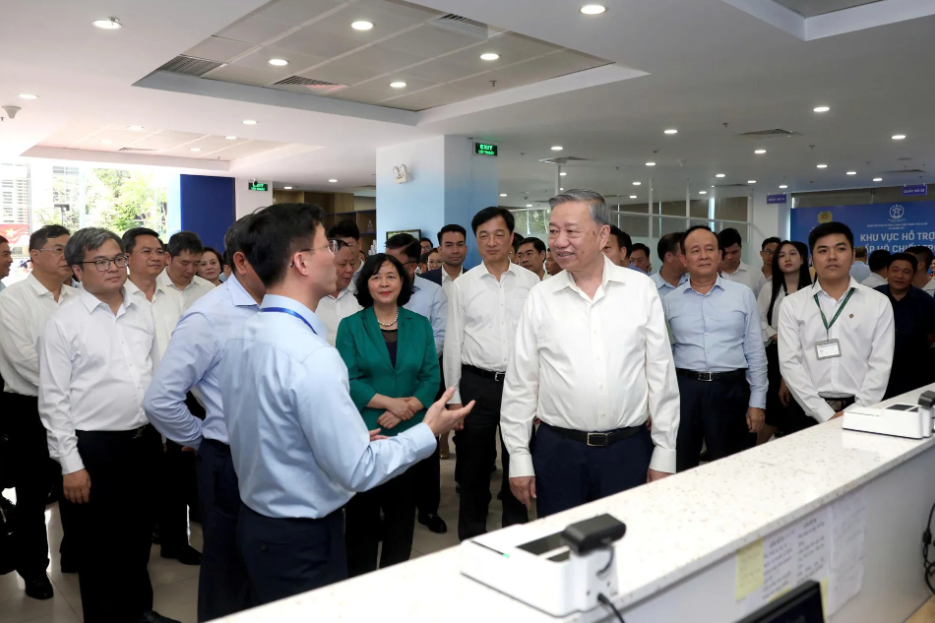
Party General Secretary To Lam and leaders of central agencies and the Hanoi municipal government visit the Hanoi Public Administrative Service Center. Photo: Thanh Hai/The Hanoi Times
First, Vietnam seeks to sustain high and inclusive growth by unlocking both traditional and new drivers, with greater emphasis on the digital economy, green development and innovation as sources of long-term momentum.
Alongside this, deeper institutional reform remains a central priority, as law-making will increasingly focus on enabling development through stronger decentralization and the removal of bottlenecks that constrain productivity and private initiative.
At the same time, the country is stepping up investment in science, technology and high-quality human resources, with priority given to strategic fields such as artificial intelligence, semiconductors, renewable energy and advanced infrastructure that can generate spillover effects across the economy.
These efforts are closely linked with the completion of major connectivity projects, including high-speed rail and Long Thanh International Airport, which are expected to strengthen regional and global integration and enhance Vietnam’s role in international supply chains.
Economic ambitions are also framed by a strong commitment to cultural and social development, ensuring that growth goes hand in hand with social equity, environmental protection and a tangible improvement in quality of life.
Additionally, Vietnam will continue proactive and balanced diplomacy while reinforcing national defense and security, safeguarding peace and stability as essential foundations for sustained development.
Thank you for your time!