Vietnam conducts first successful simultaneous heart and lung transplant
This historic surgery marks a significant milestone for the country’s organ transplant capabilities and places Vietnam among the world’s leading centers for advanced transplant procedures.
THE HANOI TIMES — In a groundbreaking medical achievement, Vietnam successfully performed its first simultaneous heart-lung transplant on a patient suffering from multi-organ failure, conducted at Hanoi-based Viet Duc University Hospital, the largest surgical center in Vietnam, on August 13th.
The patient, a 38-year-old woman identified as Tran Nhu Q., had been battling severe heart and lung complications due to congenital heart disease and Eisenmenger syndrome, a rare condition caused by untreated congenital heart defects. Her health had deteriorated to the point where her survival was measured in days.
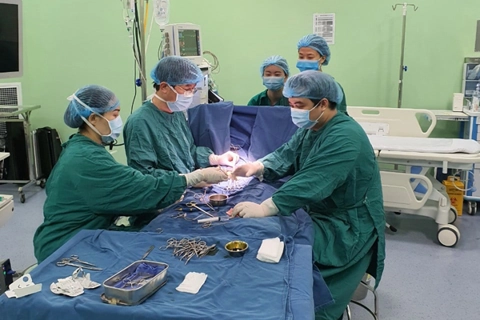
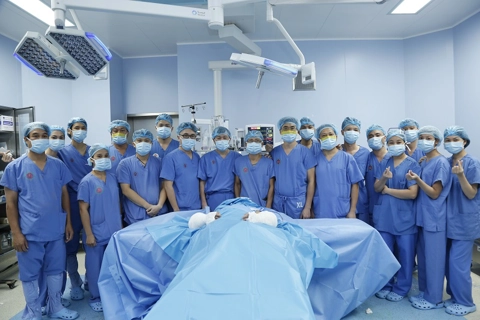
The complex 7-hour surgery involved a team of over 40 specialists from cardiology, thoracic surgery, anesthesiology, and rehabilitation. Doctors utilized extracorporeal circulation to temporarily replace the patient’s heart and lungs during the procedure. Innovative techniques, such as connecting the bronchial tubes instead of the traditional tracheal approach, were employed to improve blood flow to the transplanted organs.
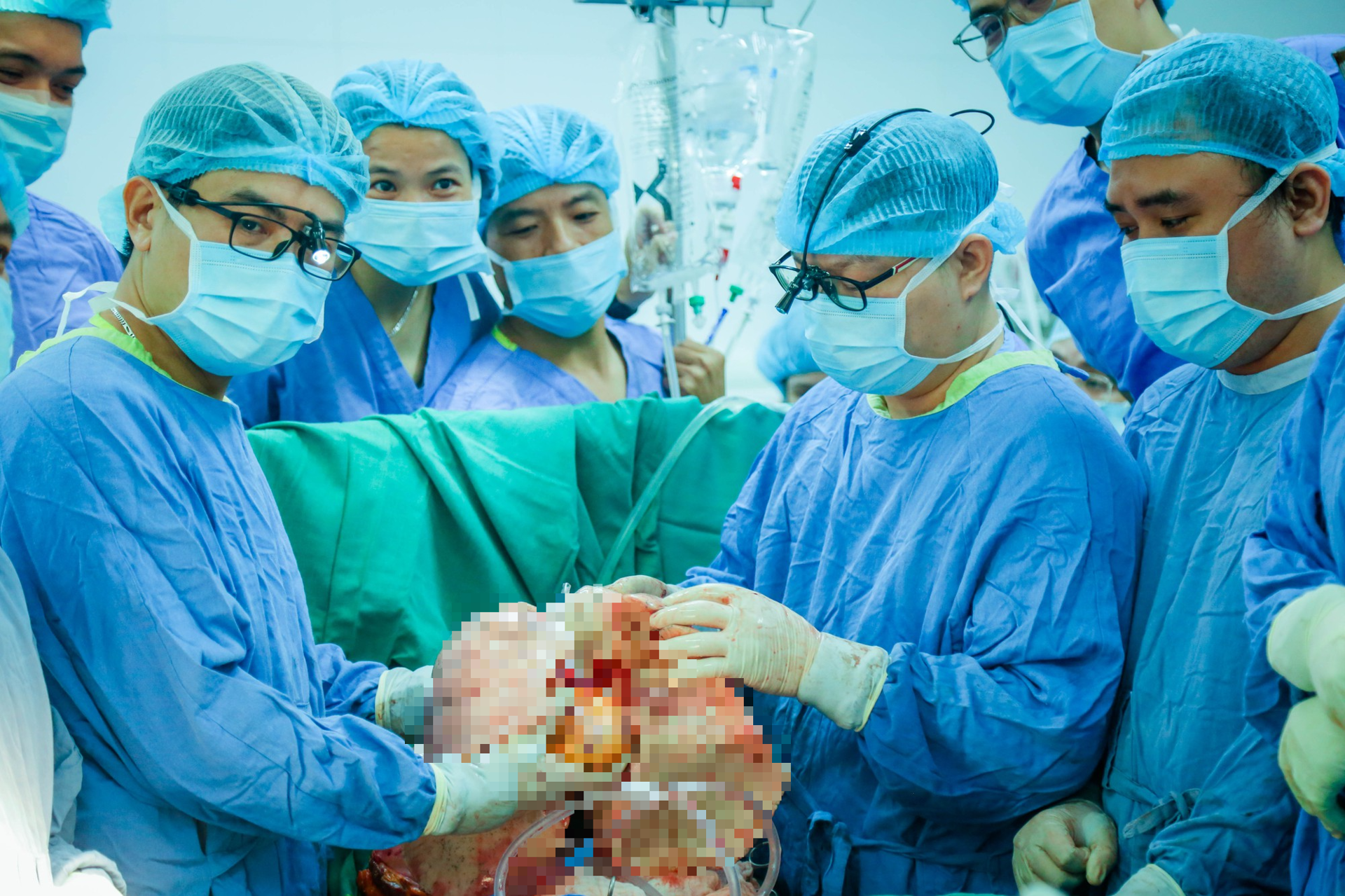
The complex 7-hour surgery involved a team of over 40 specialists from cardiology, thoracic surgery, anesthesiology, and rehabilitation. Photos: VPG
Despite challenges, including the donor lungs being larger than the recipient’s chest cavity and pre-existing bacterial infections, the surgery was a success. Nearly four weeks post-transplant, the patient has shown remarkable recovery, breathing normally and regaining mobility.
The patient’s family expressed profound gratitude, with her mother tearfully thanking the medical team for "returning a daughter, a mother, and a sister to our family."
"This achievement not only saves lives but also opens new treatment avenues for end-stage heart-lung patients in Vietnam," said Dr. Duong Duc Hung, Director of Viet Duc University Hospital. He stressed that the success reflects Vietnam’s growing expertise in multi-organ transplants, aligning with global standards.
The breakthrough also highlights the critical role of organ donation. Viet Duc University Hospital reported a record number of brain-dead donors in 2025, enabling life-saving transplants for hundreds.
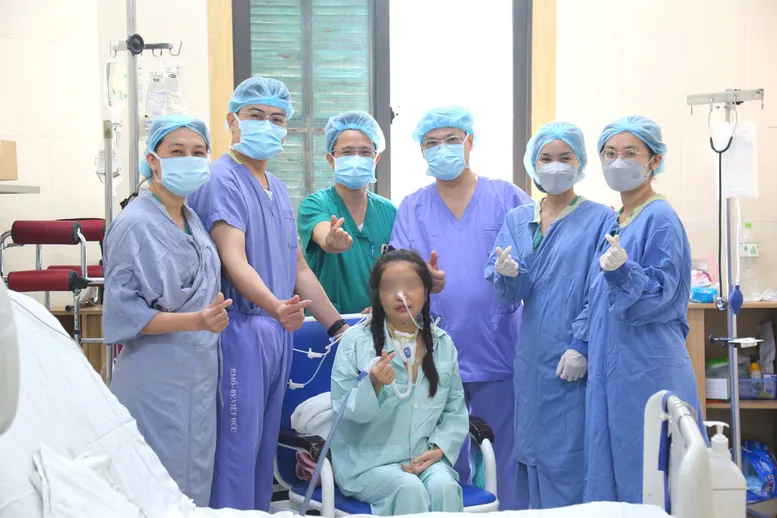
Nearly four weeks post-transplant, the patient has shown remarkable recovery, breathing normally and regaining mobility.
Globally, simultaneous heart-lung transplants are rare, with only about 100 cases performed annually due to the scarcity of donors and surgical complexity. The success rate at leading centers like Stanford Health Care in the US reaches 90% after one year, while the UK reports a 72% survival rate. Vietnam’s accomplishment signifies its rapid progress in high-stakes medical interventions.
"This is a proud moment for Vietnamese medicine. "We’ve proven our ability to master the most challenging techniques, offering hope to patients who once had none," said Dr. Ha Anh Duc, head of the Medical Services Administration under Vietnam's Ministry of Health
Health authorities plan to formalize the heart-lung transplant protocol nationwide, further advancing Vietnam’s position in global healthcare.
Viet Duc University Hospital (VDUH) was established in 1906 by the French Colonist Government. The name “Viet Duc Friendship Hospital” was established in 1973 as a memorial to non-refundable aid from the Democratic Republic of Germany. Later, the hospital was shortened to Vietnam-German Friendship Hospital. The founding directors of VDUH were Professor Ho Dac Di and Professor Ton That Tung, both famous surgeons specialized in heart and liver surgery, respectively.