Vietnam enters new era drawing lessons from August Revolution
The August Revolution of 1945 stands as one of Vietnam’s most significant historical and political events, marking a decisive turning point in the nation’s development.
THE HANOI TIMES — The August Revolution of 1945 marked a defining milestone in Vietnam’s struggle for nation-building and independence. As the country enters a new era, its historical lessons remain profoundly relevant.
Looking back at history
According to Professor Ta Ngoc Tan, former Director of the Ho Chi Minh National Academy of Politics, the August Revolution of 1945 not only secured national independence but also gave birth to the Democratic Republic of Vietnam, the first people’s democratic state in Southeast Asia.
The victory laid the groundwork for building a new type of national institution unprecedented in Vietnam’s history, an independent, democratic state of the people.
Before 1945, Vietnam remained a semi-feudal colony under French colonial rule and Japanese occupation, with no constitution or independent legal system.
The state apparatus functioned solely to protect the interests of the colonial rulers and the feudal elite, running counter to the will and aspirations of the people. Vietnamese citizens had no democratic rights to determine the destiny of their own nation.
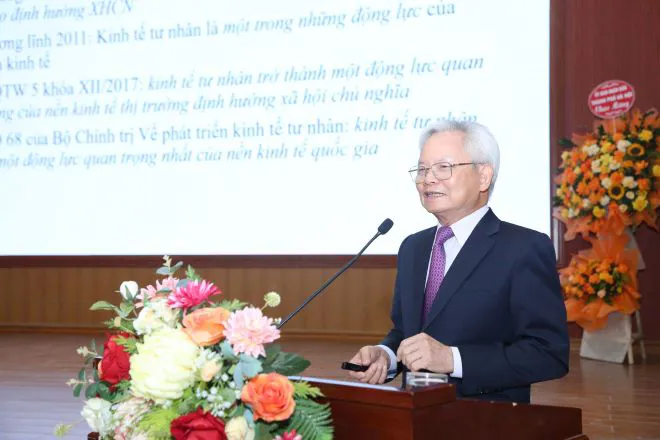
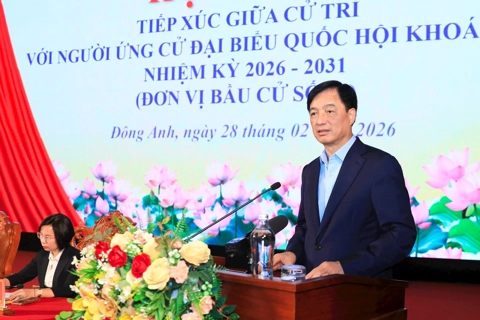
Professor Ta Ngoc Tan, former Director of the Ho Chi Minh National Academy of Politics. Photo: Pham Hung/The Hanoi Times
The victory of the August Revolution in 1945 shattered the chains of French colonial rule and Japanese occupation, while bringing an end to the centuries-old feudal monarchy.
It ushered in a new era in the nation’s history, one of independence and the path toward socialism.
“The Party, led by President Ho Chi Minh, swiftly established a comprehensive, independent democratic system across all fields to steer the creation of a new society and safeguard the revolution’s achievements,” Professor Ta Ngoc Tan observed.
The triumph of the Vietnamese revolution also encouraged people across Asia and Africa to rise against colonial oppression and exploitation in pursuit of national independence.
In the 20th century, Vietnam emerged as a pioneering symbol of national liberation movements worldwide.
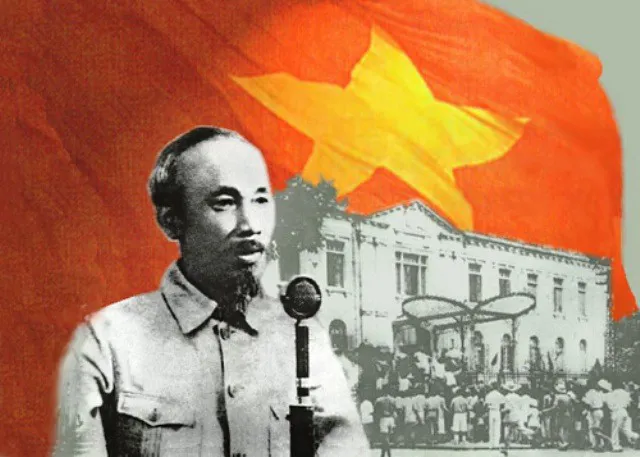
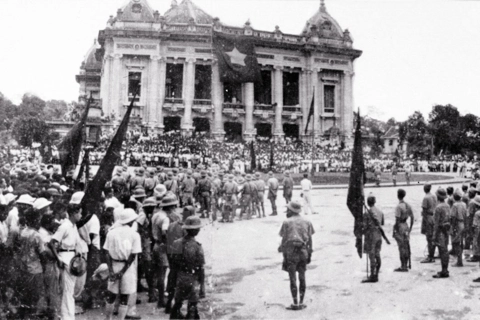
August Revolution succeeded bringing national independence. Photo: Ministry of Culture, Sports and Tourism
President Ho Chi Minh affirmed the great significance of the August Revolution: “Not only could the working class and the Vietnamese people be proud, but the working class and oppressed peoples elsewhere could also be proud that this was the first time in the history of the revolutions of colonial and semi-colonial peoples that a Party only 15 years old had led the revolution successfully and taken power nationwide.”
According to Associate Professor Dinh Quang Hai, former Director of the Institute of History, Vietnam Academy of Social Sciences, revolutionary struggles in Laos, Indonesia, India, China, Syria, Lebanon, and other countries achieved victory, especially after the defeat of French colonialism in Vietnam.
Many African countries, such as Algeria and Madagascar, followed Vietnam’s example to fight for national liberation, break free from colonial domination, and end the brutal system of old colonialism.
“The victory of the August Revolution in 1945 in Vietnam dealt a heavy blow to the colonial system of imperialism in Asia, contributing significantly to the disintegration of old colonialism on a global scale. It strongly encouraged the struggles of oppressed peoples against the slavery of imperialism, for national independence, democracy, and socialism,” said Hai.
“The victory of the August Revolution in 1945 in Vietnam landed a heavy blow to the colonial system of imperialism in Asia, contributing significantly to the disintegration of old colonialism on a global scale, strongly encouraging the struggle of oppressed peoples against the slavery of imperialism, for national independence, democracy and socialism,” said Hai.
Towards the new era
In the context of the nation's historical transformation, Vietnam has affirmed the country's foundation, position and prestige in the international arena.
Aiming to complete industrialization and move beyond lower-middle-income status by 2025, Vietnam targets upper-middle-income status by 2030 and a fully developed, high-income nation by 2045. To reach these goals, the country faces the inevitable and urgent task of building a modern, democratic, effective, and internationally integrated institutional system.
Alongside a forward-looking vision, Professor Ta Ngoc Tan stressed the importance of revisiting the past to draw valuable lessons from the August Revolution of 1945.
He noted that Vietnam has now entered a new stage of development, marked by innovation, deep international integration, strategic partnerships with many countries, and active participation in global organizations.
These characteristics have raised Vietnam's geopolitical position on the global stage. However, the increasingly complex fluctuations in security, economy, and international politics are big challenges.
Therefore, it is necessary to continue to improve institutions and laws to remove bottlenecks, open up resources for national development, and promote democracy and the role of the people.
Associate Professor Nguyen Viet Thao, former Deputy Director of the Ho Chi Minh National Academy of Politics, agreed with Professor Tan's analysis.
He said that it is necessary to look back at the historical values of the August Revolution to see more clearly the process of Vietnam from a backward colony to an independent nation.
Right from the beginning of the country's founding, President Ho Chi Minh declared that the Democratic Republic of Vietnam was ready to "be friends with all democratic countries and not create enmity with anyone."
Thao said that the stance has been consistently demonstrated through Vietnam’s facilitation of investment by foreign capitalists and engineers in all of our industries.
"These lessons remain highly relevant to today’s foreign affairs, helping to strengthen Vietnam’s standing on the international stage,” he added.
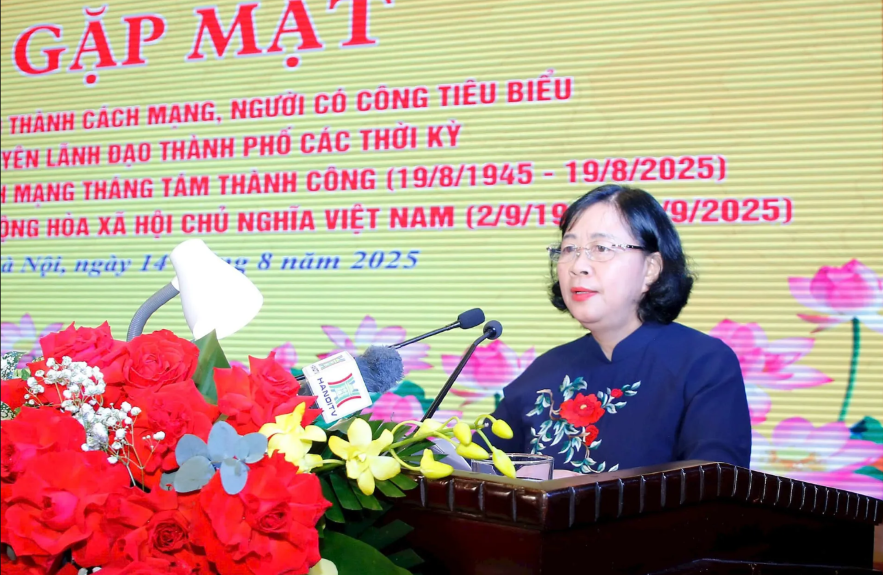
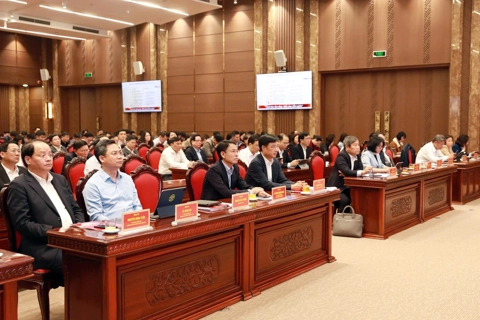
Secretary of the Hanoi Party Committee Bui Thi Minh Hoai speaks at a meeting with historical witnesses of August Revolution. Photo: Thanh Hai/The Hanoi Times
In her opinion, Secretary of the Hanoi Party Committee Bui Thi Minh Hoai affirmed that the August Revolution remains an event of great significance.
"It is a victory of the correct revolutionary direction, wise leadership, strategic vision, and the acumen to create and seize opportunities, combining national strength with the strength of the times," she said.
"Hanoi is honored and proud to be the place where the General Uprising to seize power was initiated and created the premise for the success of the nationwide general uprising."
Reviewing Hanoi’s 80-year journey with the nation, marked by many proud achievements, Secretary Dinh Tien Dung noted that the capital is now facing new opportunities to pursue faster and more sustainable development.
He emphasized that the Party Committee, authorities, and people of Hanoi are determined to build a “Cultured – Civilized – Modern” capital, worthy of its role as the national political and administrative center, and a hub of economy, culture, education, science and technology, and international integration.