Vietnam eyes policies to attract FDI in chip production
The country has gradually developed into a semiconductor manufacturing hub for the growth of the chip manufacturing sector.
Vietnam plans to encourage foreign direct investment (FDI) in chip production through various mechanisms and policies next year.
The Ministry of Planning and Investment has been assigned to draft these mechanisms and policies, which will be submitted to the Government for approval in the first quarter of 2023.
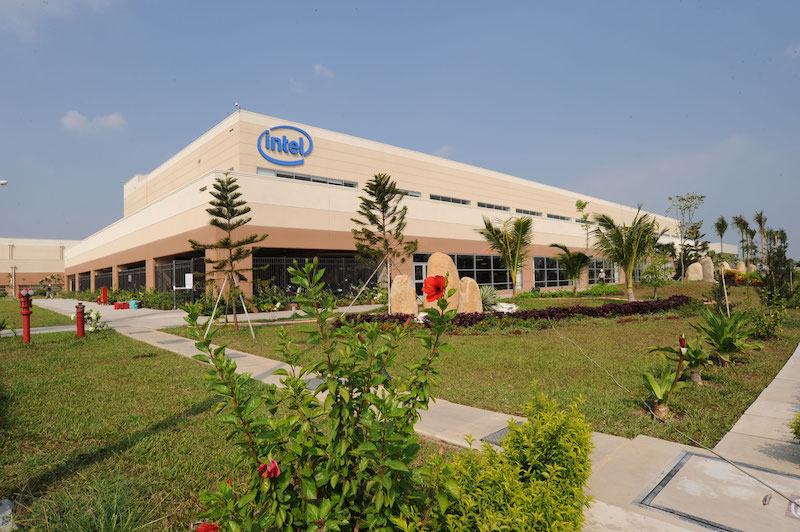
| Intel Products Vietnam's chip assembly and manufacturing facility. Photo: Intel |
This move, which responded to a request by Prime Minister Pham Minh Chinh, aims to encourage existing high-tech FDI projects to expand investment in the Southeast Asian country, one of the manufacturing bases of Samsung, the world’s largest chipmaker.
The South Korean giant plans to open the first semiconductor component fab with an investment capital of $920 million in the northern province of Thai Nguyen in the second quarter of 2023.
Attending the opening ceremony for its research and development center this month, the Prime Minister is confident the South Korean investor will conduct chip production in Vietnam next year.
Another South Korean, Amkor Technology, will build a $1.6 billion plant to manufacture, assemble and test semiconductor products in the Yen Phong II-C Industrial Park in the northern province of Bac Ninh until 2035.
Meanwhile, Japan's Kyocera Corporation announced this month that it would double its three-year investment in semiconductor manufacturing and other industries in Vietnam and other countries.
Earlier, Vietnam successfully attracted US-based Intel Corporation's investment in a large chip assembly and testing fab.
With the advantages of investment policies, a talented workforce, and a stable environment, the country has gradually developed into a semiconductor manufacturing hub with a view to setting foot in the chip manufacturing sector.
According to Fitch Solutions, Vietnamese industrial parks continue to attract considerable foreign investment amid the resurgence of Covid-19 outbreaks, especially in the electronics industry.
The country’s semiconductor industry is projected to grow by $6.16 billion, progressing at a nearly 19% compound annual growth rate (CAGR) in the 2020-2024 period, according to the market research firm Technavio.
Nguyen Le Huy from the School of Science, Engineering & Technology said that joining the global R&D, the design, production, and distribution of semiconductor chips will bring enormous economic advantages to Vietnam. Given the country’s position and capabilities, medium- and long-term strategies are needed to develop the semiconductor industry.
He suggested that, in the medium term, Vietnam needs to engage in R&D phases that rely heavily on the human factor. The Government needs to continue to invest and offer preferential policies to attract large companies such as Samsung, Intel, Synopsys, and Cadence to establish or expand their semiconductor R&D centers in Vietnam.
At the same time, policies to support universities in training high-quality graduates in the semiconductor field are needed, Huy told The Hanoi Times.
"In the long term, Vietnam should reach cooperation agreements to support technology transfer from semiconductor leaders such as the US, Japan, and South Korea. From there, Vietnam can move toward full autonomy in all important phases of semiconductor production," Huy stressed.