Vietnam-India ties hold strong potential for broader cooperation
Vietnam’s post-Congress policy direction is opening new space for deeper economic cooperation with key partners, including India, as reforms and private sector growth create fresh opportunities for expanded collaboration.
THE HANOI TIMES —
|
As the week-long 14th National Congress of the Communist Party of Vietnam concluded this weekend (January 19-23, 2026), global attention is drawn towards the policy outcomes of the important political event held every 5 years. On this occasion, an Indian Economist and Corporate Finance Professional - Dr. Kishore Nuthalapati reflects his view on the policy direction formulated for the Party and the Government in the coming time. The objective is to note his views on economic aspects, including more collaborations between Vietnam and India. |

Bamboo, a symbol of Vietnam’s resilience, comes alive in a fireworks display on January 23 to mark the success of the 14th National Party Congress. Photo: Ngoc Tu/The Hanoi Times
Over the past two years, Vietnam’s private sector has recorded notable growth, reflecting the positive impact of ongoing administrative reforms and an increasingly enabling business environment.
The expansion of private enterprises, alongside continued openness to foreign investment, underscores Vietnam’s consistent approach to building a dynamic, resilient and people-centered economy within its socialist-oriented market framework.
Vietnam formally embarked on a mixed economic model in the 1980s, and more than four decades of reform have demonstrated the effectiveness of allowing the private sector to develop in tandem with state-owned enterprises.
Today, the private sector contributes about 40% of GDP and remains a key driver of employment, innovation and domestic demand, with ample room to further expand its role in the next development phase.
Trade continues to serve as a major pillar of Vietnam’s growth. Exports account for roughly 93% of GDP, reflecting the country’s deep integration into global value chains. With exports of around US$440 billion and imports of about US$400 billion, Vietnam maintains a trade surplus while sustaining diversified trade relations.
Its key export markets include the United States (30%), China (15%), the European Union (14%), South Korea (7%) and Japan (6%), while major import sources comprise China (35%), South Korea (15%), Japan (5%), the United States (5%) and Taiwan (4%), supplying essential inputs for manufacturing, agriculture and high-tech production.
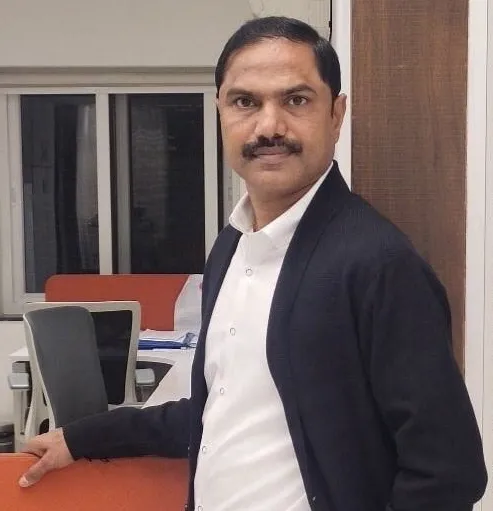
Dr. Kishore Nuthalpati, an Indian Economist and Corporate Finance Professional.
As Vietnam advances toward higher-quality growth, policymakers are actively addressing emerging challenges associated with global economic uncertainty, changing demographics, infrastructure needs and financial stability.
Rather than structural weaknesses, these issues reflect the growing complexity of an economy transitioning to a more advanced stage of development. The focus is therefore on strengthening economic resilience, improving policy clarity, mobilizing capital more effectively and expanding international economic partnerships.
In this context, balancing export-led growth with stronger domestic consumption and diversified trade cooperation has become an important policy priority. Expanding economic engagement with stable, fast-growing and complementary partners forms part of Vietnam’s broader strategy to sustain long-term growth, employment and social stability.
These issues were expected to feature prominently at the 14th National Congress of the Communist Party of Vietnam. The Congress serves as a critical platform to assess development achievements, outline strategic priorities and guide policy directions for the next phase of national development.
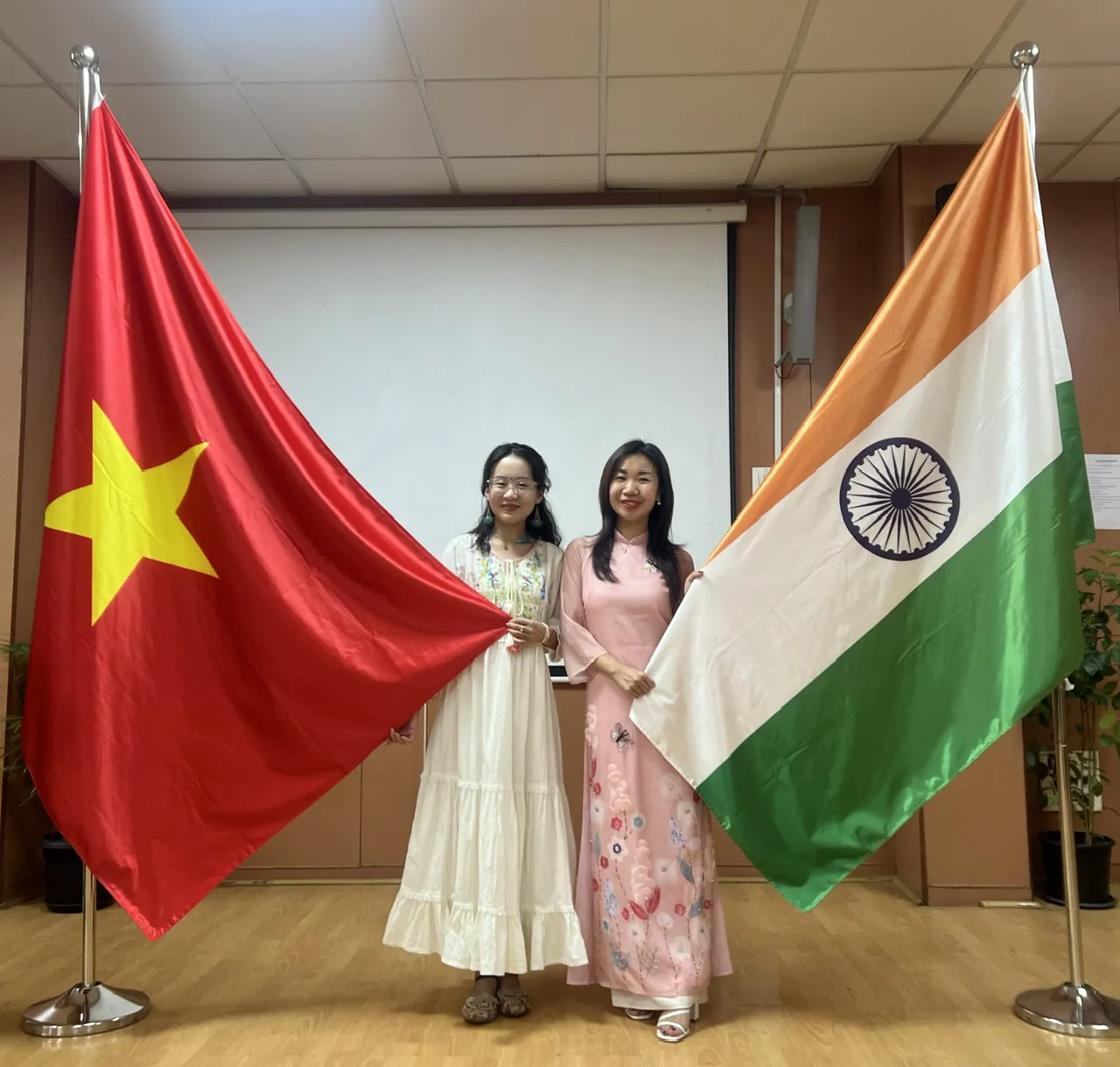
Vietnam and India has a long-lasting relationship laid by President Ho Chi Minh and Prime Minister Jawaharlal Nehru. Photo: Linh Pham/The Hanoi Times
Among Vietnam’s key partners, India occupies a particularly important position. Bilateral relations are strong and balanced across both trade and strategic dimensions. The year 2026 marks the 10th anniversary of the Vietnam-India Comprehensive Strategic Partnership, a decade defined by growing economic ties and close political coordination. Bilateral trade currently stands at US$15.7 billion, with Vietnam exporting US$10.3 billion to India and importing US$5.4 billion.
Recent years have witnessed expanding cooperation in areas such as digital payment systems, maritime security, defense technology, electric vehicles and emerging technologies, reflecting the high level of mutual trust between the two countries.
With complementary economic structures and shared development aspirations, Vietnam and India are well-positioned to elevate bilateral trade to US$50 billion in the coming years, delivering benefits in trade diversification, investment flows, job creation and sustainable growth for both economies.
Vietnam’s participation as a partner country of BRICS (Brazil, Russia, India, China, South Africa, Egypt, Ethiopia, Iran, Saudi Arabia, United Arab Emirates and Indonesia) from 2025 further opens opportunities for deeper engagement with India and other major emerging economies.
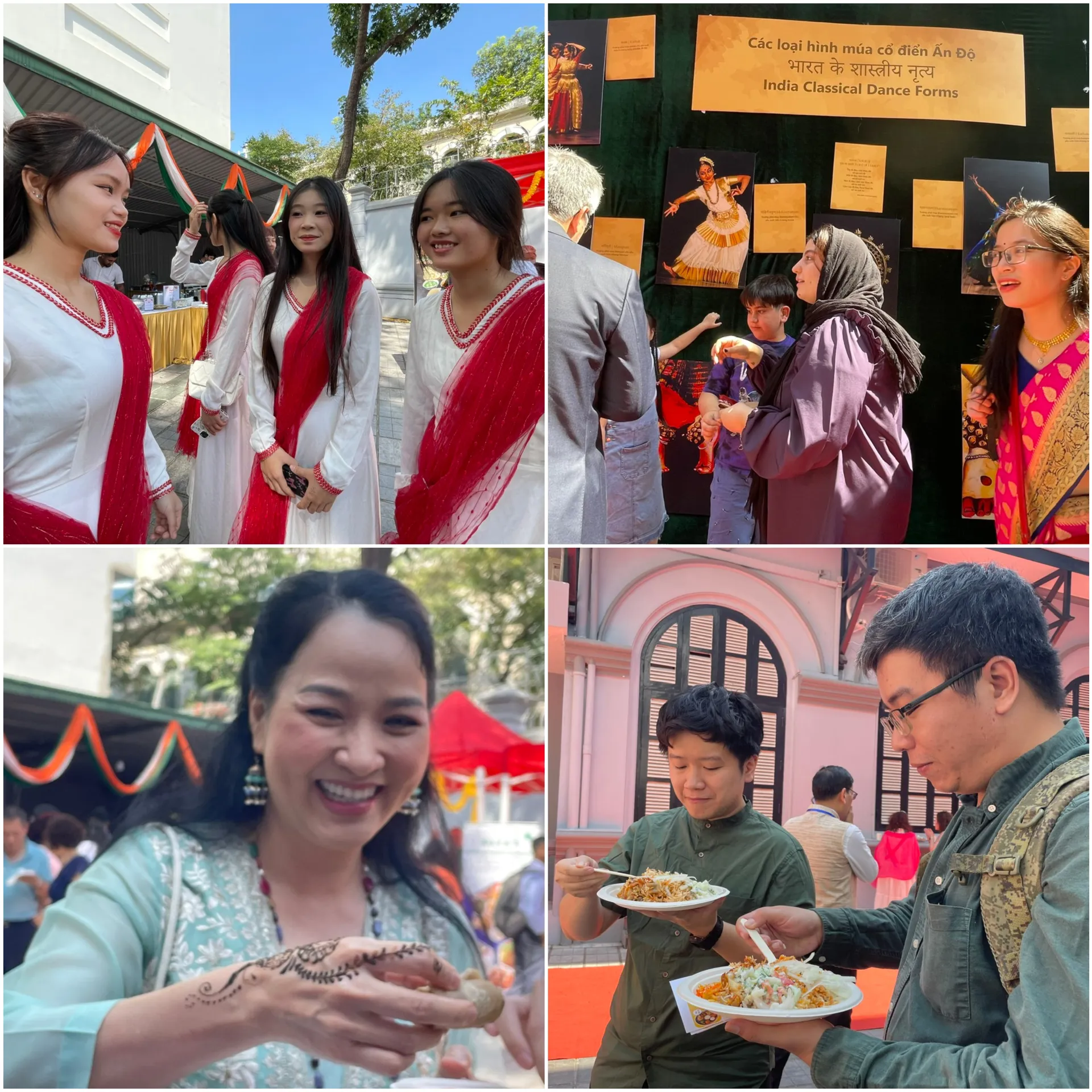
Indian culture and cuisine gain popularity in Vietnam. Photo: Linh Pham/The Hanoi Times
This cooperation aligns with Vietnam’s multilateral foreign policy and its commitment to diversification, balance and proactive international integration.
Given their geographical proximity, economic complementarities and converging strategic interests, Vietnam and India enjoy a strong foundation for long-term cooperation.
The outcomes of the 14th National Congress will provide clearer direction on how Vietnam intends to deepen this partnership as part of its broader development and foreign policy strategy.
Dr. Kishore Nuthalpati from India is a thought leader and an economist who visited Vietnam and met economists, media experts and professionals and haw fair understanding of Vietnam’s economy.