Vietnam industrial property stands tall as global manufacturers pursue 'China+1' strategy
An increasing influx of foreign capital shifting to Vietnam prompts higher demand for industrial estate.
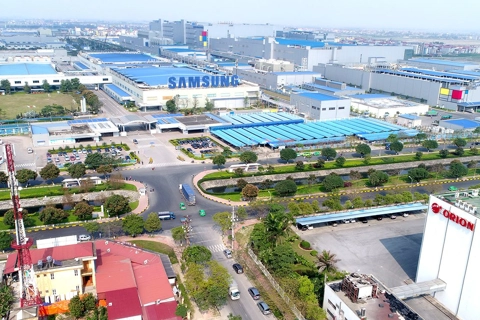
Vietnam’s industrial real estate has the potential to be a destination for multinational companies that are increasingly pursue the “China Plus One” strategy to diversify their operations as the global health crisis causes disruptions in supply chains.
As an example in containing the novel coronavirus for the past few months and its effective pandemic-control measures, the shifting in the investment continues to grow, resulting in greater demand for Vietnam industrial space as corporations seek to mitigate risk and diversity locations, according to executives from Savills Vietnam.
| Troy Griffiths, Deputy Managing Director, Savills Vietnam. Photo: Savills Vietnam |

"Industrial continues to be the ‘poster child’, with mounting enquiries and heightened capital market activity”, Troy Griffiths, deputy managing director, Savills Vietnam said.
“The key factors contributing to post-pandemic opportunities are extensive,” he said, naming the factors that include an effective and rapid pandemic response, robust middle-class growth, an increasingly stable business environment, labour force, infrastructure spend, corporate income tax incentives, and growing FTA’s.
The current situation is already expected to accelerate multinational manufacturer relocations out of China. Recent announcements from major blue-chips Apple, Pegatron, and Foxconn will see higher proportions of production shifting to Vietnam.
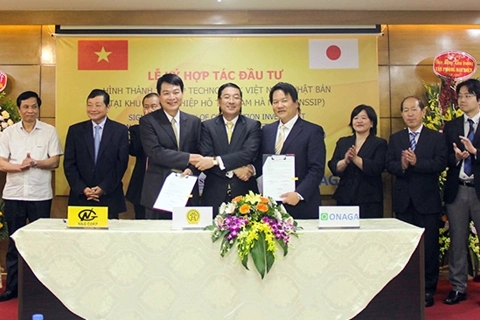
Troy Griffiths went on to say the recent Japanese government US$2.2 billion stimulus package with the core aim of underwriting Japanese manufacturing relocations out of China is another example.
So far, 15 companies including Meiko Electronics, Nikkiso, Fujikin, and Yamauchi have registered to move production to Vietnam. The Japan External Trade Organization (JETRO) confirms six of the 15 are large companies, with the remainder small and medium-sized enterprises (SMEs). Most produce medical equipment, while the others manufacture semiconductors, phone components, air conditioners, and power modules.
Demand for supply
According to Matthew Powell, director of Savills Hanoi, the recently ratified EU-Vietnam Free Trade Agreement (EVFTA) has bolstered global industrial investor confidence in Vietnam.
The property segment most resilient to Covid-19 has further significant growth potential, he said.
Demand continuing to outpace supply underscores the need for further development in key industrial provinces. In reality, occupancy rates have grown significantly since 2018 in key areas Binh Duong, Dong Nai, Long An in the south; Bac Ninh, Hung Yen, and Haiphong in the north.
| Matthew Powell, Director, Savills Hanoi. Photo: Savills Vietnam |

“Supply being the one limiting factor has developers needing to quickly catch up, especially with new developments needing to be close to main routes, ports, and airports. Though this process can be slow, we all need to better manage demand, especially under the Covid-19 situation. Of course, there is much to be done, but all credit to the government and the property sector in doing such a fantastic job attracting these industries,” Matthew Powell commented.
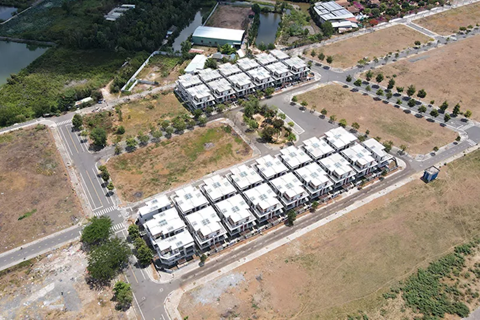
With the expected manufacturing influx out of China in 2021 and 2022, new projects are increasingly vital to accommodate high value manufacturing investments. Dong Nai has eight additional industrial zones (IZs) in planning. An official of Long Thanh district People's Committee recently announced plans to build four extra IZs in the district. Phuoc Binh commune will have two more IZs covering up to 900 ha, with total leasable areas around 500 ha. Tan Hiep and Binh An communes will each develop another IP. Furthermore, ‘rental’ developers such as BW Industrial Development JSC keep expanding, from an initial 130 ha in 2018 to almost 500 ha this year.
In June 2020, Vietnam had 336 Industrial Parks (IPs) over approximately 97,800 ha. Among them, 261 IPs are operational while 75 are under construction. Nationwide, operating IPs have a steady average 76% occupancy.
Smarter manufacturing
The EU-Vietnam Free Trade Agreement (EVFTA) will provide further impetus for Vietnam Industrial’s transition from low-skilled, labor-intensive to higher-value industries.
By enabling the latest production technologies and ramping up workforce training, the Vietnamese government is easing concerns of viability, labor shortages, and rising costs. Moving to a more transparent business environment will help mitigate investor concerns and improve quality.
However, the profiles of countries looking at Vietnam are evolving, resulting in higher skilled labor demand, and increased vocational aptitude. Investing in education and training is essential for Vietnam to properly accommodate higher-value projects.
| John Campbell, Savills Vietnam Industrial Services Manager. Photo: Savills Vietnam |

John Campbell, Savills Vietnam Industrial Services Manager, commented that Industry 4.0 is under global attention and Vietnam is focused on the opportunity. A national strategy, robust legal 4.0 framework, with policies favoring business and industrial communities is vital.
“According to the Central Institute for Economic Management (CIEM), a 4.0 Manufacturing strategy supported by mid-level technology can expect 16% growth by 2030. CIEM research also indicated Vietnam Manufacturing, supported by leading technologies has up to US$14 billion growth potential.
Lenovo and Schneider Electric recently announced a strategic partnership to make smart green solutions for the Chinese manufacturing sector, and both already have a strong presence in Vietnam. As the national economic and Industry 4.0 strategies both develop, these leading companies will increase their presence to meet growing demand”.
The rapid growth in Vietnam Industrial has been powered by a tenfold increase in foreign direct investment (FDI) over the last ten years. However, the country must be increasingly project-selective to successfully move up the value chain, while improving competitiveness to ensure sustainable growth.
This will require continued investment in infrastructure and intermodal transport links; higher education standards; a national skills development plan to increase skilled labour supply; increased focus on attracting priority hi-tech and Smart Manufacturing, while refining FDI incentives and policies. Vietnam, already adapting to these needs, has a clear opportunity to harness the extensive potential of Industry 4.0.