Vietnam must leap ahead through science and technology: Party chief
General Secretary To Lam told Hanoi voters that Vietnam’s future depends on science and technology, calling for digital transformation, reform, and better healthcare.
THE HANOI TIMES — Vietnam’s only path to close the gap with other nations is through science and technology, not traditional industries, General Secretary To Lam told voters on September 23.
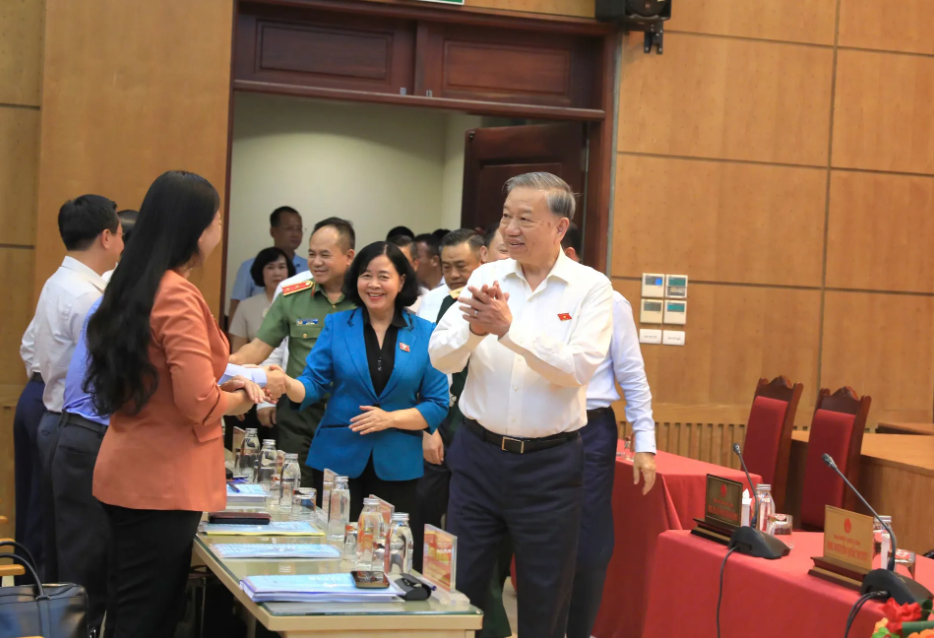
Party Chief To Lam and Hanoi leaders during the meeting with voters on September 23. Photos: Thanh Hai/The Hanoi Times
“Building wealth through traditional industry would take hundreds of years, while advancing through technology could take just a decade,” he said at a meeting with voters from 11 wards, including Ba Dinh, Dong Da and Hai Ba Trung, in Hanoi ahead of the 10th National Assembly session.
He described visions of factories, warehouses and ports that run 24/7 without lights or human labor, achieving high productivity.
He noted that while the national population database has been connected, the next step is to complete the integration, sharing and synchronization of land, health, insurance and financial databases.
A National Data Center is being built to advance this effort, along with stronger measures to safeguard cybersecurity and protect personal data.
The Party chief called on voters to join the Digital Literacy Movement, modeled on President Ho Chi Minh’s mass literacy campaigns.
“Those who know should guide those who do not; children should help their grandparents, uncles, and aunts. Everyone should contribute a little so that the country can achieve digital transformation,” he said.
Voters urge solutions on jobs, digital access
During the meeting, Lam also addressed five major issues raised by voters.
Voter Tran Tuan Khanh said that following the streamlining of the organizational apparatus, a large number of officials, civil servants, and public employees had their positions resolved under Decrees 178 and 67.
Those who left their posts still represent a significant resource, he said, and solutions are needed to enable them to continue contributing in suitable roles that generate value for society, said Khanh.
Voter Nguyen Thi Kim Bai highlighted that many people, especially the elderly, face difficulties in accessing technology. "Without smartphones, they encounter obstacles in using digital public services."
She proposed that policies be introduced to support citizens, particularly the elderly, vulnerable groups, and persons with disabilities, in accessing necessary technology and devices.
In response, the Party Chief urged strict decentralization so that localities can decide, act, and take responsibility instead of waiting for higher-level instructions.
The mindset of government should shift from control to facilitation and service, proactively identifying and addressing difficulties early, rather than waiting for requests.
“If people lack jobs or capital, the government must help; if there is a risk of disease, prevention must come first; if sanitation is poor, wards must organize and guide residents to resolve it. Authorities should not just sit behind paperwork but must accompany and serve the people,” he continued.
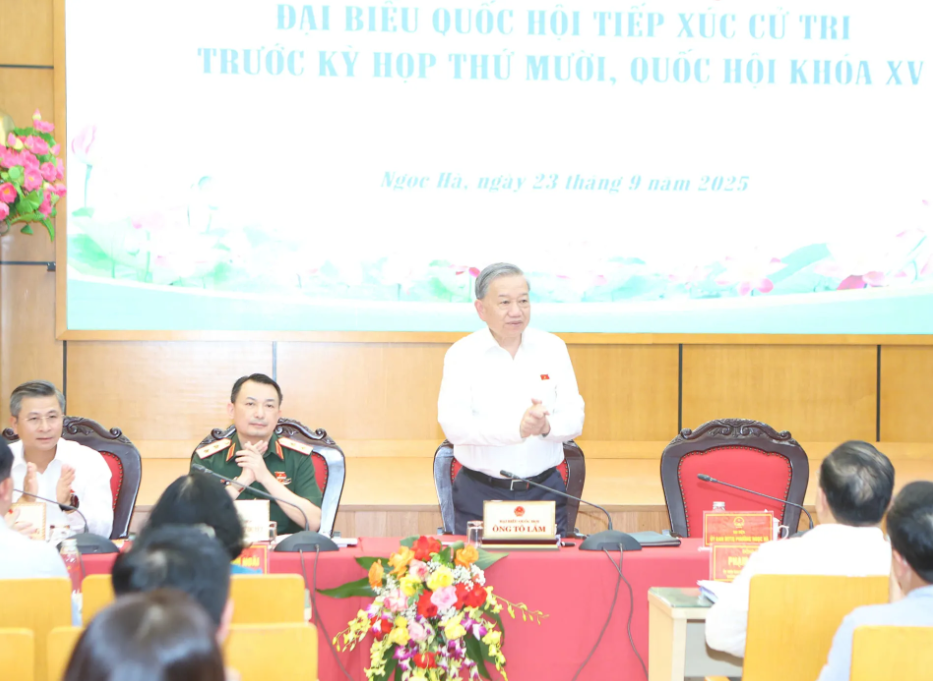
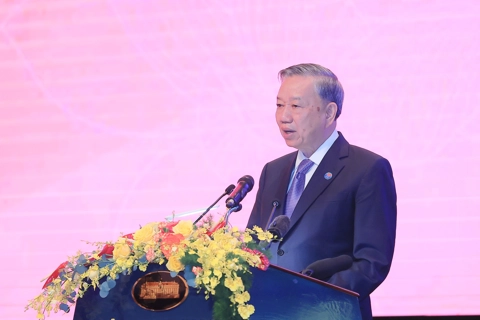
General Secretary To Lam at the meeting.
On administrative reform, he highlighted that voters acknowledge significant progress, with Hanoi among the top nationwide in digital records and online public services, but noted that cumbersome procedures and redundant documents remain
These must be reviewed and removed, with greater use of electronic and population data. Citizens should be served in the simplest way possible, with one ID code solving many needs instead of carrying bulky files,” said Lam.
Voters also raised concerns about shortages of grassroots staff and equipment after organizational restructuring.
According to Lam, this requires rational adjustments to avoid gaps and overlaps, along with policies to attract talent and the courage to let go of those who cannot meet requirements, ensuring a lean and effective system.
“The performance of local governments at two levels must be measured by public satisfaction. As long as people still complain and feel inconvenienced, government performance has not met expectations,” he added.
The ultimate goal is to improve the real quality of life, he said, adding that every socio-economic policy and every growth figure must translate into livelihoods: stable jobs, steady incomes, education for children, and care for the elderly.
Many voters expressed concern over medical costs and quality of care, especially at the grassroots level.
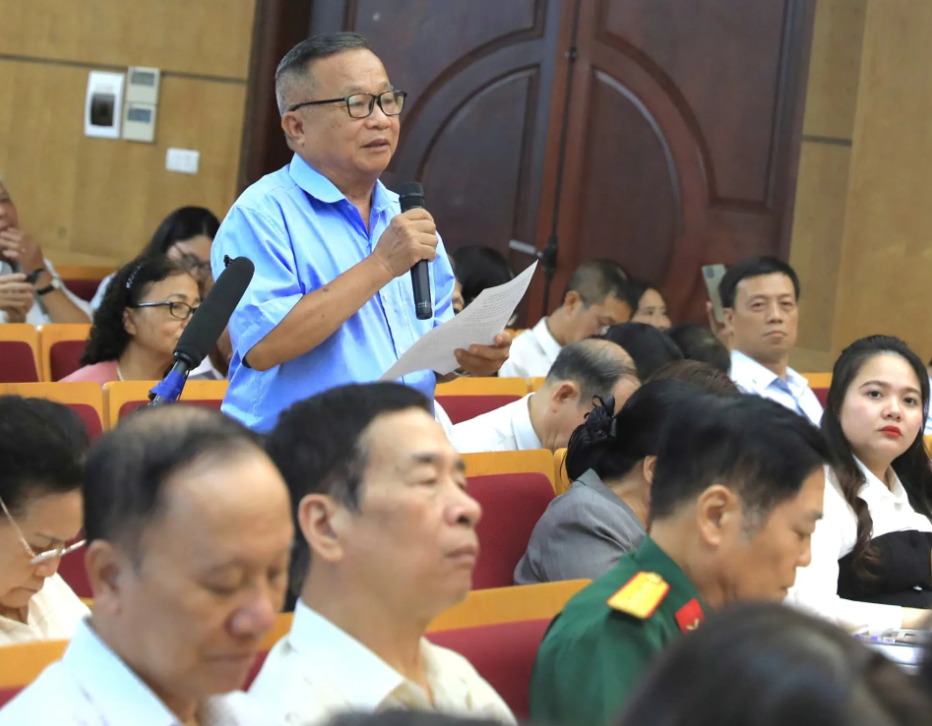
A voter raises question at the meeting.
Lam said that Resolution 72-NQ/TW of the Politburo affirms that healthcare is the foundation of people’s well-being and the country’s sustainable development.
Policies, in this regard, must shift from treatment to prevention, which is always better, less costly, and more beneficial for the community.
Local health systems, he suggested, should track residents’ health by age group such as children, adults and seniors, he noted.
Food safety, Lam added, must be treated as a priority, as counterfeit goods and substandard food remain widespread. One proposal is to build centralized, modern food centers that both ensure sanitation and enhance the city’s image.
He urged a nationwide health movement promoting exercise, nutrition, and disease prevention. “Every citizen should become "their own doctor", taking active steps to live a healthy life,” said Lam.