14TH NATIONAL CONGRESS OF THE COMMUNIST PARTY OF VIETNAM
Log in
Vietnam

Vietnam needs 22,000 additional teachers to make English second language in 2030

Vietnam’s preschools will need 12,000 more English teachers and primary schools an additional 10,000 by 2030 to meet the country’s second-language goal.

THE HANOI TIMES — Vietnam will need 22,000 English teachers at the preschool and primary levels to achieve its goal of making English the country’s second language in schools by 2030, according to the Ministry of Education and Training.

The information was shared on September 22 at a workshop on the draft project “Making English the Second Language in Schools for 2025–2035, with a vision to 2045”.
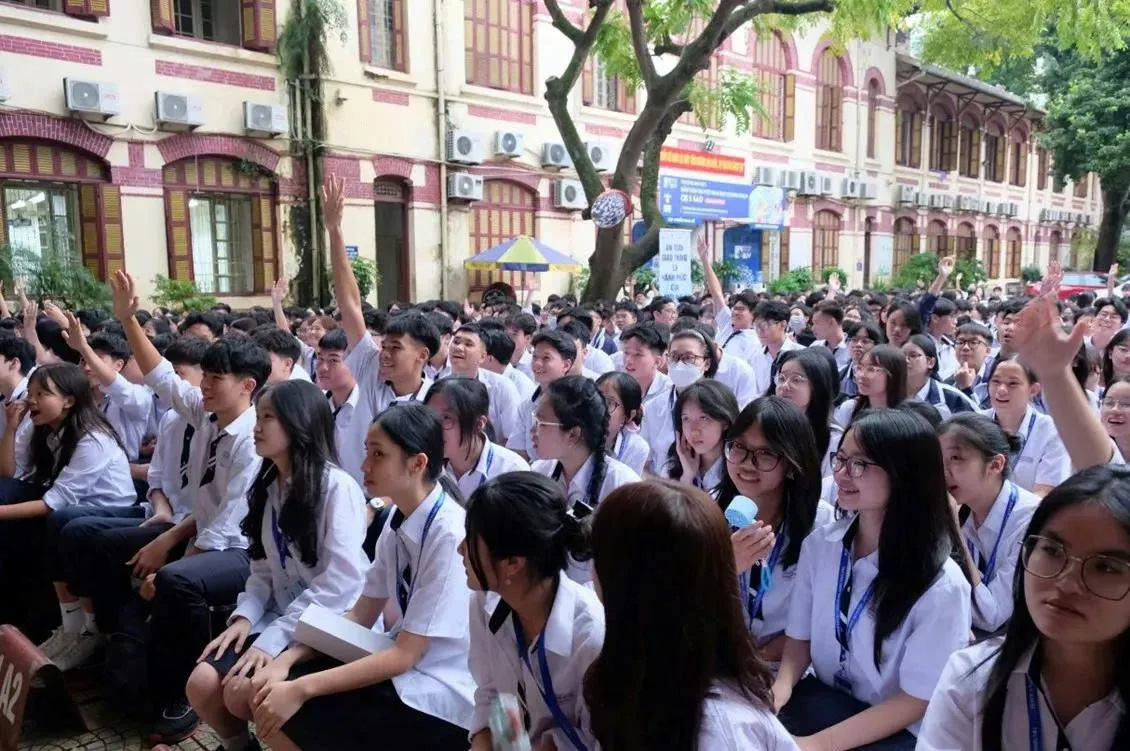
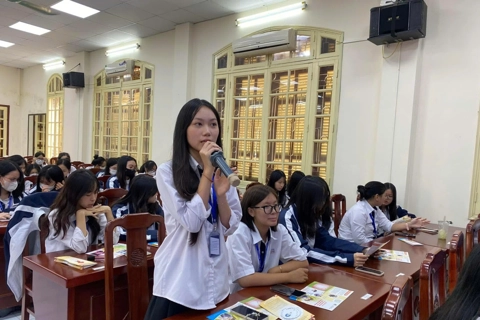
Vietnam requires an additional 22,000 English teachers to achieve second-language goal by 2030. Photo: Kinh te & Do thi Newspaper

Thai Van Tai, Director of the ministry’s Department of General Education, said that Vietnam must add 12,000 preschool teachers and 10,000 primary school teachers to teach English. In total, the country will need to train about 200,000 English teachers.

Vietnam currently has over 1.05 million preschool and general education teachers, with about 30,000 teaching English.

English is a compulsory subject for third graders with certain requirements regarding their peformances and results.

Under Government Decree 222/2025 on foreign language teaching, primary and lower secondary teachers must reach level B2, while upper secondary teachers must reach level C1 in Vietnam’s foreign language competency framework.

According to experts, teacher training and incentives are decisive factors.

Professor Huynh Van Son, Rector of Ho Chi Minh City University of Education, noted that current human resources and technology could meet demand if organized and used effectively.

Deputy Minister of Education and Training Pham Ngoc Thuong said that reforming teacher training and applying technology and artificial intelligence are crucial.

He also highlighted the importance of promoting English-learning movements and replicating successful models in localities.

The project “Making English the Second Language in Schools for 2025-2035 and until 2045” aims for English to be widely used by 2045 in 50,000 schools with about 30 million students and one million teachers and lecturers.

The roadmap has three phases: five years (2025–2030), 10 years (2030–2040) and five years (2040–2045).

It maps out several key solutions such as raising public awareness, improving the legal framework, strengthening the teaching workforce, developing curricula and materials, reforming testing and assessment as well as applying technology and artificial intelligence.

Reactions:
Share:
Trending
Most Viewed
Related news
Stop blaming the English test, start fixing education theories for students

Stop blaming the English test, start fixing education theories for students

30 Jun, 21:39

The 2025 English test in Vietnam's high school graduation exam has sparked heated debate among students, parents, and educators. While many argue the test was too difficult, others believe the real issue lies in outdated approaches to education and training. Is it an unfair test, or does is simply expose long-standing weaknesses in how we prepare students for the future? Let's find out in today's episode of Words on the Street.

Hanoi’s Party chief outlines agenda at voter meeting

Hanoi’s Party chief outlines agenda at voter meeting

The candidates pledge institutional reform, infrastructure upgrades and a stronger focus on science, technology and public services as the capital prepares for the 16th National Assembly term.

Young generation steps up to power climate action

Young generation steps up to power climate action

As climate risks intensify across Southeast Asia, young people are being called upon to move from awareness to action, harnessing technology, creativity and policy engagement to accelerate environmental solutions.

Hanoi positions itself at forefront of implementing key Party resolutions

Hanoi positions itself at forefront of implementing key Party resolutions

The three resolutions on education, healthcare reform and cultural development are closely interconnected and mutually reinforcing, all directed toward building a capital that is cultured, civilized, modern and happy.

Party Chief urges stronger state economy and cultural drive

Party Chief urges stronger state economy and cultural drive

Developing the state economy and Vietnamese culture forms the twin pillars of a unified development strategy, one strengthening material capacity, the other reinforcing cultural and social resilience.

Putting people first: Making happiness Hanoi’s measure of success

Putting people first: Making happiness Hanoi’s measure of success

A central message of the 14th National Party Congress and the 18th Congress of the Hanoi Party Organization (2025-2030) is that people’s happiness must be at the core of development. All policies be grounded in citizens’ legitimate rights and interests, with public satisfaction serving as the ultimate measure of success. 

The flavors of Vietnamese Tet linger around the world

The flavors of Vietnamese Tet linger around the world

From Osaka in Japan to Lorient in France, Vietnamese communities are spreading the spirit of Tet through vibrant cultural celebrations.

Vietnam pledges to enhance tax reforms after EU listing decision

Vietnam pledges to enhance tax reforms after EU listing decision

Vietnam has reaffirmed its strong commitment to meeting international standards on tax transparency and information exchange following the European Union's adding Vietnam to its list of non-cooperative tax jurisdictions.

Tet at the mission: Peach blossoms bloom in Africa

Tet at the mission: Peach blossoms bloom in Africa

Under the dry winds and red dust of Abyei and Bentiu, mission compounds glow with paper blossoms and steaming banh chung, as each square rice cake carries from Vietnam to Africa a message of solidarity, compassion and enduring cultural identity.