Vietnam reports 65% of schools meet national standards in 2024-2025
This result reflects Vietnam’s progress in improving school quality, with rising national standards and clear goals set for the coming years.
THE HANOI TIMES — Vietnam recorded 26,206 schools meeting national standards in the 2024 - 2025 academic year, accounting for 65% of all schools nationwide.
It marks a 54% increase from the 2019-2020 academic year and a 5.5% rise compared to last year.
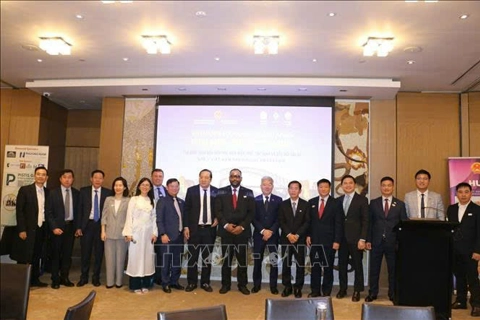
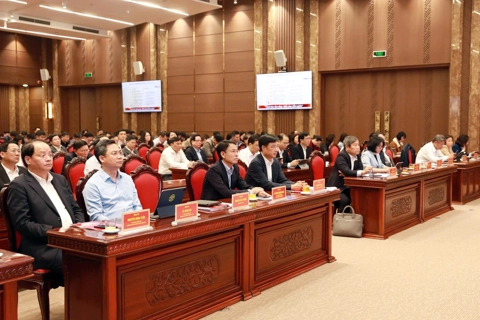
The figures were released by the Ministry of Education and Training on September 19 at a conference reviewing education quality accreditation for 2019-2025 and setting directions for 2026-2030.

The conference overview. Photo: Hanoimoi
The ministry noted that nearly 70% of schools nationwide have undergone external evaluation conducted by independent accreditation bodies.
Alongside the national results, Hanoi’s progress was highlighted at the event. Pham Quoc Toan, Deputy Director of the Hanoi Department of Education and Training, said the city now has 2,954 schools with more than 2.3 million students and aims for 80% of schools to meet national standards by 2025.

Teachers and students of Dai Thinh A Primary School, Quang Minh Commune, Hanoi. Photo: Kinh te & Do thi
He stressed that consistent awareness across all levels, together with strong political commitment, are vital for lasting progress.
Hanoi has required every public and private school to conduct self-assessments while also engaging local authorities, parents, and communities to monitor and support schools.
Looking ahead, the city will intensify communication campaigns and raise awareness among teachers and staff. It will also expand digital transformation and prioritize infrastructure investment for disadvantaged schools to close quality gaps.
Toan also urged the Ministry of Education and Training to revise the criteria for external evaluators, align quality assurance with national standard recognition, and simplify administrative procedures.
He proposed introducing incentives for schools achieving level 4 accreditation, the highest standard in the current quality assessment system.