Vietnam rolls out land management guidebook for two-tier administrative system
In addition to outlining the roles and responsibilities of local authorities, the handbook provides citizens with step-by-step guidance on completing land-related procedures under the new system.
THE HANOI TIMES — The Ministry of Agriculture and Environment has released a handbook to guide the management of land-related matters by the state under the two-tier local government structure.

The cover of the handbook.
The handbook is divided into two main sections, with the first section outlining the roles and responsibilities of People's Councils, People's Committees, their chairpersons, and specialized agencies at the provincial and communal levels in implementing the two-tier governance model.
The second section offers detailed guidance on administrative procedures in the land sector, covering land use planning, land recovery, compensation, support, resettlement, land allocation and leasing, changes in land use purposes, land and property registration, and the issuance of land use rights and ownership certificates for assets attached to land. It also covers the resolution of land disputes.
A 16-step guide outlines the entire land requisition, compensation, and resettlement process. All phases are covered, including developing recovery plans, holding community consultations, issuing notifications, conducting asset inventories, approving compensation plans, and carrying out land handover.
The handbook provides a detailed three-step process for the initial issuance of land use rights certificates and certificates of ownership of assets on land, a task typically managed by commune-level authorities.
It specifies the responsibilities of government agencies and citizens, from submitting documents at the Public Administrative Service Center to the authority reviewing and transferring the dossier to the commune-level People’s Committee for verification and the final issuance of the certificate after financial obligations are fulfilled.

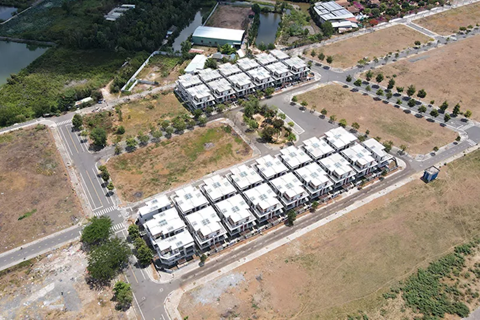
Hanoi from above. Photo: Pham Hung/The Hanoi Times
Processing times are limited to 17 working days for land registration and 20 working days for registration and issuance of the certificate. In mountainous, island, remote, or economically disadvantaged areas, the timeline may be extended to a maximum of 30 working days.
The handbook aims to promote consistency, transparency, and efficiency in land management by explicitly defining the responsibilities of provincial and communal authorities while serving as a practical tool to help local officials better understand regulations, the delegation of authority, and procedural steps.
At the same time, the handbook is intended to support citizens by providing greater clarity on administrative processes, making it easier for them to exercise their rights and fulfill their obligations related to land.
|
Beginning July 1, 2025, 34 provinces and cities in Vietnam officially adopted the two-tier local government system after a trial period. Under this new structure, the local government will operate at two levels: provincial (provinces and centrally governed cities) and communal (communes, wards, and townships). The new system replaces the previous three-tiered structure of provinces, districts, and communes. The restructuring aims to streamline the administrative apparatus, reduce intermediary layers, bring the government closer to the people, and improve overall governance efficiency. |