Vietnam starts construction of US$432 million expressway to China
The expressway will stimulate socio-economic development in four major economic zones in Vietnam: the northern, central, southern, and Mekong Delta regions.
With the attendance of Prime Minister Pham Minh Chinh, Vietnam on April 21 kicked off the construction of a VND11 trillion (US$432 million) stretch of the North-South expressway to China.
| Prime Minister Pham Minh Chinh attends the ground-breaking ceremony of Chi Lang-Huu Nghi section of the North-South Expressway in Lang Son on April 21. Photos: VGP |

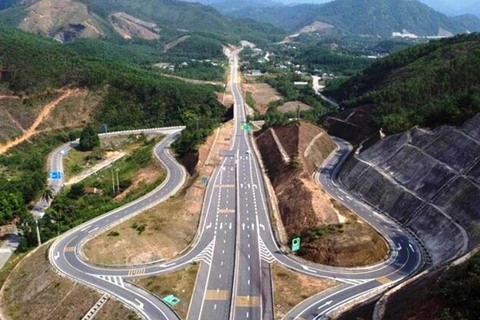
One of the main gateways to China, the Chi Lang – Huu Nghi stretch is the last section of the expressway spanning 32 cities and provinces across the country from the southernmost province of Ca Mau to the northern province of Lang Son, which borders China.
The North-South Expressway East, with an estimated investment of US$58.7 billion, directly affects 62% of the population, connecting 16 airports, 74% of seaports, and 75% of economic zones nationwide.
The BOT (Build-Operate-Transfer) section in Lang Son Province is 60 km long and passes through Lang Son City and the districts of Chi Lang, Cao Loc, and Van Lang. It is so far the largest transport project in the province.
The project is invested under the public-private partnership (PPP), in which 45% of the total investment comes from the state coffer and 55% is funded by the investor – a joint venture led by Ho Chi Minh City-based Deoca Group.
Speaking at the ground-breaking ceremony, Prime Minister Pham Minh Chinh said the project is in line with the government’s transport development strategy by 2030.
It connects two economic zones, the Red River Delta and the northern mountainous region, linking four localities: Hanoi – Lang Son – Cao Bang – Quang Ninh. The route will connect and boost economic links between Vietnam and China and between ASEAN and China.
The section, together with the construction of the Dong Dang-Tra Linh (Cao Bang Province) section, which began on April 1, would be an important route creating two economic corridors, namely Nanning (Guangxi, China) – Lang Son – Hanoi – Haiphong – Quang Ninh and Lang Son – Hanoi – Ho Chi Minh City – Moc Bai.
According to Secretary of Lang Son Party Committee Nguyen Quoc Doan, the Chi Lang – Huu Nghi section will fuel the development of the Dong Dang Border Economic Zone, industry, tourism, and trade in Lang Son Province, making it one of the economic zones in the northern mountainous region.
The expressway is expected to open up development motivations for Cao Bang, Lang Son, Quang Ninh, and Haiphong through seaports while ensuring defense and security.
| The Chi Lang-Huu Nghi section is the last piece of the North-South Expressway. |
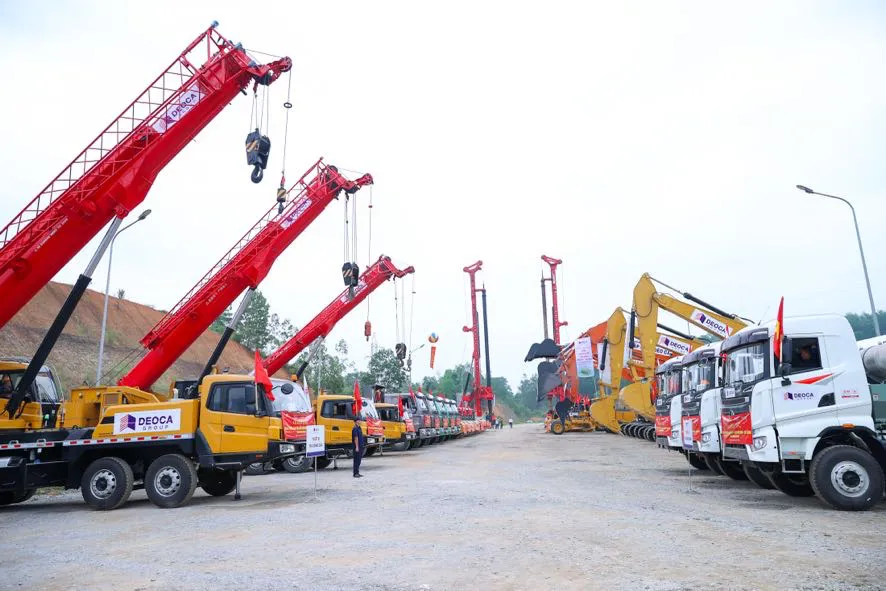
Approved in 2016, the North-South Expressway East is expected to contribute 65.7% of the country’s GDP when completed in 2025. So far, some key sections of the expressway have been delivered.
It helps connect four major economic zones, including the Northern Economic Zone, the Central Economic Zone, the Southern Economic Zone, and the Mekong Delta Economic Zone.
The expressway is expected to significantly boost socioeconomic development, increase commodity competitiveness, facilitate connectivity with modern transportation, and promote regional trade.
The expressway has at least four lanes in rugged mountain terrain and 10 lanes in economic centers. The average speed is 100km/hour.