14TH NATIONAL CONGRESS OF THE COMMUNIST PARTY OF VIETNAM
Log in
Property

Vietnam to build 4,000km expressway via PPP: PM

The financing mechanism under the private-public partnership (PPP) model would be essential to realize this goal.

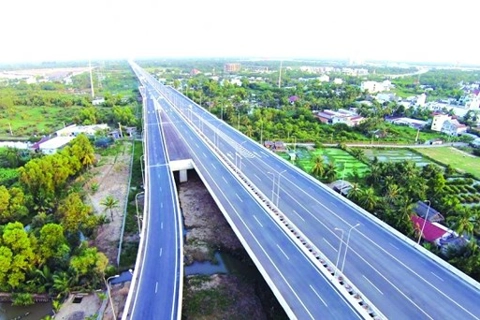
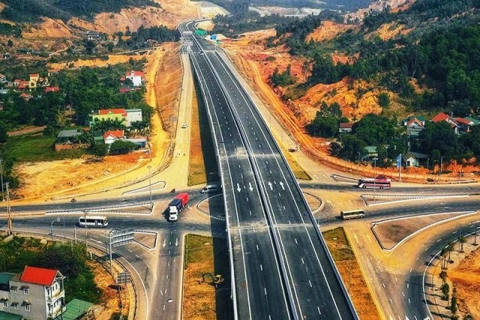
The Vietnamese Government has set the timeline for 4,000 kilometers connecting each region with the national expressway network, which will be ready by 2030.

The construction project, under the Public-Private Partnership (PPP) performance, is part of Prime Minister Pham Minh Chinh’s conclusion on the plan to expand Vietnam’s expressway network, which covered nearly 1,200 kilometers of expressway built in the past 20 years, in the 2021-2025 period, with a vision to 2030.

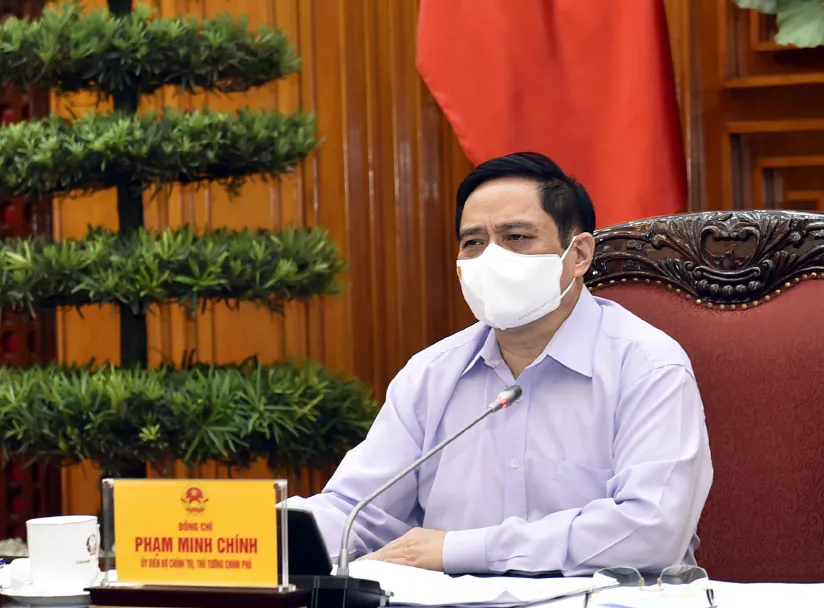
 Prime Minister Pham Minh Chinh at a recent meeting with representatives of the Ministry of Transport. Photo: VGP

“This is a political mission and our responsibility before the Party, the State and the People requiring the participation of the entire political system,” stressed Chinh, saying PPP contracts would be the main financing mechanism.

“State budget could only fund a part of the capital demand for such huge works, and in this case, investment from private sectors would be a decisive factor,” he added.

The Prime Minister has called for balanced investment among regions, especially in the Mekong Delta, North West, Central Highlands, South Central, and the key economic zones, while focusing on major projects such as the Eastern North-South Expressway, ring roads in Hanoi, and Ho Chi Minh City, that are in line with national development strategy and ensure investment efficiency.

To realize these ambitious targets, Chinh noted the necessity to change the mindset in state management and push for greater decentralization in making investment-related decisions.

“Provinces and cities that want to have expressway have to actively join the investment process and be responsible for the site clearance works,” Chinh said.

“The government would support a part of investment cost with supporting policies,” he added.

“Accountability is essential throughout the process to prevent corruption and groups of interest, with the interests of the people and the state being put at the foremost,” Chinh continued.

Among specific targets, Chinh urged the Ministry of Transport (MoT) to complete the Eastern North-South Expressway by 2025, taking the total expressway length in Vietnam to 3,000 km. The figure would eventually rise to 5,000 km five years later.

Under the MoT’s draft 10-year plan (2021-2030) development plan, Vietnam would require an investment of VND825 trillion (US$35.75 billion) to fulfill the target of having 5,000 kilometers of the expressway.
Reactions:
Share:
Trending
Most Viewed
Related news
Revised housing roadmap doubles social housing targets for Hanoi

Revised housing roadmap doubles social housing targets for Hanoi

Vietnam’s push to accelerate affordable housing has significantly raised expectations for major cities, with Hanoi now tasked with delivering a far larger volume of social homes as part of the national goal to build more than one million units by 2030.

Social housing supply exceeds targets in 2025 as Vietnam tackles property imbalances

Social housing supply exceeds targets in 2025 as Vietnam tackles property imbalances

Vietnam surpassed its social housing construction target in 2025, marking progress in housing policy, but supply mismatches, high prices and legal bottlenecks continue to weigh on the real estate market.

Online building permits promise faster approvals and transparency in Vietnam

Online building permits promise faster approvals and transparency in Vietnam

Lengthy and complex construction procedures may soon be replaced by faster online approvals as Vietnam rolls out reforms to ease housing pressures and improve transparency in land management.

Hanoi apartment market set for steady growth as suburban supply reshapes demand

Hanoi apartment market set for steady growth as suburban supply reshapes demand

Hanoi’s primary apartment market is entering a more measured expansion phase, driven by growing supply in outlying areas and softer price movements, with infrastructure upgrades and end-user demand expected to anchor the primary apartment market through 2026.

Hanoi plans 39 social housing projects to meet 2030 affordable housing target

Hanoi plans 39 social housing projects to meet 2030 affordable housing target

Hanoi is accelerating its social housing program to expand affordable supply for workers and low- to middle-income residents while managing rising costs and price pressures.

Vietnam real estate market poised for new growth cycle in 2026

Vietnam real estate market poised for new growth cycle in 2026

With more open institutions and stronger trust, real estate will remain a key sector supporting double-digit GDP growth from 2026.

Affordable housing to boost Vietnam’s real estate market

Affordable housing to boost Vietnam’s real estate market

Affordable housing should be viewed as a long-term socioeconomic policy rather than a short-term support measure.

Van Cao – Hoa Lac metro line opens prospects for Hanoi’s urban development

Van Cao – Hoa Lac metro line opens prospects for Hanoi’s urban development

The line is a strategic infrastructure project that plays a key role in shaping urban development and sustainable transport in the new phase.