Vietnam to complete 5 major road projects before 2025
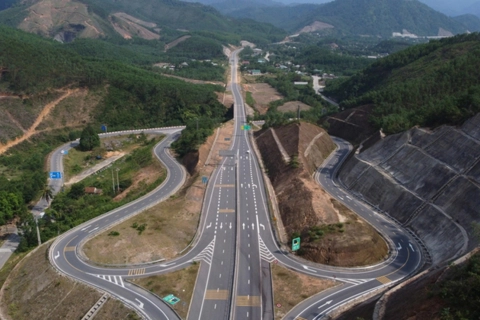
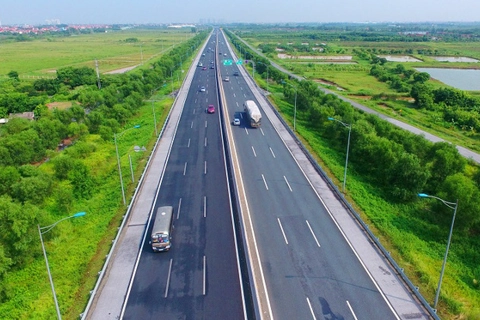
The Government sets the target of doubling the total length of the expressway in Vietnam to 2,000 kilometers in the 2021-2025 period.
The Vietnamese Government is determined to complete five major road projects with a total length of 500 kilometers before 2025.
| Prime Minister Pham Minh Chinh at the meeting. Photo: VGP |

Prime Minister Pham Minh Chinh gave the remarks at an online meeting with localities on March 1 on the feasibility study for projects of national priorities, including the Ring road No.4 of the Hanoi metropolitan area, the Ring road No.3 in Ho Chi Minh City, expressway Chau Doc - Cantho – Soc Trang; expressway Khanh Hoa – Buon Me Thuot; and expressway Bien Hoa – Vung Tau.
According to Chinh, infrastructure development, including roads, remains one of the three strategic breakthroughs for Vietnam’s sustainable growth.
“The Government sets the target of completing 2,000 kilometers of expressways in the 2021-2025 period,” he said.
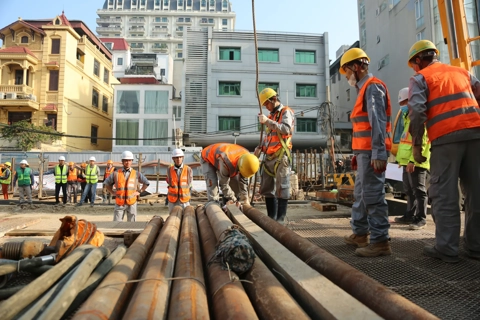
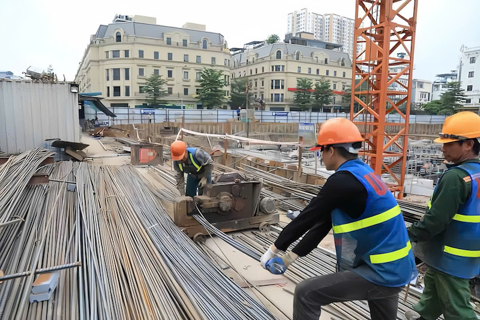
Chinh noted at present, over 700 kilometers of expressways are being constructed as part of the mid-term investment plan, and work on the five projects being discussed should kick off as soon as the feasibility study is done.
“The Government calls for the determination of provinces/cities and ministries in completing the task,” Chinh said, referring to the fact that Vietnam only has built around 1,000 kilometers of the expressway in the past 20 years.
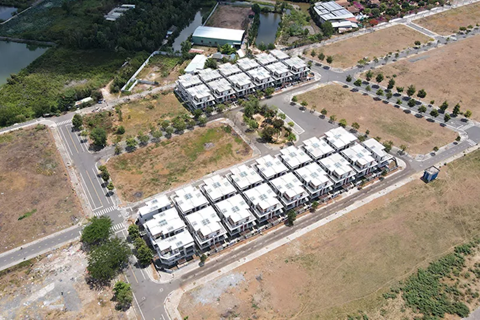
In this regard, Chinh expected the local administrations to change the mindset in clearing hurdles for implementing these projects, especially in site clearance and resettlement of affected households to avoid potential delays.
He called for the use of a public-private partnership financing mechanism to further attract investment capital from the private sector in infrastructure development.
“The expressway should take the shortest and straightest route possible, instead of running parallel to existing roads or through residential areas,” he said, noting this would help save costs for site clearance and also create new spaces for development.
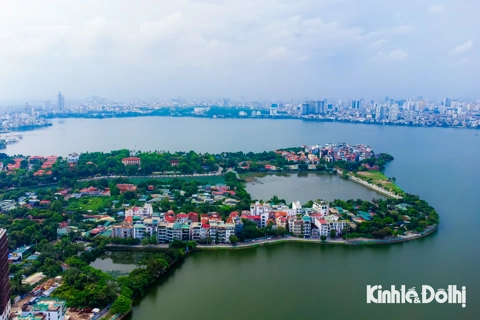
For Hanoi, the Ring road No.4 with a length of 98 kilometers that connects 14 districts from three northern cities/provinces of Hanoi, Hung Yen, and Bac Ninh, is seen as the growth driving force for both Hanoi and the capital metropolitan area. The construction of the bypass, estimated in the range of US$4.56-5.86 billion, would not only address traffic congestion but also open up room for further economic linkage and trade cooperation among Hanoi and other cities/provinces of Hung Yen, Bac Ninh, Vinh Phuc or Bac Giang. The project is currently under the feasibility study process and scheduled to submit to competent authorities for review. Covering an area of more than 24,000 square kilometers and an estimated population of 22 million, the Hanoi metropolitan area, with Hanoi as the core city, includes provinces of Vinh Phuc, Hung Yen, Bac Ninh, Hai Duong, Ha Nam, Hoa Binh, Bac Giang, Phu Tho, and Thai Nguyen. |