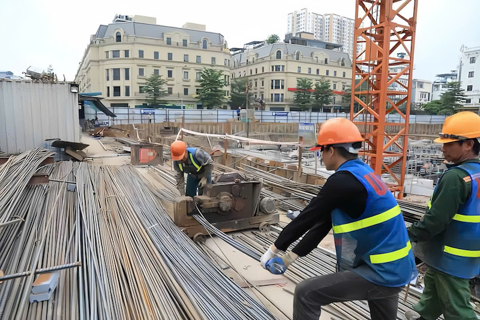
Vietnam to speed up construction of North-South expressway in 2020
By changing the form of investment, construction of the expressway could start in the third quarter of 2020 instead of the first quarter of 2021 at the earliest.
The Vietnamese Ministry of Transport (MoT) is expected to change the financing format of three sub-projects under the Eastern North- South expressway project from public private partnership (PPP) to public investment, and start construction right in the third quarter of 2020, according to the Government Portal.
.jpg)
Such change in the investment form is due to the negative impacts of the Covid-19 pandemic on the economy, said a representative of MoT’s PPP Department, adding the credit channeled for infrastructure projects would become limited in the current situation.
At present, domestic commercial banks are reducing the ratio of short-term capital used for mid- and long-term lending, in turn impacting the eight sub-projects under the PPP format.
The Eastern North-South expressway project, which is of national priority for investment in the 2017 – 2020 period, includes 11 sub-projects with a total length of 654 kilometers running through 13 provinces and cities. As per the initial plan, three would be financed by the state budget and eight under the PPP and build-operate-transfer (BOT) formats.
The MoT’s decision would mean the expressway project now consists of six projects to be funded by the state budget and other five under the PPP format, however, the MoT representative hinted more may be turned into state budget-funded projects in the future.
The 11 sub-projects are estimated to cost a total of VND118 trillion (US$5.04 billion), including VND55 trillion (US$2.35 billion) in state capital to be pumped into three public investment projects, and counterpart funds for the other eight projects.
Once three PPP sub-projects are turned into state budget-sourced projects, the MoT would proceed with the procurement process immediately for the construction to start right in the third quarter of 2020.
Meanwhile, sub-projects under the PPP format would need to go through the procurement process which would last at least six months. Therefore, construction could only start in the first quarter of 2021 as the earliest.
The MoT proposed using part of the VND55 trillion for the three new state budget-sourced projects, and looking for other sources of capital in the 2021 – 2025 period.
In a government meeting on March 12, Prime Minister Nguyen Xuan Phuc said the acceleration of major infrastructure projects holds significant meaning amid negative impacts from Covid-19 pandemic on the economy.
As of present, over 1,000 kilometers of expressway have been built throughout the country, while an addition of 900 kilometers are set to be completed by end-2021.
In the 2021-2025 period, Vietnam targets to have at least 2,000 kilometers of expressways and by 2025, the figure would be 4,000 kilometers stretching from the northern province of Lang Son to the southernmost province of Ca Mau.
Including the Eastern North-South expressway, Vietnam would have four major transportation routes across the country, including National highway No.1, Ho Chi Minh highway, and coastal highway.