Property
Vietnam’s industrial real estate draws investors amid global uncertainty: JLL
Geopolitical uncertainty, free trade agreements, and rising middle class are considered Vietnam`s advantages.
Global uncertainties, mostly the US – China trade tensions are drawing more international real estate investors’ interest to Southeast Asian countries, with Vietnam’s industrial sector a key focal point.
Accordingly, geopolitical uncertainty, free trade agreements, and rising middle class would be major factors catching more foreign investors’ interests, according to JLL, a leading professional services firm that specializes in real estate and investment management.
“The current trade tensions have led commentators to believe that Vietnam will benefit as companies look to redirect their supply chains to Southeast Asian countries,” said Khanh Nguyen, Senior Director, Capital Markets, JLL Vietnam.
Vietnam posted US$9.1 billion worth of disbursement for foreign direct investment (FDI) in the first half of 2019, up 8% on year. Meanwhile, the number of newly registered projects hit 1,723 worth US$7.41 billion, up 63% on year in terms of quantity, according to the Ministry of Planning and Investment.
A series of free trade agreements the country has signed over the past years, such as the Comprehensive and Progressive Agreement for Trans-Pacific Partnership (CPTPP) and the EU-Vietnam Free Trade Agreement (EVFTA) would be factors driving Vietnam’s economy forward.
Meanwhile, the rising middle class and large labor force have resulted in growing demand for consumer goods.
“Much of Vietnam’s strong growth is underpinned by fundamentals such as a young population and a big middle class with increasing domestic consumption,” Khanh said. “The manufacturing industry has been a significant driver of growth this year.”
Regarding geographic position, JLL has analyzed that the yield of Vietnam’s industrial property sector varies around 11-12%, the highest in Southeast Asia.
A report by JLL showed that an additional area of 18,116 ha of industrial land would be added to the supply of industrial property in the northern key economic zone by end-2020, offering investors with abundant stock after 2019.
Manufacturing shift
Industrial and logistics assets in particular are attracted interest as companies look to shift manufacturing away from China to avoid US tariffs. The average price for industrial land in Southern Vietnam is at US$95 per square meter per lease term, up 15.8% from a year ago, according to a JLL report.
“Investors are actively looking into joint ventures with local industrial developers, or the acquisition of land bank and operating assets,” says Khanh. “There has always been a strong demand for industrial spaces as companies have long been attracted to Vietnam’s high productivity and low labor costs. But the US-China trade tension has accelerated the urgency for businesses to relocate.”
As a result, Sharp has announced plans to build a new plant in Vietnam, while American shoe company Brooks Running is moving its production from China to its southern neighbor.
Apple supplier Foxconn has expanded its presence in Vietnam, acquiring a local component manufacturer in July after getting the rights to use a factory in February. Even Chinese manufacturers are considering Vietnam – nearly 70% of 33 Chinese companies surveyed which are looking to expand overseas are choosing Vietnam as a base, according to research from Nikkei Asian Review.
But manufacturers who moved to Vietnam have groused about the headache of finding enough skilled workers and an adequate and sophisticated enough supply chain that manufacturers are used to in China, Khanh said, adding that infrastructure could struggle to keep up as more manufacturing business gets diverted to Vietnam.
“Many infrastructure projects in Vietnam face delays due to land compensation and funding. To attract more foreign investment, reap the benefits of companies moving here and stay ahead of the curve, Vietnam would need to improve its infrastructure network and the process of cross border trading,” she noted.

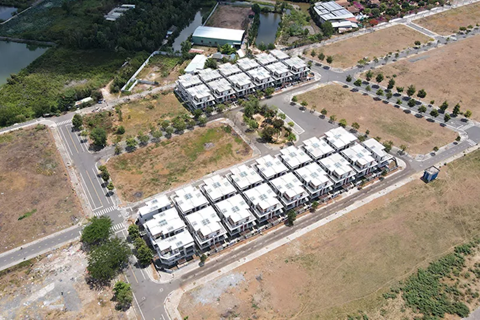
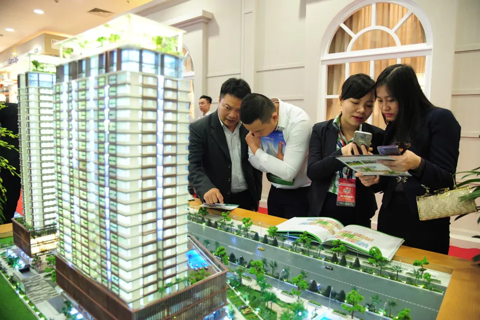
Vietnam's industrial real estate draws foreign investors. Photo: JLL
|
Accordingly, geopolitical uncertainty, free trade agreements, and rising middle class would be major factors catching more foreign investors’ interests, according to JLL, a leading professional services firm that specializes in real estate and investment management.
“The current trade tensions have led commentators to believe that Vietnam will benefit as companies look to redirect their supply chains to Southeast Asian countries,” said Khanh Nguyen, Senior Director, Capital Markets, JLL Vietnam.
Vietnam posted US$9.1 billion worth of disbursement for foreign direct investment (FDI) in the first half of 2019, up 8% on year. Meanwhile, the number of newly registered projects hit 1,723 worth US$7.41 billion, up 63% on year in terms of quantity, according to the Ministry of Planning and Investment.
A series of free trade agreements the country has signed over the past years, such as the Comprehensive and Progressive Agreement for Trans-Pacific Partnership (CPTPP) and the EU-Vietnam Free Trade Agreement (EVFTA) would be factors driving Vietnam’s economy forward.
Meanwhile, the rising middle class and large labor force have resulted in growing demand for consumer goods.

Khanh Nguyen, Senior Director, Capital Markets, JLL Vietnam. Photo: JLL
|
“Much of Vietnam’s strong growth is underpinned by fundamentals such as a young population and a big middle class with increasing domestic consumption,” Khanh said. “The manufacturing industry has been a significant driver of growth this year.”
Regarding geographic position, JLL has analyzed that the yield of Vietnam’s industrial property sector varies around 11-12%, the highest in Southeast Asia.
A report by JLL showed that an additional area of 18,116 ha of industrial land would be added to the supply of industrial property in the northern key economic zone by end-2020, offering investors with abundant stock after 2019.
Manufacturing shift
Industrial and logistics assets in particular are attracted interest as companies look to shift manufacturing away from China to avoid US tariffs. The average price for industrial land in Southern Vietnam is at US$95 per square meter per lease term, up 15.8% from a year ago, according to a JLL report.
“Investors are actively looking into joint ventures with local industrial developers, or the acquisition of land bank and operating assets,” says Khanh. “There has always been a strong demand for industrial spaces as companies have long been attracted to Vietnam’s high productivity and low labor costs. But the US-China trade tension has accelerated the urgency for businesses to relocate.”
As a result, Sharp has announced plans to build a new plant in Vietnam, while American shoe company Brooks Running is moving its production from China to its southern neighbor.
Apple supplier Foxconn has expanded its presence in Vietnam, acquiring a local component manufacturer in July after getting the rights to use a factory in February. Even Chinese manufacturers are considering Vietnam – nearly 70% of 33 Chinese companies surveyed which are looking to expand overseas are choosing Vietnam as a base, according to research from Nikkei Asian Review.
But manufacturers who moved to Vietnam have groused about the headache of finding enough skilled workers and an adequate and sophisticated enough supply chain that manufacturers are used to in China, Khanh said, adding that infrastructure could struggle to keep up as more manufacturing business gets diverted to Vietnam.
“Many infrastructure projects in Vietnam face delays due to land compensation and funding. To attract more foreign investment, reap the benefits of companies moving here and stay ahead of the curve, Vietnam would need to improve its infrastructure network and the process of cross border trading,” she noted.