Who is transforming the lives of millions of children in Vietnam?
The National Assembly's decisions show a strong and growing commitment to ensuring every child in Vietnam can grow up safe, healthy and ready to thrive, demonstrating how policy can shape a better future.
THE HANOI TIMES — Vietnam’s National Assembly has made some of the most far-reaching reforms for children in its history, reforms that UNICEF says are already improving the lives of millions.
Michaela Bauer, Deputy Representative of UNICEF Vietnam, shared the assessment in an interview with The Hanoi Times as the two sides mark 50 years of Vietnam-UNICEF cooperation (1975–2025).
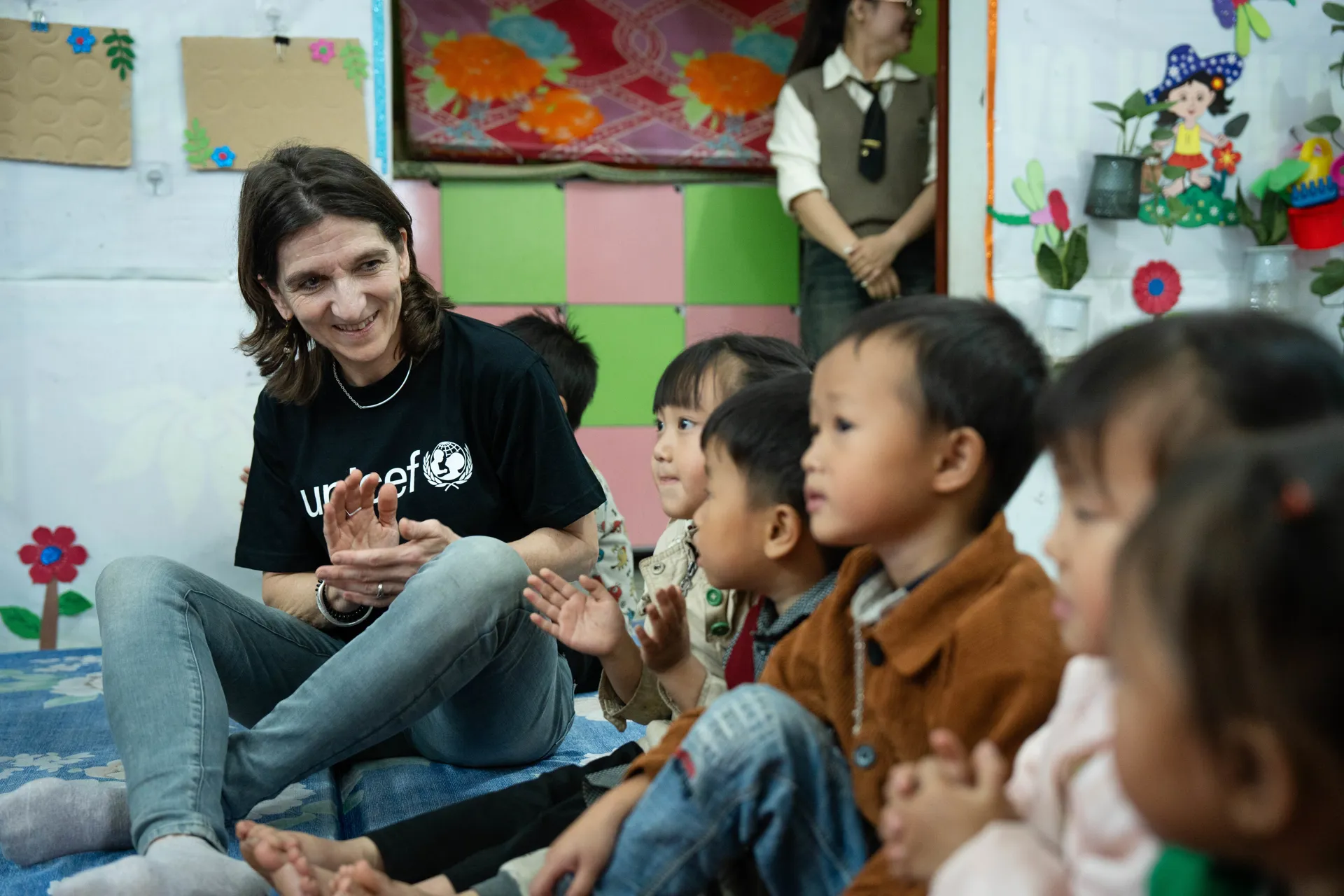
Michaela Bauer, Deputy Representative, UNICEF Vietnam, with children in Vietnam.
“In recent years, the National Assembly has taken truly transformative steps to advance children’s rights. These aren’t just legal milestones, they'are already making a real difference for millions of children,” said Bauer.
She named a number of laws on children, including the Law on Children (2016) that lays the foundation for child protection, participation and welfare, aligning Vietnam’s legal system with the Convention on the Rights of the Child. It was a major step forward in recognizing children not just as beneficiaries, but as rights holders.
The Law on Education (2019), followed by the Politburo’s recent decision and Resolution No. 217/2025/QH15, to waive tuition fees for all students in public schools, from preschool to high school, is historic. It’s hard to overstate the impact: more than 23 million children now have greater access to education, regardless of their families’ income.
The Law on Justice for Minors (2024) is another breakthrough. It changes how the justice system treats children under 18, whether they conflict with the law or are victims of harm, ensuring they’re treated with dignity, care and in ways that reflect their age and needs.
The NA’s Resolution 121/2020/QH14 on strengthening enforcement against child abuse and violence, followed by Decision 1472/QĐ-TTg, has led to more targeted and effective protection measures. It shows how oversight can lead to real change.
“These decisions reflect a deep and growing commitment to ensuring that every child in Vietnam, no matter their background, can grow up safe, healthy and ready to thrive,” Bauer said. “As someone who works closely with partners across sectors, I find it inspiring to see how policy can truly shape a better future for children.”
National Assembly’s role in shaping child rights laws

Joy on the faces of children in Danang, Vietnam. Photo: UNICEF Vietnam
The UNICEF official stressed that the NA has played a central role in shaping Vietnam’s legal and social welfare systems, especially in ensuring that every child can enjoy their rights to development, protection and participation.
“Over the years, we’ve had the opportunity to work closely with the NA and various of its Committees, in particular its Committee for Culture and Social Affairs, in advancing a child-focused legislative agenda,” Bauer stated
Key laws such as the Law on Children, the Law on Education and the Labor Code, as well as the more recent Law on Justice for Minors, have laid a strong foundation for protecting and promoting children’s rights.
The NA’s laws and resolutions are more than just legal safeguards and policy guidance. They reflect a deep commitment to translating Vietnam’s obligations under the Child Rights Convention, which it ratified 35 years ago into reality by further advancing a society where children have rights and are safe, supported and empowered.
The Assembly’s oversight role on children’s rights has also been crucial. One moment that stands out is the NA’s 2019 oversight mission on child abuse and violence. It led to Resolution 121, calling for stronger enforcement, followed by the Prime Minister’s Decision 1472/QĐ-TTg, which launched a national action plan. This sequence of actions shows how the NA turns concern into concrete change.
What is also noteworthy is the NA’s proactive stance on emerging challenges, such as digital transformation, artificial intelligence, and climate change. By embedding child rights into new laws and resolutions, the NA is helping Vietnam protect children from evolving risks while harnessing the new opportunities by promoting digital inclusion.
Through public hearings, oversight missions and national debates, the NA is also raising public awareness and strengthening accountability. Its leadership continues to guide Vietnam’s legal and social systems to evolve in line with global standards and with the changing needs of its youngest citizens.
In this regard, Vietnam’s journey offers powerful lessons for countries striving to build inclusive and sustainable social welfare systems, especially those looking to place children at the heart of development, Bauer emphasized.
One of the most inspiring aspects is how Vietnam has managed to combine economic growth with social equity. The country’s commitment to child-centered development is not just a policy choice, it’s a vision for the future.
The second key point is investing across the life cycle. Vietnam shows that early and sustained investment in children’s health, education, nutrition, and protection yields the highest returns for human capital. It’s a smart and compassionate strategy.
The next one is an integrated and rights-based approach. By embedding equity, inclusion, and child participation into policies, Vietnam ensures that vulnerable groups are not left behind. This approach strengthens social cohesion and resilience.
Additionally, forward-looking legislation is impressive. Laws addressing digital safety, mental health and climate resilience demonstrate that legislation can be both responsive and preventive - anticipating future challenges while protecting today’s children.
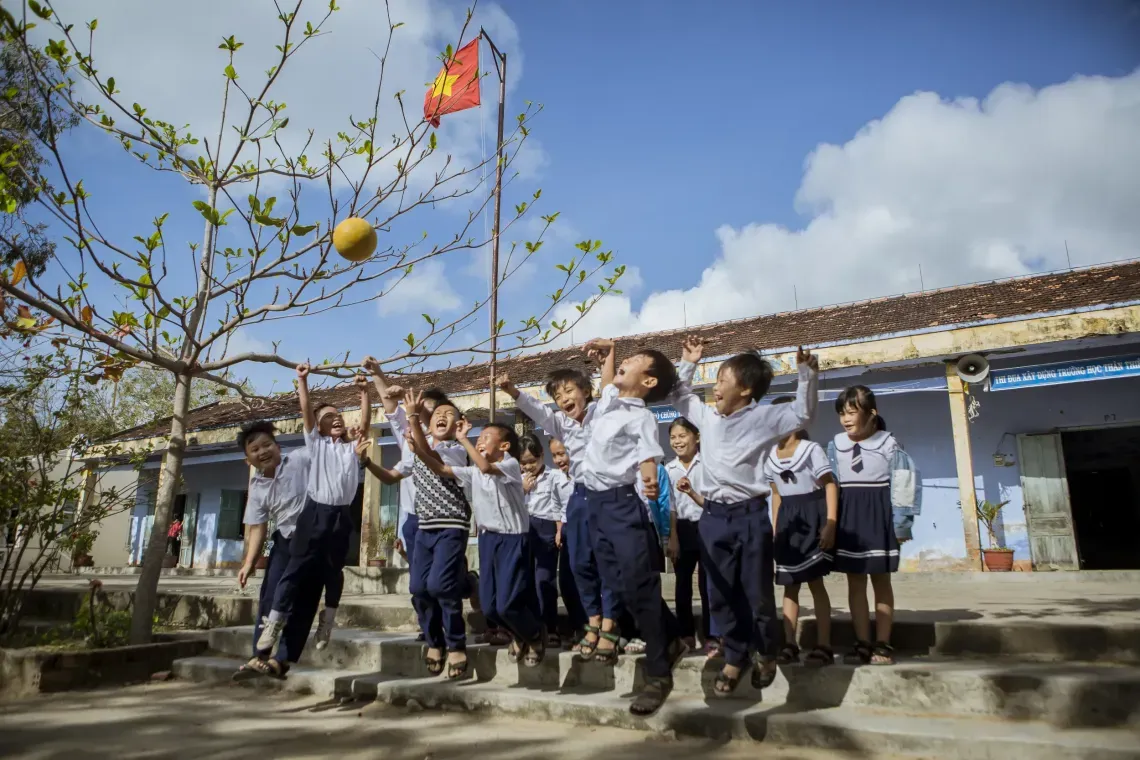
Vietnam's National Assembly has made legal milestones that enable children to grow up safe, healthy and ready to thrive. Photo: Truong Viet Hung/UNICEF Vietnam
Meanwhile, child-sensitive planning and budgeting is another issue in which integrating children’s rights into national planning and spending, especially in the upcoming Socio-Economic Development Plan (SEDP) 2026-2030, helps ensure that progress is measurable and sustainable.
Strong partnerships and accountability are among the key factors, as collaboration between the National Assembly, government ministries, and development partners has been crucial to Vietnam’s success. It builds trust, transparency and impact.
What stands out most is this: when children are placed at the center of national development, societies become more resilient, equitable and future-ready. Vietnam’s experience is a testament to that and it’s a story worth sharing with the world, Bauer underlined.