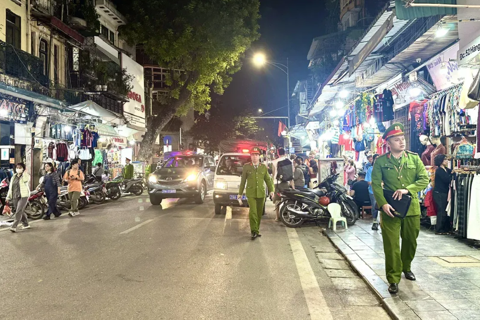
Hanoi stops on-site dining in Hai Ba Trung District
The move came after some areas of the district were placed at a higher risk for serious infection.
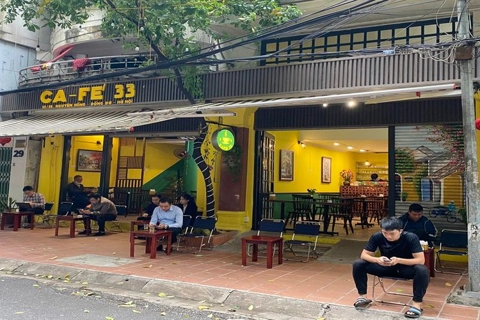
The People’s Committee of Hai Ba Trung District and several other locations in Hanoi have ordered the temporary halting of on-site dining at restaurants and in-person study, from December 19 noon, as Covid-19 cases surge.
The move came after some areas of the district were placed at a higher risk for serious infection.
The coronavirus situation in the districts has been progressing in a complicated way, with new outbreaks being detected in many wards, according to local authorities.
The district People's Committee has said that all non-essential activities, including sports and physical exercise activities, would be suspended.
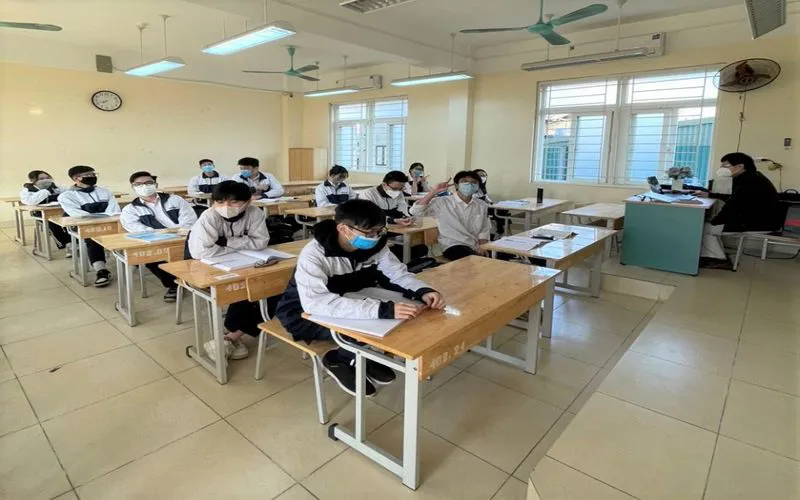
High-school students at Tran Nhan Tong High School, Hai Ba Trung District were on the first day back to school [December 6]. Photo: Nam Du |
Restaurants, food, and beverage establishments are still allowed to open for delivery and must be closed before 9:00 pm every day. Wet markets are also banned.
Twelfth graders, students in vocational schools, and continuing education facilities will switch to online classes until further notice.
As a coronavirus prevention measure, the local authorities would ban gatherings of more than 20 people in a room and more than 10 people in public places.
Activities that require in-person participation can allow no more than 20 people at a time, and they will have to submit medical declarations through QR codes. All participants are required to be fully vaccinated or have recovered from Covid-19 and tested negative for the virus within 72 hours.
Accommodation facilities like hotels must not exceed half their maximum capacity, and their owners and employees must either be fully vaccinated or have recovered from Covid-19. Groups going to tourist attractions must not exceed ten people.
All local residents are advised to stay home, go out only for very essential reasons and avoid large gatherings.
On December 13, Dong Da District in Hanoi’s downtown also suspended on-site dining and large gatherings.
Hanoi as a whole has recorded nearly 25,000 Covid-19 cases since the fourth coronavirus wave broke out in late April.
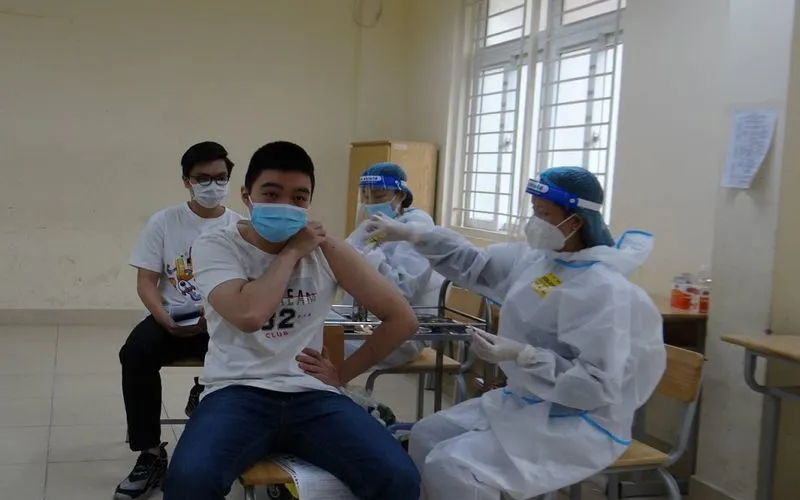
Hai Ba Trung District organizes vaccination against Covid-19 for children under 18 years old at Tran Nhan Tong High School. Photo: Linh Nguyen |
Vietnam’s health ministry has confirmed more than 1.5 million Covid-19 cases in the fourth coronavirus wave, with over 29,350 deaths. Both the infections and deaths have been on the rise recently, with around 15,000 new cases daily.
Compared to the previous month, the number of community transmission cases and the number of severe cases in the country has risen by 186.4% and 62.2%, respectively.
Therefore, the Ministry of Health has just proposed localities stop all non-essential activities with large gatherings during the incoming new year holidays due to recent Covid-19 surges.
In a document sent to the Government Office on December 18, the Ministry of Health stated the number of Covid-19 cases in the community has been rising, especially in areas with high population and traffic density.
The Omicron variant circulating around the world is also a concerning variable, despite Vietnam having recorded no such infection, it said, stressing that essential activities for economic development and production should be sustained, while other activities could keep under certain conditions, or be suspended.
"People should only go to places with large gatherings when it's so essential, avoid parties and reduce the number of people in meetings, especially in the coming times," the document said.