Hanoi greenlights Olympic sports city and Red River boulevard to drive next growth phase
The approval of two landmark projects underscores Hanoi’s push to unlock new growth engines, reshape its urban structure and accelerate its ambition to become a green, smart and globally connected capital.
THE HANOI TIMES — Hanoi has approved the investment policy for two strategic projects, including the Olympic Sports Urban Area in the southern part of the city and the Red River Landscape Boulevard, positioning them as key drivers for growth, urban transformation and Hanoi’s long-term development vision.
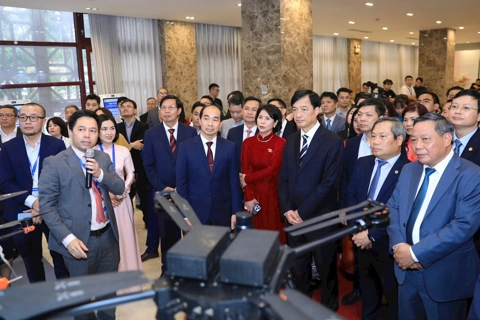
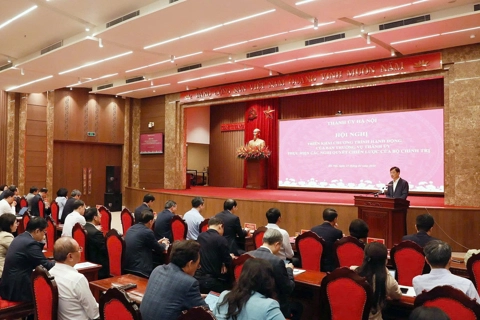
The two projects were discussed and endorsed at a thematic conference by the 18th Hanoi Party Committee Executive Board on December 13. They are expected to help reshape the capital’s urban landscape, strengthen regional connectivity and contribute to Hanoi’s target of achieving GRDP growth of at least 11% from 2026.
The conference was chaired by Politburo member and Hanoi Party Secretary Nguyen Duy Ngoc, alongside senior city leaders, including Chairman of the Hanoi People’s Committee Vu Dai Thang and Standing Deputy Party Secretary Nguyen Van Phong.
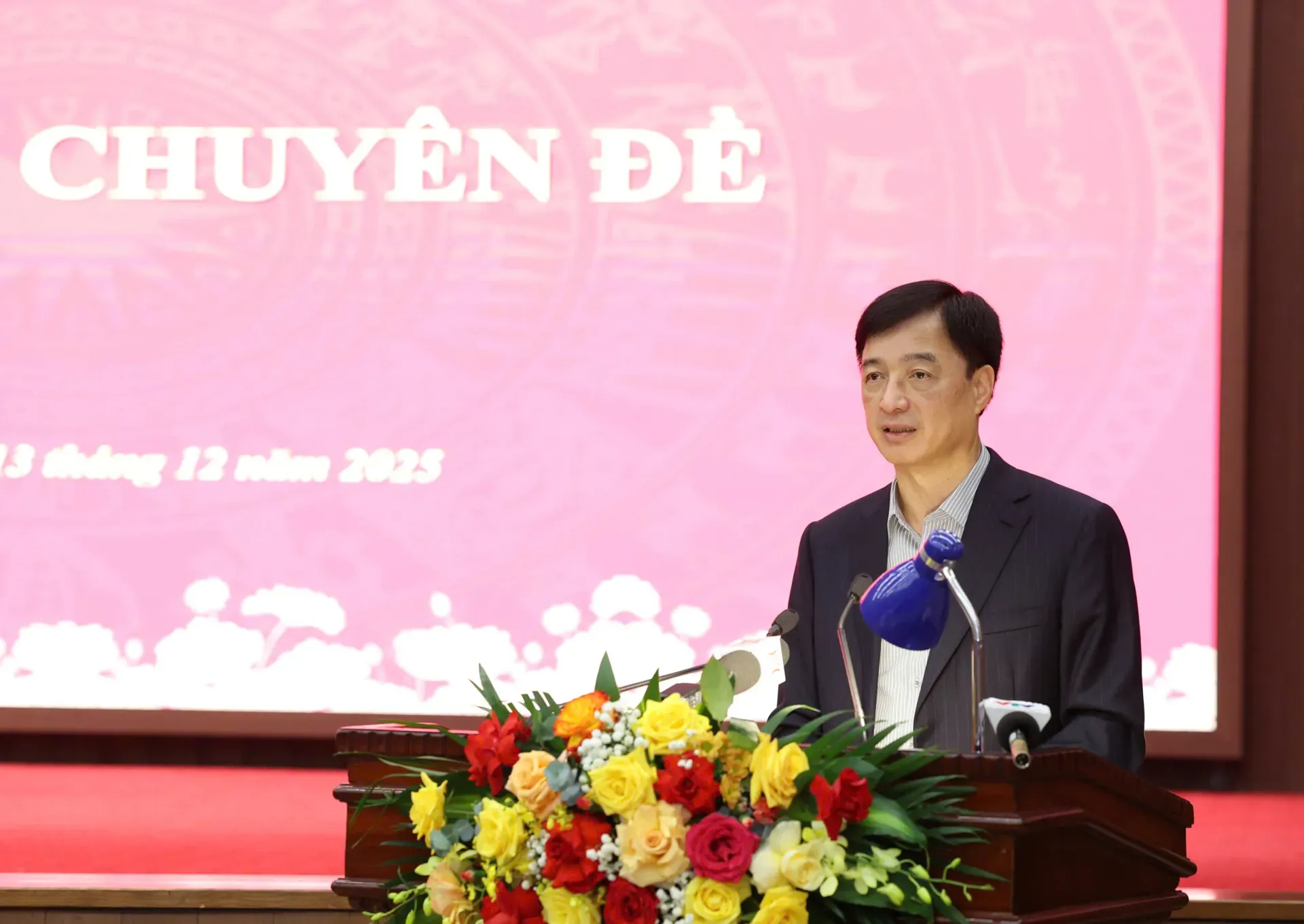
Hanoi Party Secretary Nguyen Duy Ngoc delivers the opening remarks at the conference. Photos: kinhtedothi.vn
Opening the conference, Ngoc said the approval of the two projects comes as Hanoi accelerates the implementation of the 18th Party Congress Resolution, key Politburo resolutions and directions from Party General Secretary To Lam, while refining institutions and master plans for the capital with a 100-year vision.
“The Olympic Sports Urban Area and the Red River Landscape Boulevard are seen as projects of special importance, not only for Hanoi but also for the Red River Delta and the country as a whole,” said Ngoc.
Together, the projects aim to create what Ngoc termed a future “Red River miracle,” while giving Hanoi a new look as a “cultured, distinctive and creative” capital and a green, smart and globally connected mega city.
Ngoc noted that following the Politburo’s approval in principle, the National Assembly on December 12, 2025 adopted Resolution No. 258/2025/QH15, allowing pilot mechanisms and special policies for major projects in the capital. “This provides a crucial political and legal foundation for Hanoi to turn its development vision into reality.”
If approved by the City Party Committee and the municipal People’s Council, construction of both projects is expected to begin on December 19, 2025, with completion targeted for the 100th anniversary of the Communist Party of Vietnam on February 3, 2030.
Olympic Sports Urban Area aligned with capital’s development
According to Standing Vice Chairman of the Hanoi People’s Committee Duong Duc Tuan, the Olympic Sports Urban Area aims to form a modern, integrated sports and urban complex in southern Hanoi, capable of hosting major continental and international events such as the Asian Games and the Olympic Games.
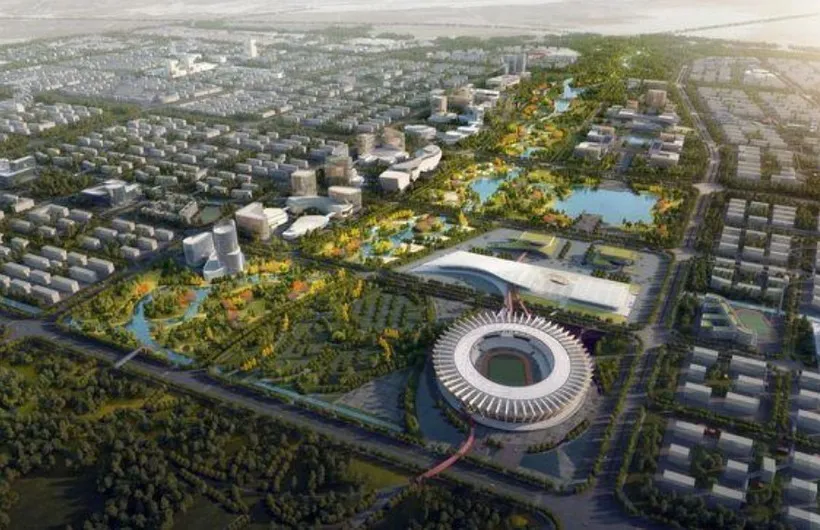
The Olympic Sports Urban Area is designed as a comprehensive investment project combining large-scale sports infrastructure with synchronized social and technical infrastructure, unified architectural planning and landscape design.
In addition to sports facilities, the project includes residential and commercial developments for sale, lease and rent-to-own in accordance with the law.
The project spans about 9,171 ha across 11 communes, including Dai Thanh, Ngoc Hoi, Nam Phu, Thuong Tin and Hong Van. It will be divided into four main subprojects corresponding to four functional zones.
Zone A will be a new urban development following a transit-oriented development (TOD) model, serving as a transport hub supporting the main sports complex in Zone B. Zone B is planned as a sports and services urban area centered on the main sports complex, including the internationally standard Drum Bronze Stadium, and incorporates the initial parking subproject.
Zones C and D will continue the sports and service urban model, linked to international-standard stadiums, forming a modern, multifunctional and integrated sports urban cluster.
According to investor submissions, the project’s population is expected to reach about 751,000 people. Preliminary total investment is estimated at approximately VND925.7 trillion (US$37.8 billion), making it one of the largest investment projects ever undertaken in the capital.
The main sports complex and stadium are scheduled for completion by the second quarter of 2030, while the entire project is expected to be completed by 2035. The initial parking subproject covers about 2.1 ha, with an estimated investment of VND72 billion ($2.9 million).
“The Olympic Sports Urban Area is envisioned as a symbolic, landmark project for Hanoi, carrying major political, economic, social and diplomatic significance and reflecting the central government’s strong and ongoing support for the capital’s strategic development initiatives,” said Tuan
Creating a modern urban axis along the Red River
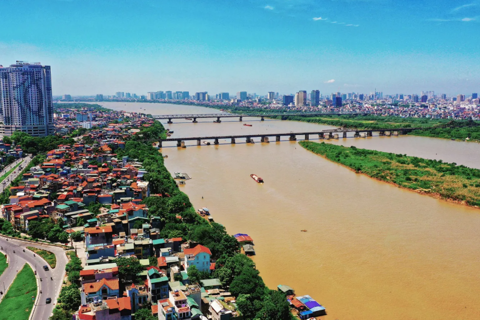
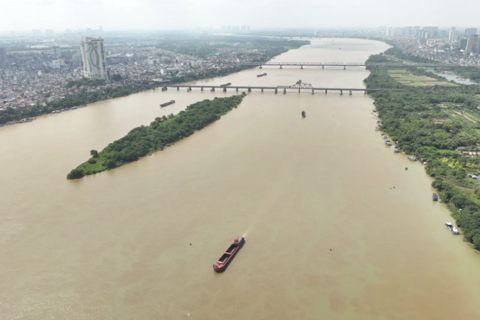
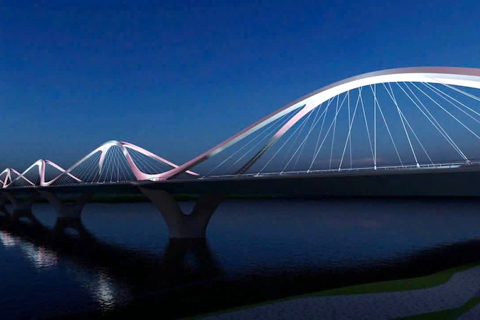
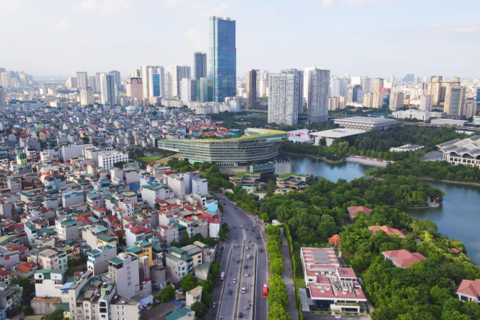
According to Standing Vice Chairman of the Hanoi People’s Committee Duong Duc Tuan, the Red River Landscape Boulevard project aims to complete and upgrade transport infrastructure, stimulate urban development along both banks of the river and form a synchronized, modern urban space on either side of the Red River.
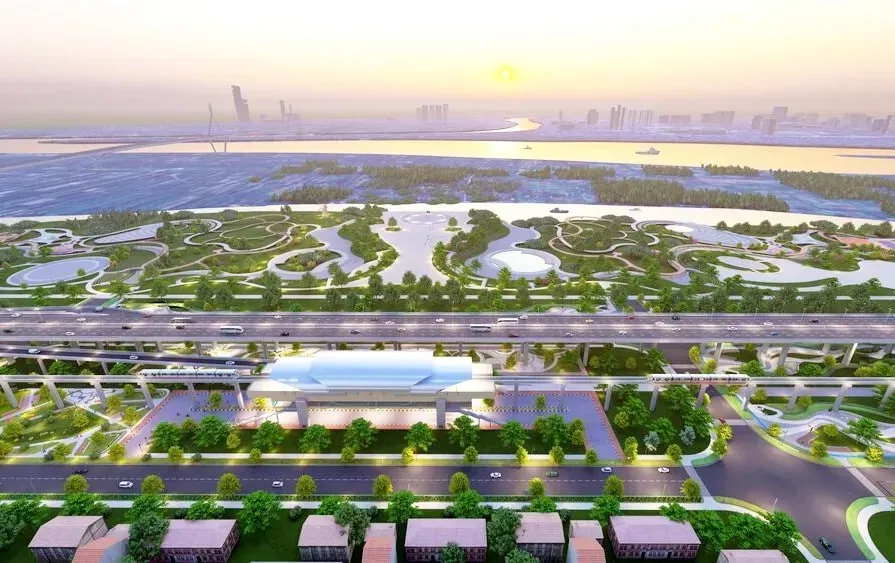
The project is coincided with Hanoi’s sustainable development orientation, directions from Party General Secretary To Lam and key Politburo resolutions, including Resolution No. 15 on the development of the capital and Resolution No. 68 on private sector growth.
The project covers an initial standalone subproject, with the construction of a public park in Phu Thuong Ward, covering about 20 ha, to serve the groundbreaking ceremony scheduled for December 19, 2025.
The Red River Scenic Boulevard will run along the Red River from Hong Ha Bridge to Me So Bridge, spanning 19 communes and wards across Hanoi.
On the right bank, the project passes through 12 localities, including O Dien, Thuong Cat, Dong Ngac, Phu Thuong, Hong Ha and Vinh Tuy. On the left bank, it runs through seven areas: Me Linh, Thien Loc, Vinh Thanh, Dong Anh, Bo De, Long Bien and Bat Trang.
The total project area is estimated at around 11,000 ha. This includes an 80-kilometer scenic traffic boulevard, about 3,300 ha of landscape parks and recreational spaces and roughly 2,100 ha earmarked for land clearance to support urban redevelopment.
“To ensure feasibility and smooth implementation, the project is divided into four independent component projects,” said Tuan.
The first component focuses on the left bank of the Red River, covering the boulevard, landscape parks and land clearance for urban renewal. The second component mirrors these works on the right bank and includes the initial standalone subproject to build a public park in Phu Thuong Ward for the project’s groundbreaking.
The third component involves the construction of an underground metro line along the right bank, stretching about 45 kilometers and designed to integrate seamlessly with Hanoi’s urban rail network, ensuring long-term, modern transport connectivity.
The fourth component is a resettlement urban area, developed mainly in place through high-rise apartment buildings, with additional housing areas, including low-rise and high-rise developments, potentially used as land-for-infrastructure payments to investors.
Preliminary estimates put total investment for the Red River Landscape Boulevard at around VND855 trillion ($34.9 billion). Investors will be required to meet strict financial capacity conditions and complete investment approval procedures within six months.
The project is scheduled for completion by 2030. Land used to pay investors will likely come from urban redevelopment areas within the overall project scope and designated resettlement zones.
Alongside the main project, the city plans to launch the initial standalone subproject to build a public park in Phu Thuong Ward, covering about 2 ha near An Duong Vuong Street, with an estimated investment of VND670 billion ($27.3 million). This park will serve as a key element of the December 19, 2025 groundbreaking ceremony, as directed by the Government.
According to Tuan, the Red River Landscape Boulevard is a symbolic and landmark project for Hanoi, carrying major political, economic, social and communication significance. The project is expected to be launched simultaneously with other major national projects on December 19, 2025, with Hanoi serving as the main groundbreaking site under the direct guidance of central leaders.
“The project is expected to create a strong ripple effect, build momentum for double-digit economic growth in 2026, reshape the Red River’s riverbanks and generate positive public confidence in the Party’s leadership and Hanoi’s development drive,” said Tuan.
Consensus and institutional momentum
At the conference, participants expressed strong consensus on implementing both the Olympic Sports Urban Area and the Red River Landscape Boulevard, noting their potential to create new urban highlights and drive socio-economic development.
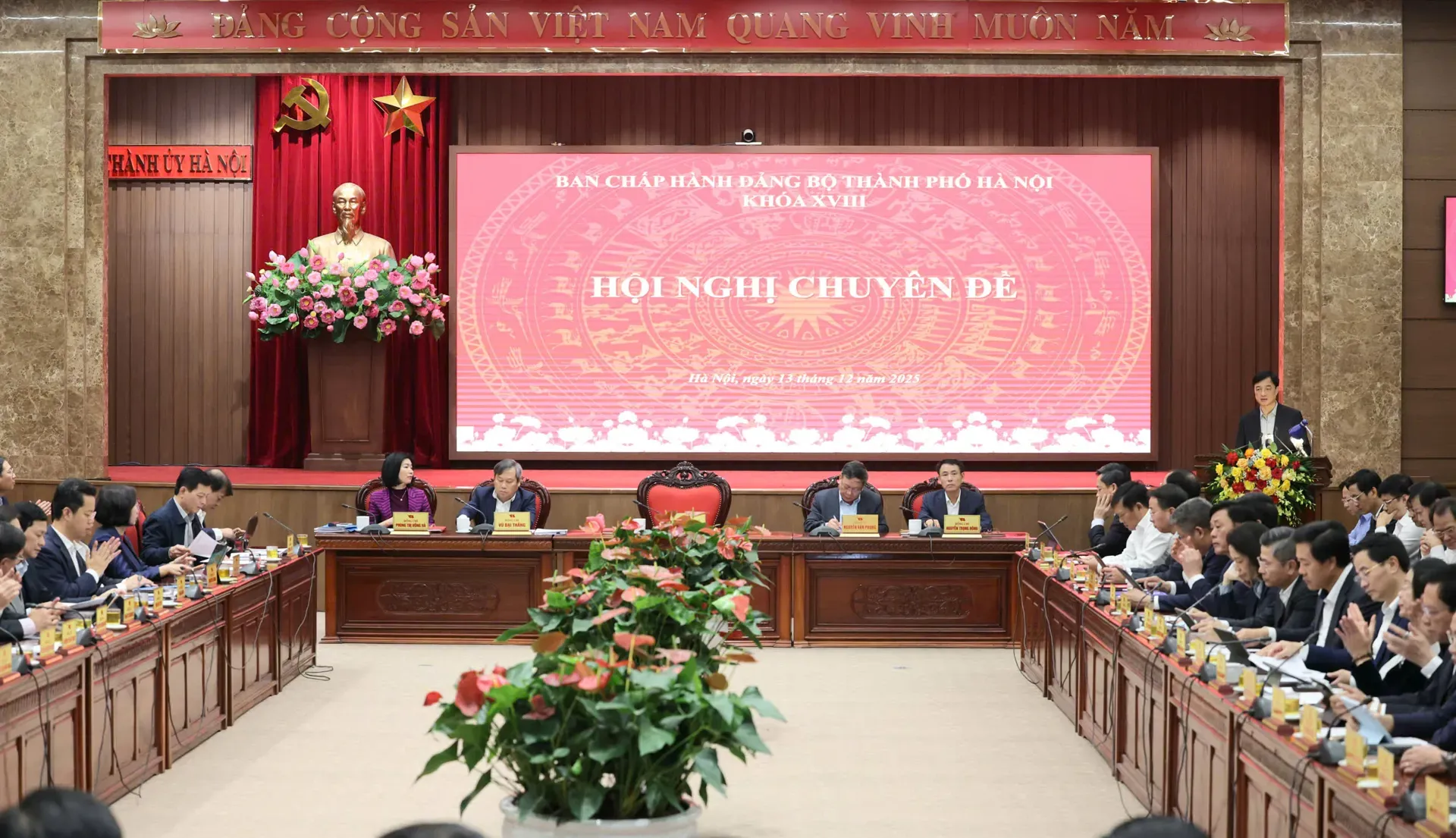
The Hanoi Party Committee Executive Board subsequently adopted a resolution approving the investment policy for both projects.
Closing the conference, Hanoi Party Secretary Nguyen Duy Ngoc said the city is witnessing strong momentum thanks to reforms in decentralization, public investment disbursement and the removal of major bottlenecks, combined with decisive leadership and broad public support.
He highlighted progress in land clearance for key ring roads, radial routes and bridge projects, praising local leaders for proactive implementation and early completion in several areas.
He also noted that the Standing Party Committee has conducted extensive oversight across 126 communes and wards to identify and resolve grassroots-level obstacles. Hanoi will continue to streamline administrative processes, clarify responsibilities and build a service-oriented administration for citizens and businesses.
“All units and agencies must take concrete actions to support strategic projects and ensure a clear, superior legal framework for Hanoi’s next phase of rapid development,” said Ngoc.