Another pedestrian zone in Hanoi opens
The area was redesigned and refurbished to create a new tourist attraction.
The Ba Dinh District government on October 11 opened the Ngoc Khanh Lake pedestrian zone, bringing the total number of pedestrian areas in Hanoi to seven.
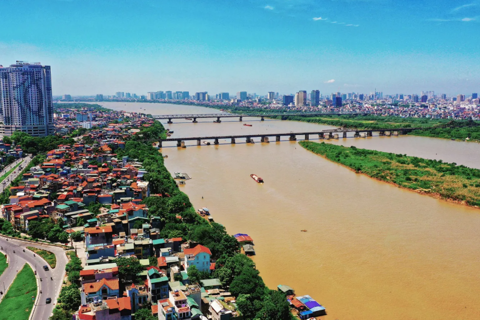
| View of Ngoc Khanh Lake from above. Photo: Ngoc Tu/The Hanoi Times |
.jpg)
The Ngoc Khanh Lake pedestrian zone is open from 6 PM every Friday until midnight the following Monday.
According to Ta Nam Chien, Chairman of the Ba Dinh District People's Committee, the development of this pedestrian zone and surrounding areas aims to foster local businesses and create a pleasant and civilized landscape.
The Ngoc Khanh Lake pedestrian zone will become a new tourist attraction, drawing both locals and tourists to experience the capital's green spaces and recreational activities.
To facilitate this new pedestrian zone, Pham Huy Thong Street, which circles Ngoc Khanh Lake, will be closed to traffic. There will also be roadblocks at alleys 535, 575, and 523 on Kim Ma Street and alley 998 on La Thanh Road, which communicate Kim Ma and De La Thanh Streets to Ngoc Khanh Lake.
The trial traffic closure will be in effect for 12 months.
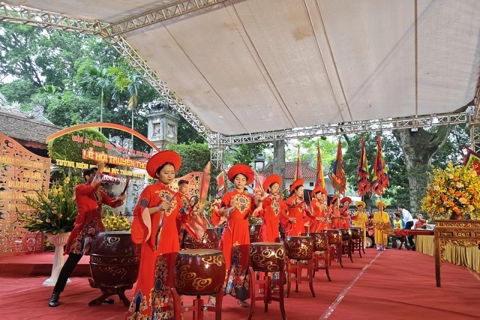
| Decorations inspired by the ancient Giang Vo military training complex. Photo: Ngoc Tu/The Hanoi Times |
.jpg)
On October 8, Ba Dinh District completed the infrastructure upgrading and rehabilitation project of Ngoc Khanh Lake and its surrounding area to celebrate the 70th anniversary of Hanoi Liberation Day (October 10, 1954 - October 10, 2024). The project had a total investment of nearly VND30 billion (US$1.2 million).
Ngoc Khanh Lake is one of Hanoi's most important green spaces. During its expansion in 1983, numerous archaeological artifacts were unearthed, including iron weapons, stone bullets, and ancient architectural remains.
Historical records and scientific studies confirm that this area was once the Giang Vo Military Training Complex. The complex was used for military exercises and combat training during the Ly, Tran, and later Le dynasties (1010 - 1792).
The training complex spanned Giang Vo, Kim Ma, and Ngoc Khanh wards in Ba Dinh District. Artifacts from the site, believed to date back to the 1480s during the Later Le Dynasty, highlight the country's long-standing military prowess and efforts to safeguard the nation.
Today, Ngoc Khanh Lake is a bustling area filled with shops and restaurants. Recent renovations by Ba Dinh District aim to preserve the area's historical significance while integrating the legacy of the Giang Vo Military Training Complex into modern urban life.
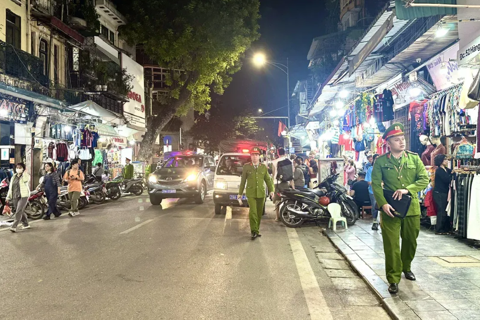
| The new pedestrian zone will be a major draw for visitors to the city. Photo: Ngoc Tu/The Hanoi Times |
.jpg)
By incorporating elements that evoke the area's historical roots, Ba Dinh District hopes to honor the past while enhancing the infrastructure and urban design of Ngoc Khanh Lake and its surroundings.
The other six pedestrian zones in Hanoi are located at the Hoan Kiem Lake in Hoan Kiem District, the Son Tay Old Fortress in Son Tay Town, Thien Quang Lake in Hai Ba Trung District, and Trinh Cong Son Street in Tay Ho District.