Buon Don dipterocarp forest - Symphony of colors in Vietnam’s Central Highlands
It is one of Vietnam’s largest nature reserves and home to a rare dipterocarp ecosystem, a dry deciduous broadleaf forest found almost exclusively in Southeast Asia.
THE HANOI TIMES — The dipterocarp forest in Yok Don National Park now reaches its most striking moment of the year when the last seasonal rains fade.

From November to April, Buon Don’s dipterocarp forest enters its most beautiful season as changing leaves turn the landscape into a vast living oil painting. Photos: Phuong Dong/The Hanoi Times
The landscape seems to change clothes, glowing in gold under the Central Highlands sun and wind, offering a beauty that is both proud and quietly poetic.
About 40 kilometers northwest of Dak Lak’s center, Yok Don National Park spans more than 115,000 hectares across Dak Lak and Lam Dong provinces, one of Vietnam’s largest nature reserves and home to a rare dipterocarp ecosystem exclusively in Southeast Asia.
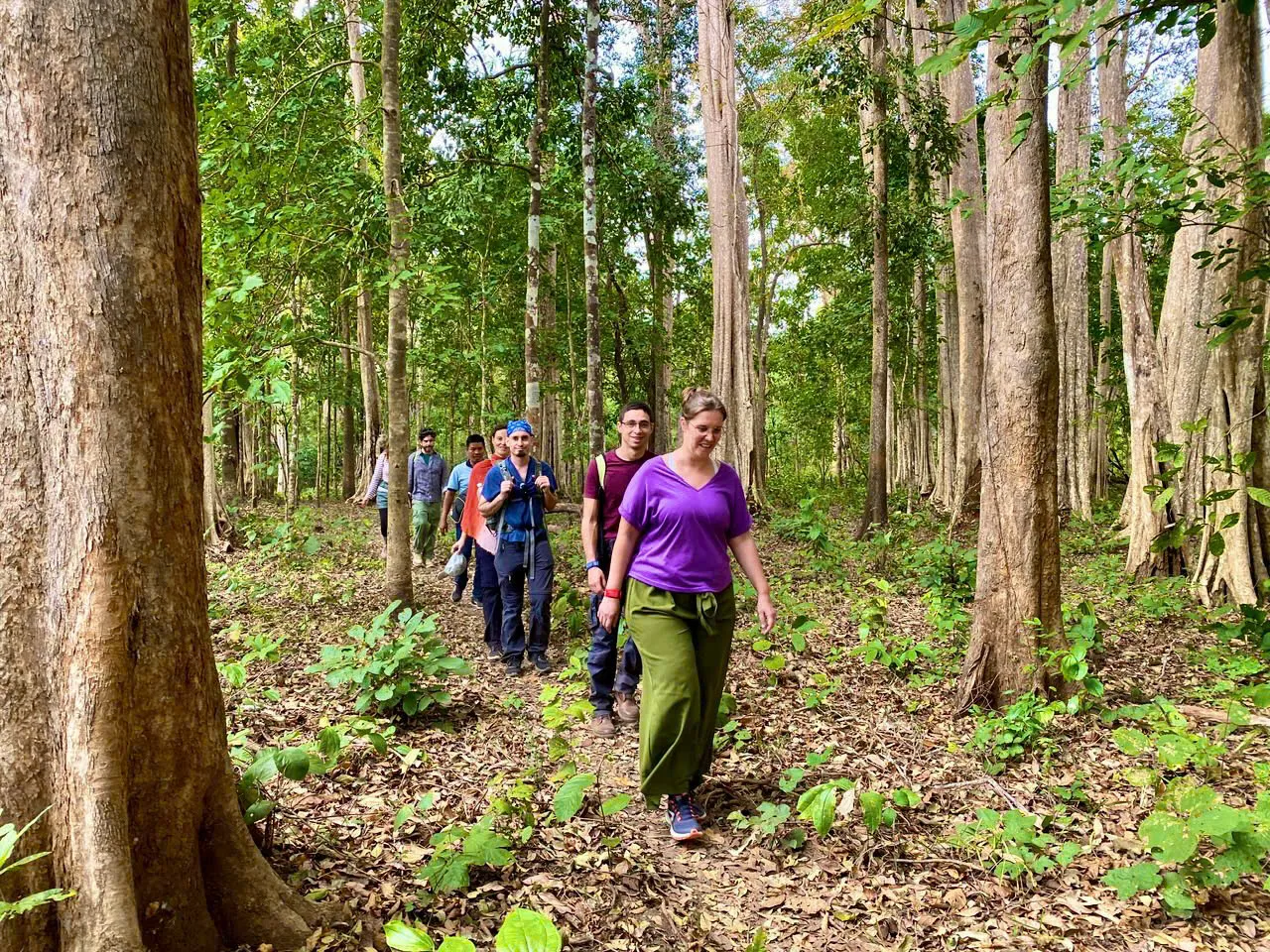
Unlike dense and humid tropical forests, the dipterocarp forest feels open and airy, with tall oil trees growing sparsely on dry soil, creating wide visual corridors.
Meanwhile, gnarled trunks stand firm under harsh sunlight, evoking resilience and endurance long associated with life in the Central Highlands.
Behind this seemingly restrained landscape lies rich biodiversity as the park hosts more than 1,000 plant species and about 650 animal species, many under strict protection.
From November to April, Buon Don’s dipterocarp forest enters its leaf-changing season. Green gradually gives way to bright yellow, burnt orange and deep red. Under honey colored sunlight, the forest takes on a luminous and almost dreamlike quality.
Mountain winds sweep through, sending leaves cascading down in soft rustling showers, while a thick carpet of dry leaves covers the ground, each step producing a crisp sound that brings an unexpected sense of calm.
When the leaves have fully fallen, bare branches emerge against a clear blue sky, revealing striking silhouettes. This is not a scene of decline but one of quiet elegance, as if the forest is resting while awaiting renewal with the first rains of the new season.
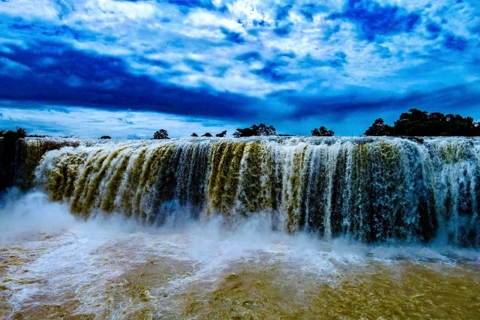
The journey through the dipterocarp forest extends to the legendary Serepok River, Vietnam’s only river known for flowing westward. Formed by the confluence of the Krong No and Krong Ana rivers, the Serepok reflects late afternoon light through sparse foliage, blending rushing water with birdsong and waterfalls into an endless natural chorus.
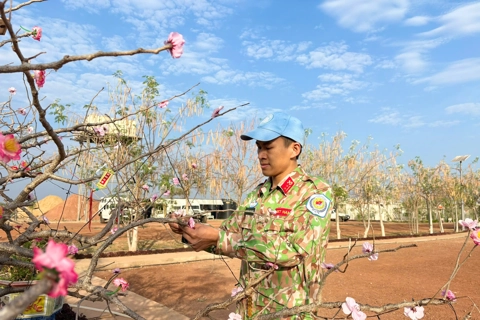
Amid the golden forest, the calm presence of elephants in their natural habitat and the green uniforms of forest rangers underscore Yok Don’s human values and conservation efforts.
Visiting Buon Don during the leaf-changing season also offers cultural immersion, which is seen through forest roads lined with golden leaves that can feel reminiscent of a European autumn.
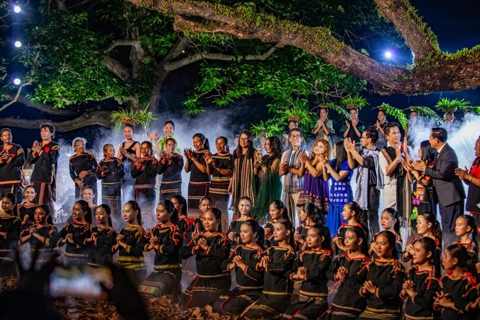
After a day of exploration, visitors can gather by a fire, enjoy lang fish from the Serepok River, sip ruou can (a traditional fermented rice wine shared through long bamboo straws of ethnic minorities in Vietnam’s Central Highlands, including the Ede, Mnong, Gia Rai and Ba Na) and listen to stories of elephant hunting and domestication passed down among Ede and Mnong communities.
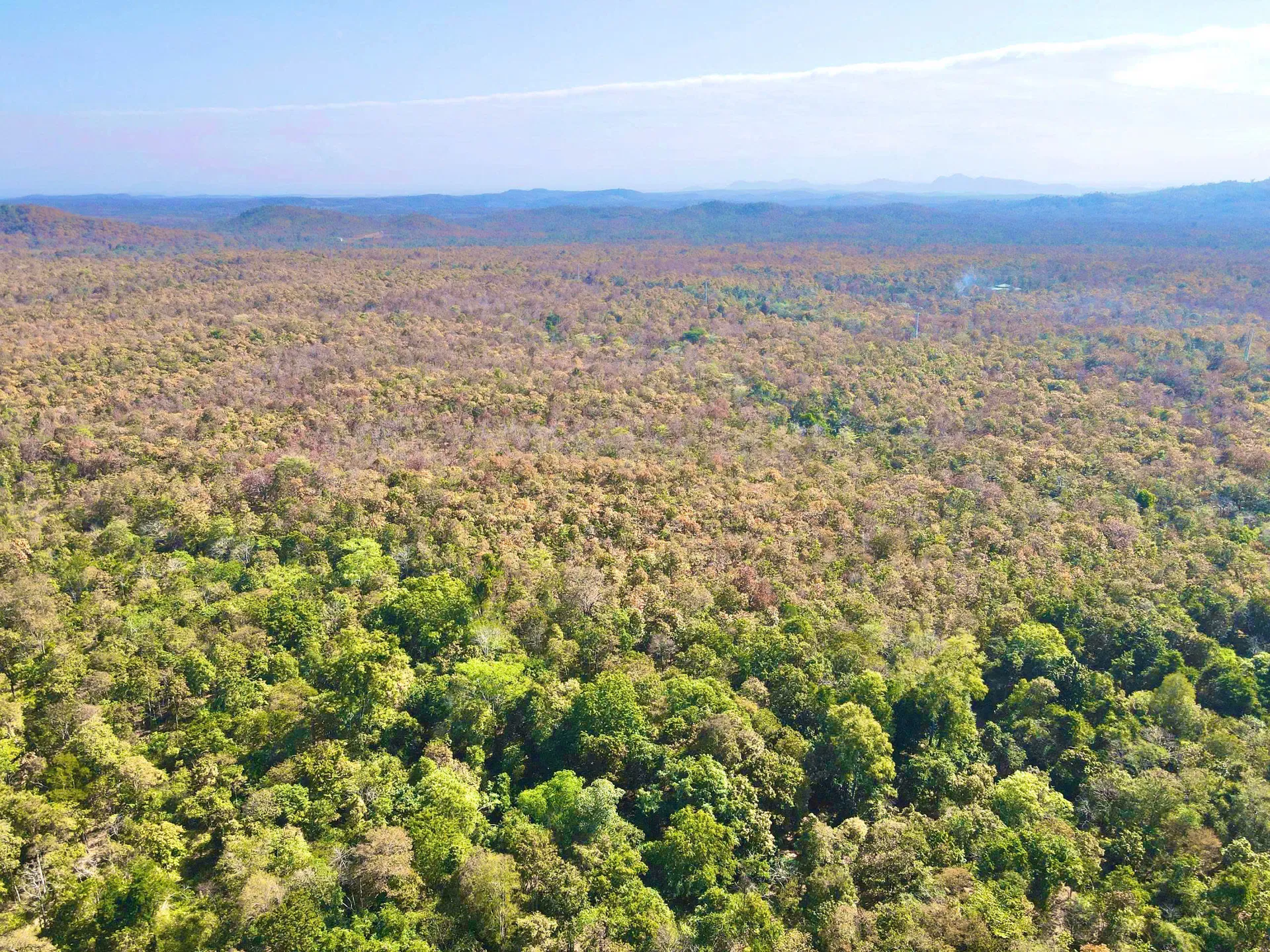
An open dipterocarp forest with tall oil trees growing sparsely on dry soil, creating a sense of space and light.

It is one of Vietnam’s largest nature reserves and home to a rare dipterocarp ecosystem.


After the leaves fall, bare trunks emerge in striking shapes, silhouetted against a clear blue sky.

The quiet joy of visitors as they witness the gentle presence of elephants in their natural habitat.

The green uniforms of forest rangers stand as a steady anchor for the recovery and protection of this precious ecosystem.

Buon Don’s dipterocarp forest in its leaf changing season is not just a destination but an experience of reflection amid modern life.
|
Buon Don’s dipterocarp forest in its seasonal transformation is an experience of reflection as the quiet landscapes invite visitors to appreciate simple beauty and to understand that shedding and change can be the beginning of a stronger and more vivid renewal. The dipterocarp forest is an open deciduous broadleaf ecosystem typical of mainland Southeast Asia, especially Vietnam’s Central Highlands. Shaped by long dry seasons and low rainfall, it forms open woodlands with scattered trees rather than dense tropical canopies, allowing sunlight to nourish grasses and understorey plants adapted to arid conditions. In Vietnam, this forest type is concentrated in the Central Highlands, particularly Dak Lak and nearby provinces. Yok Don National Park, about 40 kilometers northwest of Buon Ma Thuot, is the country’s only protected area primarily dedicated to conserving dipterocarp forests, spanning more than 115,000 hectares dominated by species of the Dipterocarpaceae family. Key species such as Dipterocarpus tuberculatus, Dipterocarpus obtusifolius and Shorea obtusa shed their leaves during the dry months. Fire and drought resistant, they turn golden, orange and red before leaf fall, creating landscapes often compared to a miniature European autumn. Beyond their seasonal beauty, Vietnam’s dipterocarp forests support high biodiversity, with Yok Don recording over 1,000 plant species and nearly 650 animal species, including Asian elephants, gaur and wild buffalo. They also play important roles in soil stabilization and water regulation, though they remain vulnerable to habitat loss and timber exploitation, underscoring the importance of long-term conservation efforts. |