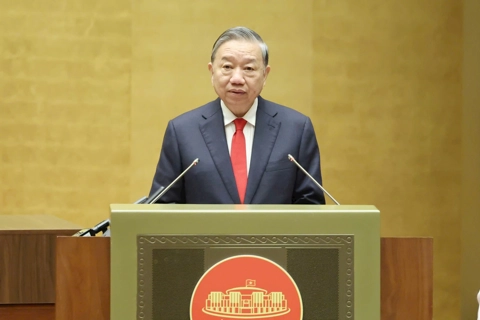
Digital transformation matters a lot to economic integration: Vietnamese PM
Vietnam’s digital transformation is designed to be based on three main pillars namely institution, infrastructure, and manpower.
Digital transformation plays a major role in building an independent and integrated economy, Vietnam’s Prime Minister Pham Minh Chinh made the statement today.
The country should not remain outside this process and building successful digital-based economy and society needs to begin with e-government, Chinh, who is also Chairman of the National Committee for Digital Transformation, said at the committee’s 3rd meeting on August 9.
The event drew the participation of more than 130,000 officials nationwide, including Deputy Prime Minister Vu Duc Dam and many cabinet members, to discuss the application of population data and electronic identification and authentication for national digital transformation in the 2022-2025 period with a vision to 2030.
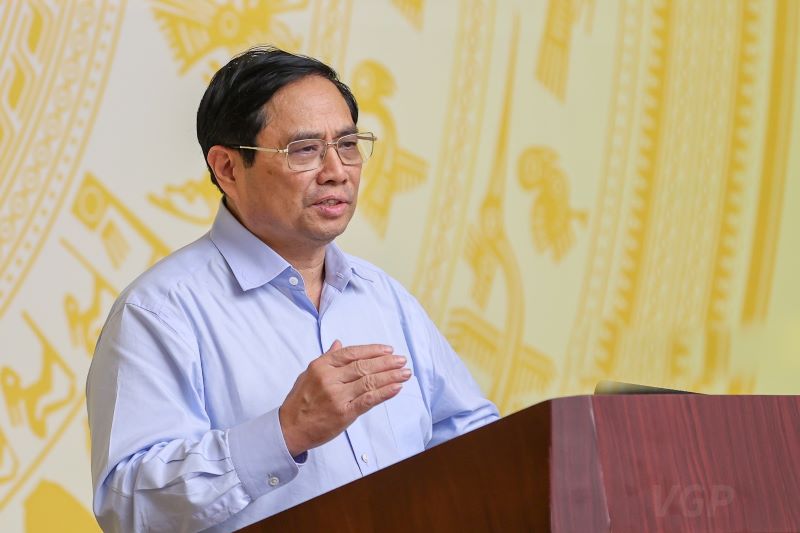
| Vietnam's Prime Minister Pham Minh Chinh speaks at the national meeting on digital transformation on August 9. Photos: VGP |
Make it substantive
Emphasizing the role of digital transformation in society, Chinh said the process could be effective if it’s practical for beneficiaries.
In this regard, the national program should be based on three key factors namely institution, infrastructure, and manpower with a focus on administrative reforms to save time for people.
As a result, in the tax administration sector, as much as 99% of businesses have so far paid taxes online and all firms used e-invoices while 66% of citizens aged above 15 have bank accounts.
In the first five months of this year, cashless transactions rose by 76% in volume and the rate of people using QR codes increased by 68.9% on year.
So far, the Ministry of Public Security has issued over 67 million chip cards, chip-based cards, or integrated circuit cards (ICC or IC cards). At the same time, the ministry has piloted the application of ID cards with integrated health insurance information for medical checkups and treatment, and ID cards with bank account data to withdraw money at ATMs, using ICC for security and safety purposes at major events.
The electronic identification and authentication system came into operation on July 18, 2022.
As of May 2022, all 63 cities and provinces set up Steering Committees for Digital Transformation in their localities, issuing resolutions for plans and operations in the next five years.
Notably, grassroots technology teams have been established nationwide, reaching remote areas to provide digitalized services for local residents.
According to the General Statistics Office of Vietnam (GSO), Vietnam’s digital economy reached $163 billion, accounting for 8% of GDP and the digital economy is expected to account for 20% of its GDP by 2025.
| The event draws more than 130,000 participants, including Deputy PM, ministers of different ministries, and leaders of localities. |

Leaders should be pioneers
The process requires leaders to inspire, create trends, and promote the movement by undertaking practical work for beneficiaries who are people and businesses, Chinh emphasized.
He noted that leaders must take the pioneering role in the common drive to make possible two goals set in the National Digital Transformation Program for 2025 with a focus on 2030: developing digital economy, digital society, and digital governance while building Vietnamese digital businesses with global capabilities.
For that reason, heads of state agencies and localities must change their mindset by removing barriers and easing the tough and must-do process, at the same time promoting the national digital transformation programs. Accordingly, the agencies need to spare their manpower and capital on the drive.
The role of leaders in digital transformation (DX) has once been mentioned by local leaders and experts who believed that those who have a desire to change, inspire, and promote connections help organizations and individuals act together in the journey ahead.
At the Vietnam – ASIA DX Summit 2022 held in late May, Truong Gia Binh, Chairman of FPT Corporation, one of the leading private technology companies in Vietnam, stressed the importance of business and authorities in DX, mostly in the initial stage of the process.
“National digital transformation needs to consist of a successful digitalization model of each locality and business in which they need to find for themselves a leader who has the desire to change, inspire and promote connections in the common process,” Binh said.
He explained that DX in Vietnam brings about both advantages and challenges as each locality is allowed to decide its own process in the national long-term program.
Echoing Binh, Nguyen Thanh Binh, Deputy Chairman of the Thua Thien-Hue People’s Committee said that leaders are those who lay the foundations for the process and seek resources for the implementation in the initial stage.
Having the same ideas, Nguyen Quang Thanh, Director of the Danang’s Department of Information and Communications, said the process requires four main factors, including leadership, connections, manpower, and long-term strategy.
At the event on August 9, PM Chinh also stressed the importance of all stakeholders in the process, saying that authorized agencies need to provide digitalized platforms for civil service and some main sectors like tax, customs, catering, among others.