Government rules out limiting apartment ownership duration
The amendment to the Housing Law is expected to be approved during the 6th session of the National Assembly, scheduled for the end of 2023.
The Government has decided not to set a specific time limit for apartment ownership.
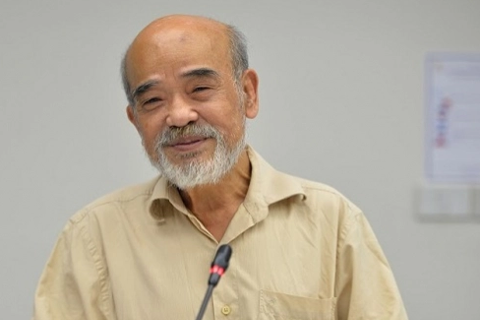
Construction Minister Nguyen Thanh Nghi appeared today [June 19] before the National Assembly to give explanations regarding the regulations on the term to own an apartment.
| Minister of Construction Nguyen Thanh Nghi at the session. Photos: quochoi.vn |
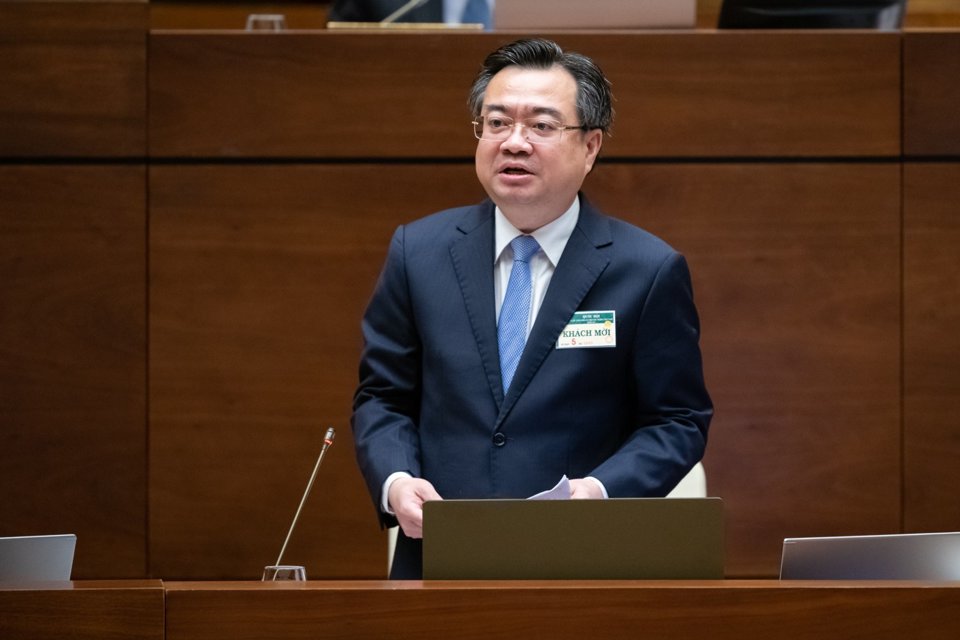
Nghi acknowledged that the amendment was met with mixed reactions. During the drafting process, the Ministry of Construction presented two options: one with a specified holding period and one without it.
However, after considering the feedback from the National Assembly Standing Committee, Nghi stated that the Government was leaning towards the option without a specified term of ownership, as outlined in the draft submitted to the National Assembly for further input.
In addition, the ministry included provisions on the demolition of apartment buildings, the rights and obligations of owners during relocation, demolition, and contribution to reconstruction. The draft also clarifies the responsibilities of relevant parties and serves as a basis for addressing and resolving problems and challenges that arise in practice.
In earlier discussions, some National Assembly deputies agreed with the proposal to allow long-term ownership of apartments. Deputy Truong Trong Nghia from Ho Chi Minh City emphasized that the longer the life of an apartment, the greater its economic and social benefits. He cited examples of apartments in foreign countries that have existed for hundreds of years and have become an integral part of the city's identity.
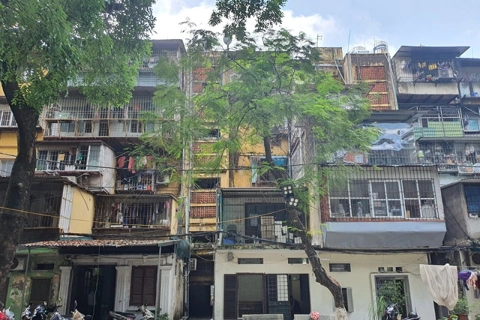
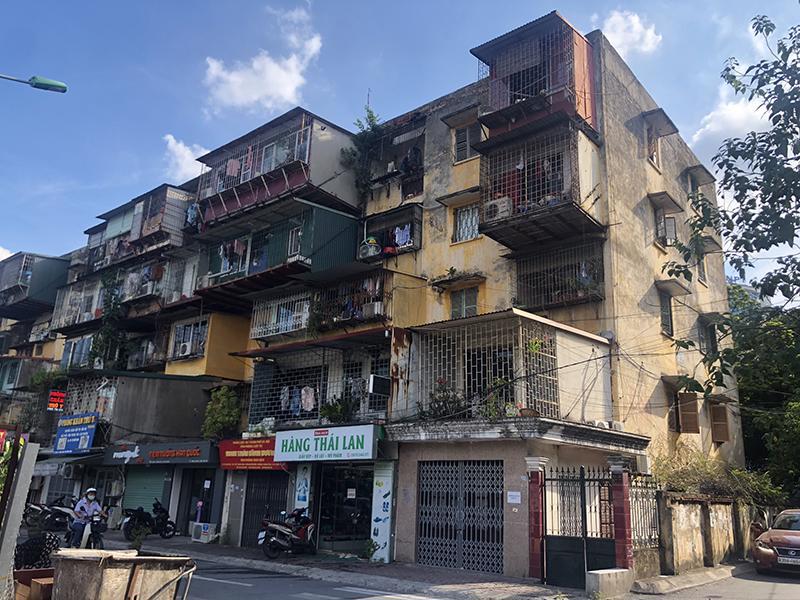
| Old apartment buildings in Hanoi. Photo: The Hanoi Times |
In Singapore, for example, commercial properties can be owned for long periods of time, often hundreds of years. However, when the safety of these properties becomes uncertain, developers typically negotiate with owners to buy back the dilapidated buildings to allow for maintenance, repairs, and new construction.
Nghia, therefore, proposed a plan to allow long-term apartment ownership in addition to time-limited ownership. This would give people a choice between apartments with specific time limits and those with indefinite term ownership.
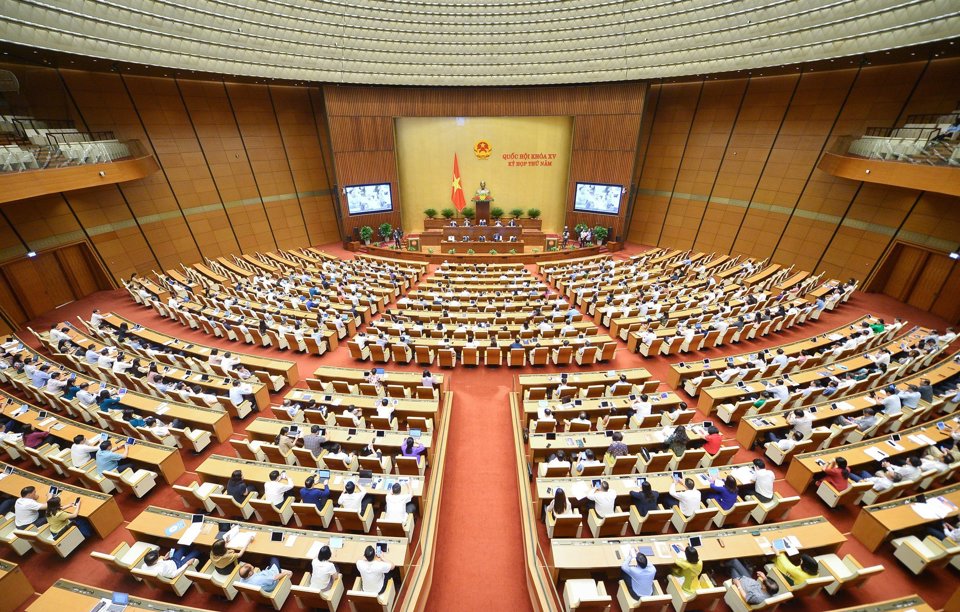
| Overview of the session. |
However, some deputies also suggested that the ownership period should be based on the design life of the buildings to avoid disputes and facilitate the renovation of old apartment complexes.
Deputy Hoang Van Cuong from Hanoi said that low-rise residential buildings are often replaced by high-rise buildings, which are more profitable and attract investors.
However, the renovation of existing low-rise buildings has become complicated due to indefinite ownership status, Cuong added.
In the future, as the majority of apartments will be high-rise buildings, demolishing them will no longer yield a significant profit margin, making it less likely for investors to finance such projects. In such cases, residents would have to invest their resources in renovating and repairing their apartments if they want updated living spaces.
"At a certain point, renovating high-rise apartment buildings can become a challenge, even if they are nearing the end of their life," he said.
Cuong noted that implementing regulations on the term of ownership for apartments would help avoid disputes related to the demolition and renovation of aging apartment buildings, which may face opposition from residents who consider these properties their own.
The amendment to the Housing Law is expected to be approved during the 6th session of the National Assembly, scheduled for late 2023.