Hanoi considers changing public attitude before gasoline vehicle restriction
Acceleration of infrastructure development and technological use is key for Hanoi to encourage the public to shift from gasoline-fueled to electric vehicles.
THE HANOI TIMES — The key to shaping green transportation in Hanoi is changing the behavior of vehicle users, according to Nguyen Hoang Hai, Vice Chairman of the Hanoi Public Passenger Transport Association.
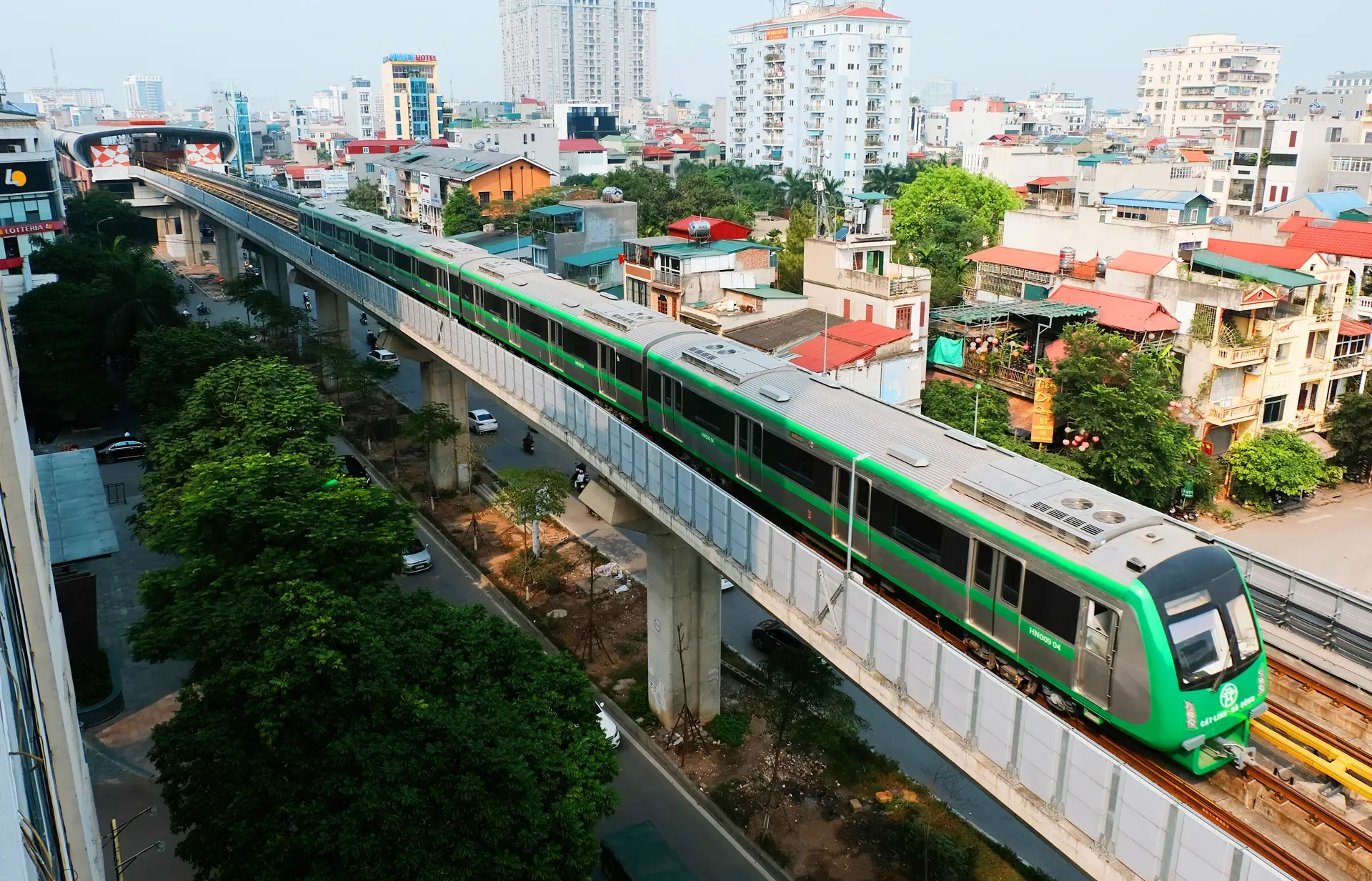
The Cat Linh - Ha Dong metro line. Photo: Cong Hung/The Hanoi Times
The change in people’s habits should be done before the restriction on gasoline-powered motorbikes is put into effect, he told a seminar on green transportation on August 6.
Hai suggested improving conditions for public transportation users, such as trains, buses, public e-bikes, and even walking.
“If public transport is fully deployed and supported by modern infrastructure, people will have more options,” He said. “Moreover, it needs better communication on how transport systems connect and how to use public transport and payment methods in Hanoi.”
Nguyen Minh Duc, Editor-in-Chief of Hanoimoi Newspaper – the event host – said that the Hanoi People’s Council last year launched a test operation of a low-emission zone in the former area of Hoan Kiem and Ba Dinh districts as part of the city's low-emission efforts.
“We are pushing this initiative forward, evaluating criteria for the low-emission zone based on principles such as switching to electric vehicles and limiting private transportation,” he said.
Duc cited examples from Guangzhou, China, where local governments have replaced 90% of gasoline vehicles with electric ones since 2007. The city offered incentives and financial support to help residents transition to newer, safer, and more eco-friendly electric vehicles.
From Grab Vietnam’s perspective, changing people’s attitude toward electric vehicles is a big problem.
About 60% of Grab drivers in Hanoi are unwilling to switch from gasoline to electric vehicles, said Dang Thuy Trang, Director of External Affairs at Grab Vietnam.
The drivers are concerned about the limited number of charging stations for electric cars and motorbikes and financial issues such as lacking collateral for loans and not having labor contracts, she said.
Therefore, it requires a suitable roadmap to build an ecosystem and infrastructure for the transition, Trang said, urging the government to introduce stronger support policies to encourage the switch from gasoline to electric vehicles.
The Singaporean ride-hailing platform has partnered with electric vehicle manufacturers and worked on low-interest loan programs to help its drivers buy electric vehicles.
With a large number of drivers in Hanoi, Grab has worked with Hanoi Metro to help metro passengers travel more conveniently. Its multi-use app allows users to check metro schedules, find the nearest station, and book rides to the station.
Challenges in building a first-mile–last-mile transportation system
Experts stress that building an integrated public transport system is key to green mobility in Hanoi.
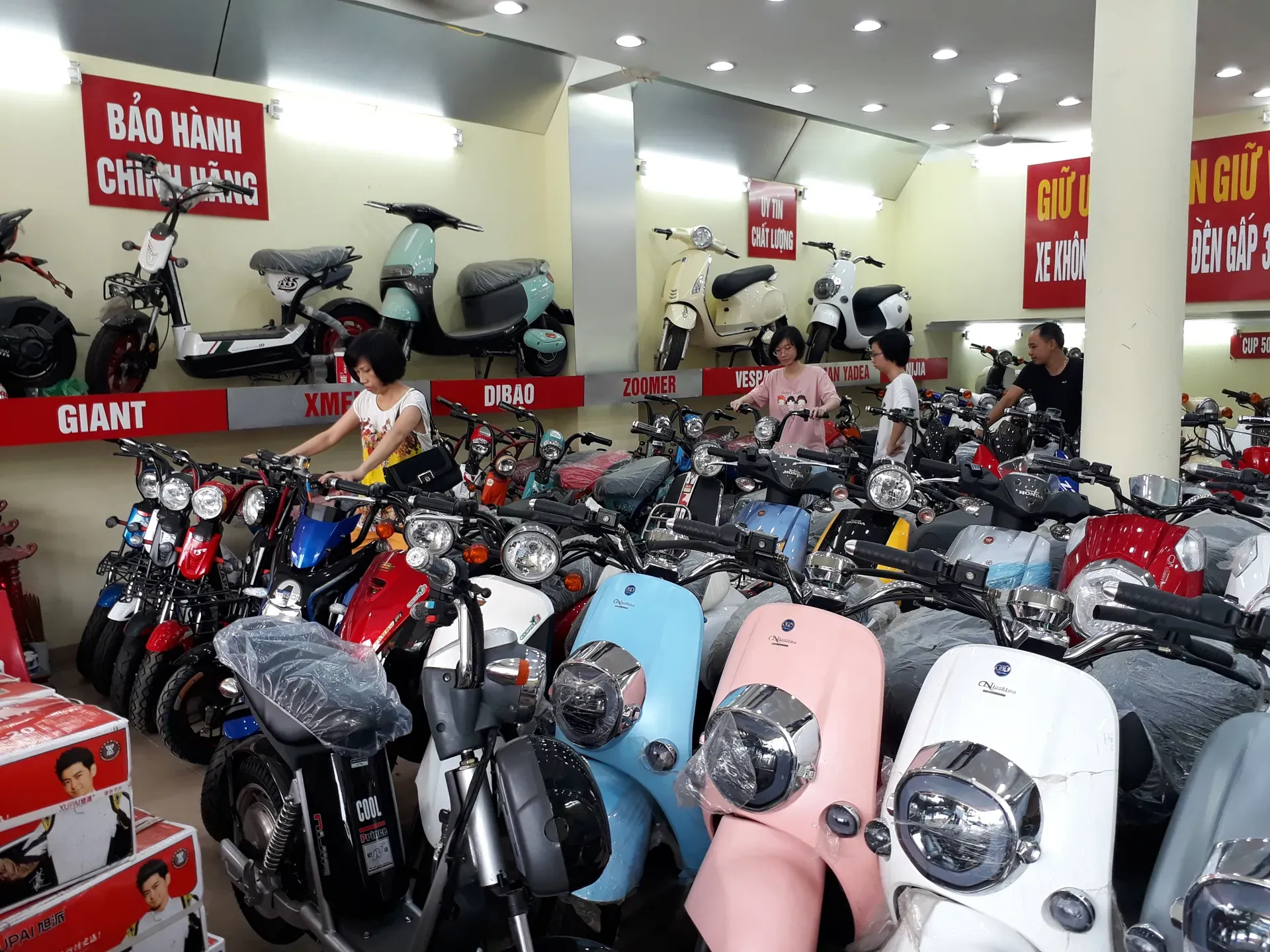
An electric bike shop in Hanoi. Photo: Hai Linh/The Hanoi Times
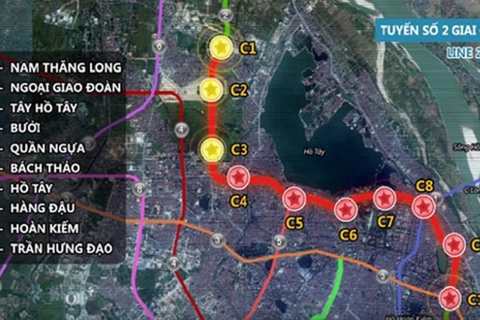
By 2035, the city plans to have built 10 metro lines totaling over 410 kilometers to solve traffic congestion, connect city areas, and promote Hanoi’s socio-economic development.
Hai from the Hanoi Public Passenger Transport Association said that Hanoi’s transport routes and modes currently lack connection, making travel difficult.
“At Kim Ma Bus Station, transfer points to nearby train stations are hundreds of meters apart, which makes transfers time-consuming. Whilst details about bus and train schedules and routes are still scattered,” he said.
“Even walking in Hanoi is difficult due to the lack of sidewalks and dedicated pedestrian paths,” Hai added.
Economist Nguyen Minh Phong noted that Hanoi’s public transport lacks coverage, convenience, and affordability, which limits people's choices.
There is also a lack of connection between transport modes, insufficient diversity in transport types, and poor integration between public and private transport systems.
The city also lacks enough parking space to support multi-modal journeys and has not developed a financial mechanism to encourage the development of integrated public and private transport systems.
Technology, policy-making as the keys
Mass public transportation has become the backbone of the traffic in other countries across Southeast Asia, according to Economist Nguyen Tri Hieu.
He cited Singapore and Indonesia as examples for developing multi-modal transport connections upon smart infrastructure, data management, self-driving vehicles, and 5G-enabled systems.
Hieu said that Vietnam's transport planning faces difficulties due to frequent changes and inconsistent regulations, especially regarding land use, which hinders progress.
The lack of integration between buses and trains in Hanoi is why millions of motorbikes still crowd the streets, causing congestion, economic losses, and pollution.
He recommended that the government establish stable legal frameworks for land, real estate, and infrastructure, and adopt digital solutions to manage transport company data.
In terms of funding, Hieu suggested setting up an annual transport budget for Hanoi and Vietnam. He also proposed taxing businesses along metro lines, which will become valuable commercial areas.
The economic specialist encouraged Hanoi to develop a "shared economy" model to make its transport system more integrated and seamless using the first-mile–last-mile concept.
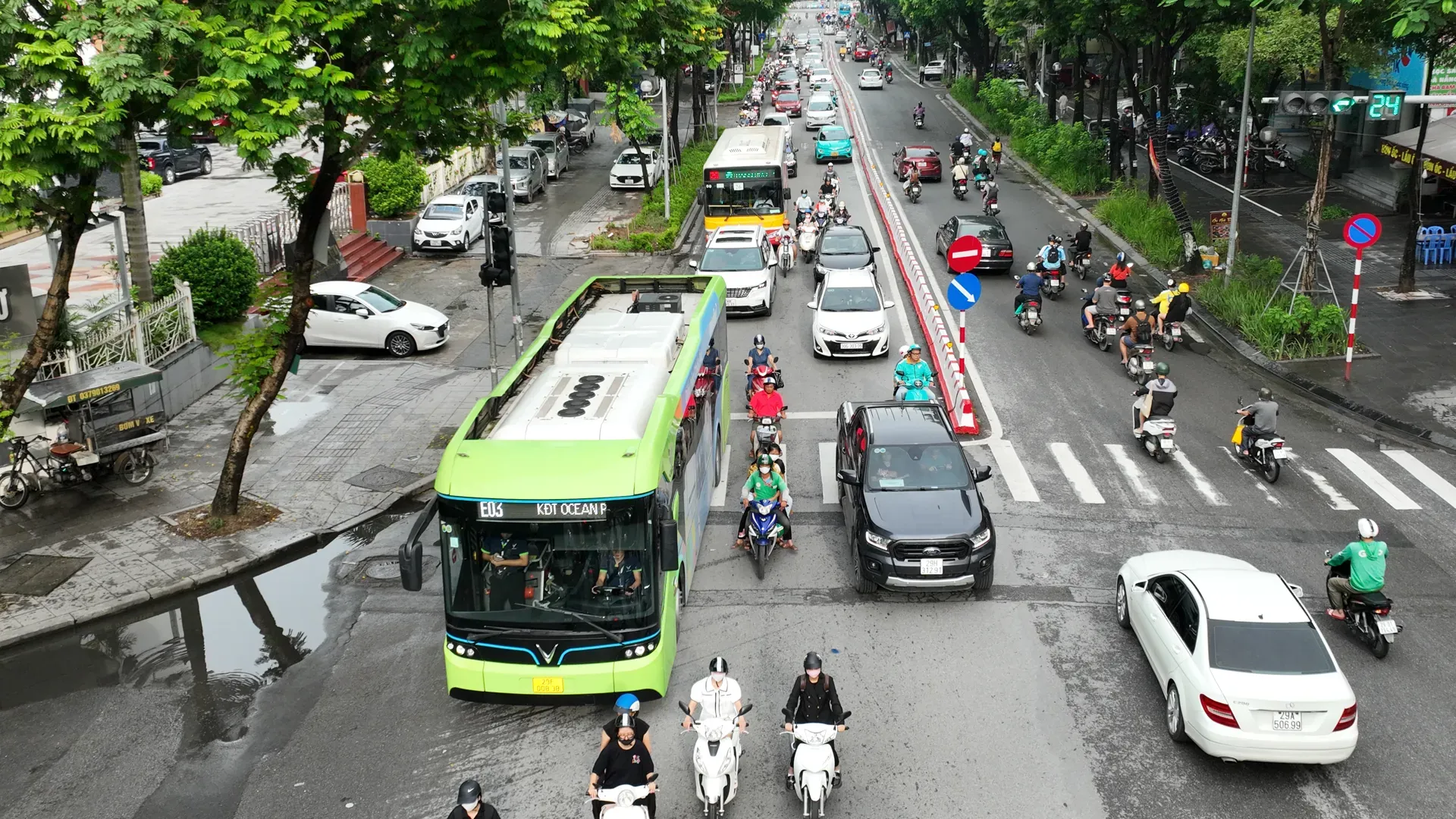
An electric bus operates on Huynh Thuc Khang Street, Hanoi. Photo: Pham Hung/The Hanoi Times
“This connection function only adds value if it is supported by a high-capacity public transport system that minimizes passenger wait times.”
Hieu recommended that the central and Hanoi governments create a shared data standard, known as Mobility as a Service (MaaS), allowing multiple companies to provide services instead of a few dominant players.
“It should also mandate data-sharing obligations, which regulate businesses to report anonymized mobility data to authorities for urban planning and transport management.”
Trang from Grab Vietnam said that the city must build clear and practical pick-up and drop-off points at stations, ports, and airports to ensure safety and convenience.
She emphasized the importance of ensuring enough vehicles for first-mile–last-mile models to maintain a seamless transport and logistics network in Hanoi.
Grab Vietnam’s representative also recommended that the city invest in and complete charging infrastructure to support green transport, especially for tech-based drivers.
Hanoi also needs proper policies to help residents and drivers transition effectively and sustainably, minimizing negative impacts on daily life, Trang added.
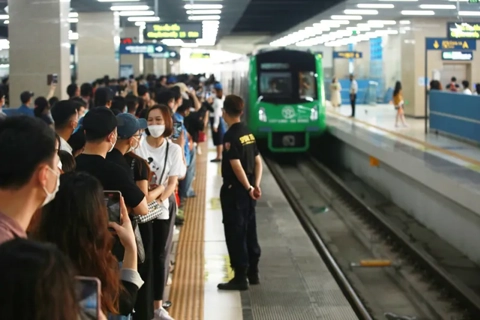
Hanoi has two metro lines in operation: Cat Linh–Ha Dong and the elevated section of the Nhon–Hanoi Station. In the first five months of 2025, the two lines served nearly eight million passengers.
The city also has 2,250 bus routes, 18,800 taxis, and app-based transport services like Grab, be, and Xanh SM, as well as interprovincial passenger transport.
Hanoi has also installed 1,100 public bicycles at multiple locations to help people connect with buses and other transport options.
However, the city still faces a serious parking shortage. According to the static traffic plan, Hanoi needs 1,620 parking areas but has only developed 72. Another 61 are in the investment preparation stage, with many obstacles remaining.
Public transportation currently meets only 19.5% of travel demand. Meanwhile, Hanoi has around eight million motorbikes and nearly 1.5 million cars. The city’s rate of personal vehicle growth is 4.5% per year.