Hanoi convention marks global milestone for cybersecurity cooperation
The signing of the United Nations' first global convention on fighting cybercrime and ensuring cybersecurity will take place on October 25-26 to enhance user protection, prevent online scams and build a safer digital space.
THE HANOI TIMES — The United Nations Convention against Cybercrime, to be signed in Hanoi later this month, marks the world’s first global legal framework on cybersecurity and the first UN convention named after a Vietnamese city, signaling a new era of cooperation to make the digital world safer for users and creators alike.
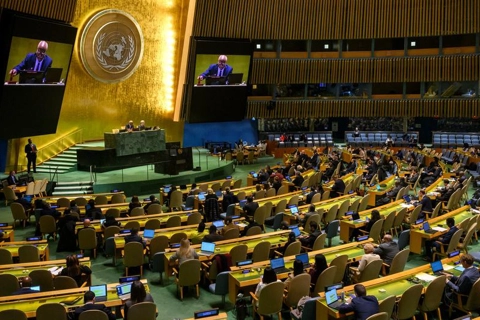
Adopted on December 24, 2024, the convention was approved by 192 UN member states, including Vietnam, reflecting the global community’s readiness to fight online crime in an increasingly connected world.

The Hanoi Convention on Cybercrime creates a global framework to enhance cybersecurity and protect citizens, especially young people, from online scams. Photo: Quynh Anh/The Hanoi Times
According to Hieu, who represents TikTok Vietnam’s official partner, the convention’s importance is growing as information spreads faster and content creators increasingly influence public behavior and awareness.
The convention assures creators that they can work in a transparent digital environment under international legal protection, he told The Hanoi Times at a conference held recently.
Hieu noted that when violations such as identity theft, content plagiarism and harmful information are punished under global standards, genuine creativity will be respected and shared more widely.
The convention reinforces digital safety and reduces risks from scams or malicious content, protecting both creators and audiences at the heart of the digital ecosystem, he added.
“A global convention carrying Hanoi’s name will raise awareness of cybersecurity and make the issue more relatable to the public,” said Hieu.
“It also encourages a culture of responsible creativity, where individuals and organizations respect copyright, value users and build a positive and sustainable online environment.”
“Vietnam’s participation in the convention carries great significance for its international standing,” he added.
The signing ceremony of the United Nations Convention against Cybercrime will take place in Hanoi on October 25-26.
The convention will create a global framework to improve cybersecurity and protect citizens, especially young people, from online scams and crimes. Around 200 national and international representatives have confirmed attendance.
Adopted on December 24, 2024, this is the United Nations’ first cybersecurity convention and the first UN document named after a Vietnamese city.
The convention has nine chapters and 71 articles defining a shared legal framework against illegal access, online fraud, data-related crimes, privacy violations and the spread of harmful information.
It also introduces mechanisms for global cooperation in evidence sharing, mutual legal assistance and cross-border investigations, contributing to a safer and more transparent digital environment.
Deputy Minister of Public Security Pham The Tung described the convention as a historic milestone, marking the first unified global legal framework against cybercrime.
He said it will strengthen cooperation, align national laws with international standards and promote a secure digital space.
Tung added that naming the convention after Hanoi highlights Vietnam’s growing international reputation and commitment to global peace, showing the capital as a safe and well-connected city.
The convention also offers Vietnam a golden opportunity to attract cybersecurity investment, strengthen national capacity and position Hanoi as a regional hub for digital innovation, the deputy minister said.
Data from the Ministry of Public Security released in early October shows that from January to August 2025, authorities detected nearly 1,500 online fraud cases causing losses of more than VND1.6 trillion (US$65 million).
Cyber fraud accounted for over 50% of all criminal cases, with online scams making up 59%, mostly involving asset fraud, cryptocurrency theft, illegal betting and “online kidnapping”.
The Department of Cybersecurity and High-Tech Crime Prevention (A05) reported about 50 “online kidnapping” cases between mid-2024 and August 2025, with 90% of victims being female students, mainly in large cities such as Ho Chi Minh City, Cantho, Hanoi and Danang.
The rapid rise of artificial intelligence (AI) poses new challenges. While AI improves creativity and efficiency, it also enables the manipulation of images, voices and identities, making deception harder to detect.
Vietnam’s younger generation grows up surrounded by social media but often lacks the skills to distinguish truth from misinformation, making them easy targets for scams.
According to the National Cybersecurity Center, 70% of young social media users have never been through training for “safe digital skills” and only 25% of parents teach their kids how to react to suspicious actions.
In one case in Ho Chi Minh City, scammers impersonated teachers and police officers to stage a fake kidnapping and extort VND475 million (US$18,000). In Dak Lak, police rescued a student after a ransom demand of VND450 million (US$17,000). In Cantho, fraudsters pretended to be law enforcement and forced two men to transfer VND800 million (US$30,000) for “protection.”
Creators empowering a safer cyberspace
According to the Digital 2025 Vietnam report by We Are Social and Meltwater, Vietnam has over 77 million social media users, including nearly 50 million monthly TikTok users, mostly aged 16 to 34.
In 2024, TikTok removed over 420,000 scam-related videos, 97% of which were deleted before gaining any views.

Vu Minh Hieu, co-founder of the VULACI media and marketing ecosystem and manager of the VULACI NETWORK MCN, an official partner of TikTok Vietnam. Photo courtesy of the subject
A separate report by AnyMind Group found that over 60% of young Vietnamese respond positively to influencer-created short videos, showing the power of creators in spreading awareness and promoting safer online habits.
Audiences often trust creators who share real experiences, blogger Hoang Minh Ngoc, who has more than one million followers and 35 million likes on TikTok, told The Hanoi Times.
“I believe that one credible voice can encourage viewers to think critically,” Ngoc said. “Creators should recognize their social responsibility because spreading awareness about online scams protects audiences and builds a healthier digital space.”
Many social media influencers are now reliable information channels, helping audiences verify links and identify fake accounts. Ngoc often receives messages from followers asking her to check suspicious links or report fraudulent profiles.
“That gentle, everyday reminders in videos can gradually help viewers form safer online habits,” she said.
Acknowledging these dangers, content creator and literature teacher Le Tran Dieu Thu, with over half a million followers, uses her platform to promote digital literacy and media awareness.
She considers online communication an extension of education, helping young people think critically and stay alert. Cybersecurity messages work best when they are sincere and delivered with warmth rather than fear, she said.
Thu emphasized that sincerity builds trust and long-term engagement. Creators should use accurate information, positive language and avoid exaggeration to maintain credibility.
Hieu from VULACI said both platforms and users must adapt to these developments. Platforms like TikTok now label AI-generated content to improve transparency.
He emphasized that awareness is key and technology supports users, but vigilance is a personal responsibility. Once people learn to verify information and recognize risks, fake content will lose influence.
Hieu said creators can cooperate with authorities in education and awareness campaigns, helping bridge the gap between official messages and the public. They play a crucial role in translating complex messages into relatable stories that resonate with audiences.
He added that many young people trust engaging content without verification, so creators must present accurate and reliable information in accessible ways.
The convention is expected not only to strengthen cybersecurity but also to empower creators and users to build a more transparent and trustworthy digital ecosystem, where innovation can thrive safely in the heart of the connected world.

Blogger Hoang Minh Ngoc, who has more than one million followers and 35 million likes on TikTok (left and Le Tran Dieu Thu, a literature teacher with more than half a million followers on TikTok (right). Photo courtesy of the subject