Hanoi Convention pushes global cybercrime response, elevates Vietnam’s global position
Israeli Ambassador to Vietnam Yaron Mayer praised Vietnam’s efforts in ensuring cybersecurity, affirming that the signing of the United Nations Convention against Cybercrime in Hanoi this week will further elevate the country’s global standing.
THE HANOI TIMES — Vietnam and Israel have enjoyed a thriving partnership in cybersecurity, which has become a cornerstone of their bilateral relations. Israeli Ambassador to Vietnam Yaron Mayer told The Hanoi Times about this matter as the signing of the Hanoi Convention will take place on October 25-26
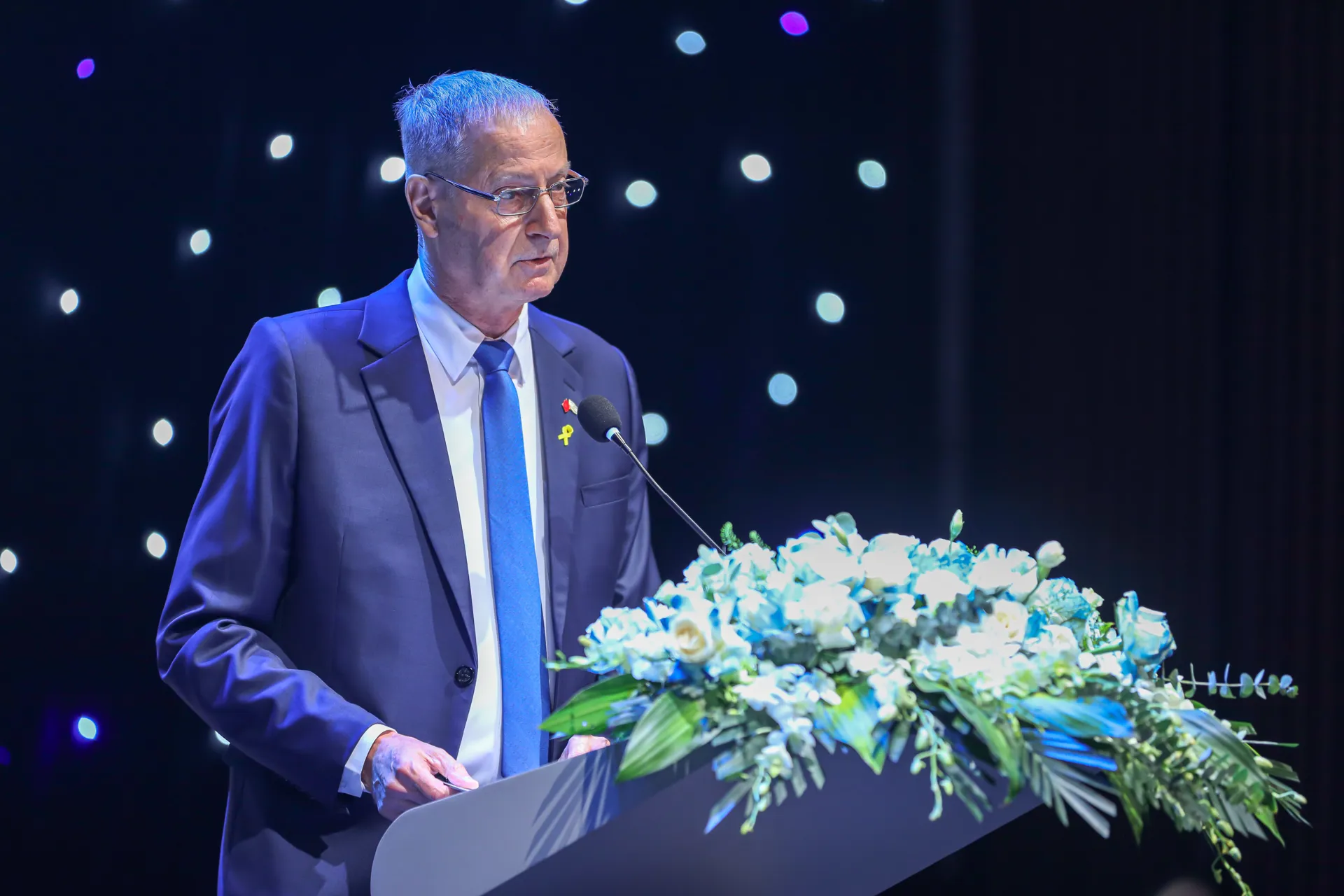
Israeli Ambassador to Vietnam Yaron Mayer. Photo: Israeli Embassy in Vietnam
Israel is known as a powerhouse in information technology. Could you share your views on the role of the upcoming signing of the United Nations Convention against Cybercrime, known as the “Hanoi Convention”?
Israel is pleased to see the United Nations Convention against Cybercrime signed in Hanoi. Acts that are categorized in the convention may include unauthorized access to information technology systems, data theft, online fraud, dissemination of malicious software, online child exploitation and money laundering through digital assets. All of them have long been researched thoroughly in Israel and the country now proudly provides a huge asset of experience and technical solutions for them.
The convention also pushes forward for the global superstructure. The Hanoi Convention will help countries, Vietnam or Israel or the likes, perfect national legal framework for cybersecurity that aligned closer to a global common. The synchronization of cybercrime regulations ensures transnational crime would face worldwide punishment, a countermeasure to its inter-border nature on the Internet.
Through criminalization of certain acts of cybercrime, the Criminal Law of each country connect to each other and paves way to an unprecedented international cooperation mechanism.
I understand that United Nations will operate a channel that shares e-proof for all members’ security authorities. For the first time, we can overcome bilateral bureaucracy. The Israel Police can request help from the Vietnamese public security force, which takes no time to provide evidence through a secured 24/7 channel, just as cyber criminals took no time to commit internationally behind a computer.
I highly appreciate another pillar of the convention, which is to ensure human rights privacy on the digital world as I have a highly related personal tragic experience.
Just a few months ago, a childhood friend of mine was manipulated into an online scam scheme, where he put significant amount of money into. He later fell victim to that cybercrime and lost all and despite consolation and sympathy from the family, he chose to end his life. The feeling of shame engulfed his mentality as fear of exposure to scam was increasing prevalent. Cybercrime is moral crime.
While acting as global binding, the convention points out that the sharing and retrieval of cyber personal data must follow national law and regulations of universal human rights. The legal frameworks on the digital environment are still left with gray areas for all countries due to its borderless characteristics. Hence each of us must find a pathway between our own safety and security and freedom of our people.
I hope that the convention puts forth the value of human, in the context that digitalization of public information of each individual becomes an irreversible trend, including in Vietnam.
What is the significance, in your view, of Hanoi being chosen as the venue for the opening and signing ceremony of the United Nations Convention against Cybercrime?
The signing in Hanoi demonstrates that Vietnam has elevated its post in the cybersecurity scene and international law on cybercrime. I believe Vietnam has continuously contributed to the negotiations of the Convention, being a highly active member state for a global good.
During the Border Security Summit held in London this March, Vietnam’s Minister of Public Security Luong Tam Quang remarked that efforts against cybercrime must be “conducted based on the fundamental principles of the United Nations Charter and international laws.”
Coming from a country which developed cybercrime countermeasures early, I recognize that Vietnam is making profound efforts to tackle increasingly diverse and complex methods of Internet crime.
Vietnam has caught up with legal framework.
This September, the Vietnamese National Assembly passed the Law on Personal Data Protection, which prohibits social media platforms to request users to present images and videos of IDs for authentication. The 2018 Law on Cybersecurity for the first time regulates safety and social orders on the cyberspace, which also specifies Vietnamese pro-activeness on international cyber agreements.
The seriousness is shown last year by the Prime Minister’s decision to choose August 6 as a National Cybersecurity and Safety Day. It aims to mobilize the whole population and political system to discover and debunk high-tech and scam on online environment. I reckon that Vietnam is among the only few countries to give such level of importance to the issue.
The singing of the Hanoi Convention, additionally exhibits the faith of the United Nations and members on Vietnam, a country that raises the flag on an international matter that develops and evolves through time.
I think with the convention comes challenges for Vietnam. Now the stakeholders, the state managements, the businesses and the security authorities, all must watch and follow international standard.
Transparency must be kept all the time to attract international partners who will analyze the cyber environment based on the conditions reached in the convention. Local regulations will also be updated and more process is expected to come such as higher training for cyber human resources.

What cooperation and technology transfer projects have been planned and done between Vietnam and Israel in the field of information technology and cybersecurity?
Vietnam and Israel have enjoyed thriving partnership in cybersecurity. It has become a cornerstone of our bilateral relations. In the third meeting of Inter-Governmental Committee in 2023, the two sides listed digital and cybersecurity as a collaboration items for the years to come.
At the same time, a cooperation agreement was signed between Vietnam’s Authority of Information Security and the Information Safety Agency of Israel. With the Vietnam-Israel Free Trade Agreement signed in 2023 and put into practice at the end of 2024, the basis for our common efforts of the fields have become clearer than ever.
A number of joint conferences and forums on cybersecurity have been held in Vietnam, with leading actors from Israel, including policy-makers and private businesses with technological solutions.
They have exchanged understandings in Israeli management system, which is one of the world’s best in cyber safety, and offered state-of-the-art technologies on a variety of digital fields, such as cloud computing, virtualization, artificial intelligence, biometric identification and internet of things. There was even a seminar that focused on Israeli fintech, working with Vietnamese financial institutions.
The latest, entitled “Israel’s Network Resilience: Innovations Against Emerging Threats” was hosted in August 2025 by the Israeli Trade and Economic Mission, with coordination from the Israel Ministry of Economy and Industry.
A large number of Vietnamese companies from various sectors such as IT, banking and digital had direct engagements with the Israeli firms to explore solutions. This provided Vietnamese companies and public authorities alike the opportunity to access not only end products but also management and operational approaches.
Another example is that recently, the Vietnamese tech giant FPT has teamed up with Israeli car cybertech company Cymotive Technologies for research and develop safe software on smart vehicle.
There is growing demand on online safety as Vietnam is implementing Resolution No. 57 of the Politburo on breakthroughs in science and technology development. The Israeli Embassy in Vietnam is open to facilitate technology transfer to Vietnamese partners. Our high-tech cyber businesses are eyeing Vietnam as targeted market and have repeatedly came to Vietnam for opportunities.
With more than 800 companies specializing in cybersecurity, as well as a whole cybersecurity ecosystem, Israel is confident to contribute together with Vietnam on this journey.
In fact, along with local partners, we are planning to bring Cybertech Asia event, a global platform for high tech and startup connection to Hanoi in 2026, matching Israeli, Vietnamese and international experts, both state and private, on cyberspace to discuss and deliver strategies and concrete steps to a better and safer digital world.
Thank you for your time!