Joining forces to help Vietnam translate Hanoi Convention into practice
Through concrete actions and its leadership in the first-ever Hanoi Convention, Vietnam is turning global commitments into reality and affirming its pledge to protect human dignity in the digital age.
THE HANOI TIMES — International organizations and countries have joined Vietnam in working toward a safer digital future for women and children as part of their efforts to help Vietnam translate the UN Convention against Cybercrime (the Hanoi Convention) into practice.
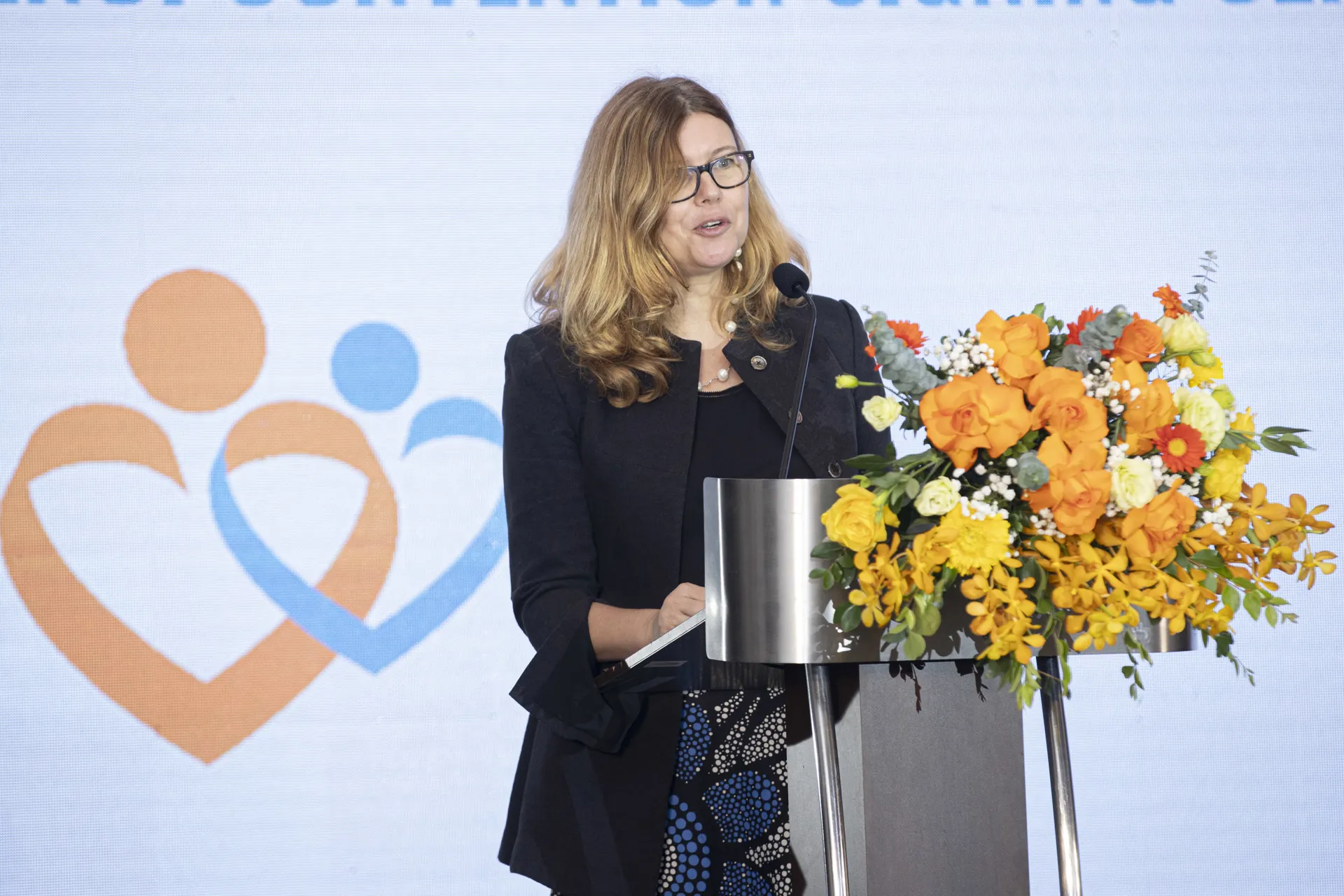
UNICEF Representative in Vietnam Silvia Danailov speaks at the event on October 22. Photos: UNFPA
UNICEF Representative in Vietnam Silvia Danailov made the statement at the Pre-Hanoi Convention Signing Ceremony Seminar on Online Violence against Women and Children held on October 22.
Danailov said that training front-line responders, supporting survivor- and child-centered services and advocating for digital safety to be built into every classroom, clinic and community show how Vietnam can turn international commitments into reality for every woman, adolescent and child.
UNICEF, UNFPA and UN Women – the One UN team working with Vietnam and Australia, with insights from Thailand and New Zealand, strengthen regional and global responses to online exploitation and abuse.
Danailov said that the signing of the first-ever global Cybercrime Convention (the Hanoi Convention) holds a special meaning as it coincides with the 80th anniversary of the UN’s founding and Vietnam’s independence.
“This is more than a treaty. It’s a global commitment to protect human dignity in the digital age, and Vietnam’s leadership in championing it is a remarkable signal to the world,” Danailov said on behalf of UNICEF, UNFPA and UN Women.

From right: Representatives of UN WOMEN, UNICEF, the Government of Australia and UN Coordinator at the event.
As Vietnam hosts the signing ceremony and high-level conference Hanoi Convention, the country is promoting international cooperation to make the digital space safer for women and children.
The International Seminar and Gallery Exhibition on Online Child Sexual Exploitation and Abuse and Technology-Facilitated Gender-Based Violence in Hanoi on October 22 gathered policymakers, experts, civil society and private sector representatives to shape a shared vision for a safer digital future in Vietnam and the region.
In Vietnam, nearly nine in ten children aged 12 to 17 are active online, but only a third have learned how to stay safe, with many facing harassment or exposure to sexual content and almost half never reporting it.
While 13% of women in Vietnam have experienced sexual violence, the absence of national data on online abuse leaves much of the issue unreported.
Globally, around 300 million children fall victim to online exploitation each year, with cases of sexual extortion nearly tripling in 2024, while 38% of women with internet access have suffered online violence.
Across Asia and the Pacific, 16%–58% of women have experienced technology-facilitated abuse, underscoring the urgent need for joint action to make the digital world safer for everyone.
“Behind each statistic and number is a young girl groomed or sexually extorted through a social platform, a boy coerced to share intimate images, a woman targeted by threats or deepfakes,” Danailov told The Hanoi Times.
They are part of the same continuum of violence that begins in childhood and too often follows women through life.
These harms violate human rights to safety, privacy, equality and participation, and they demand coordinated, survivor- and child-centered systems connected by referrals, case management and shared accountability for safety and recovery, she stressed.
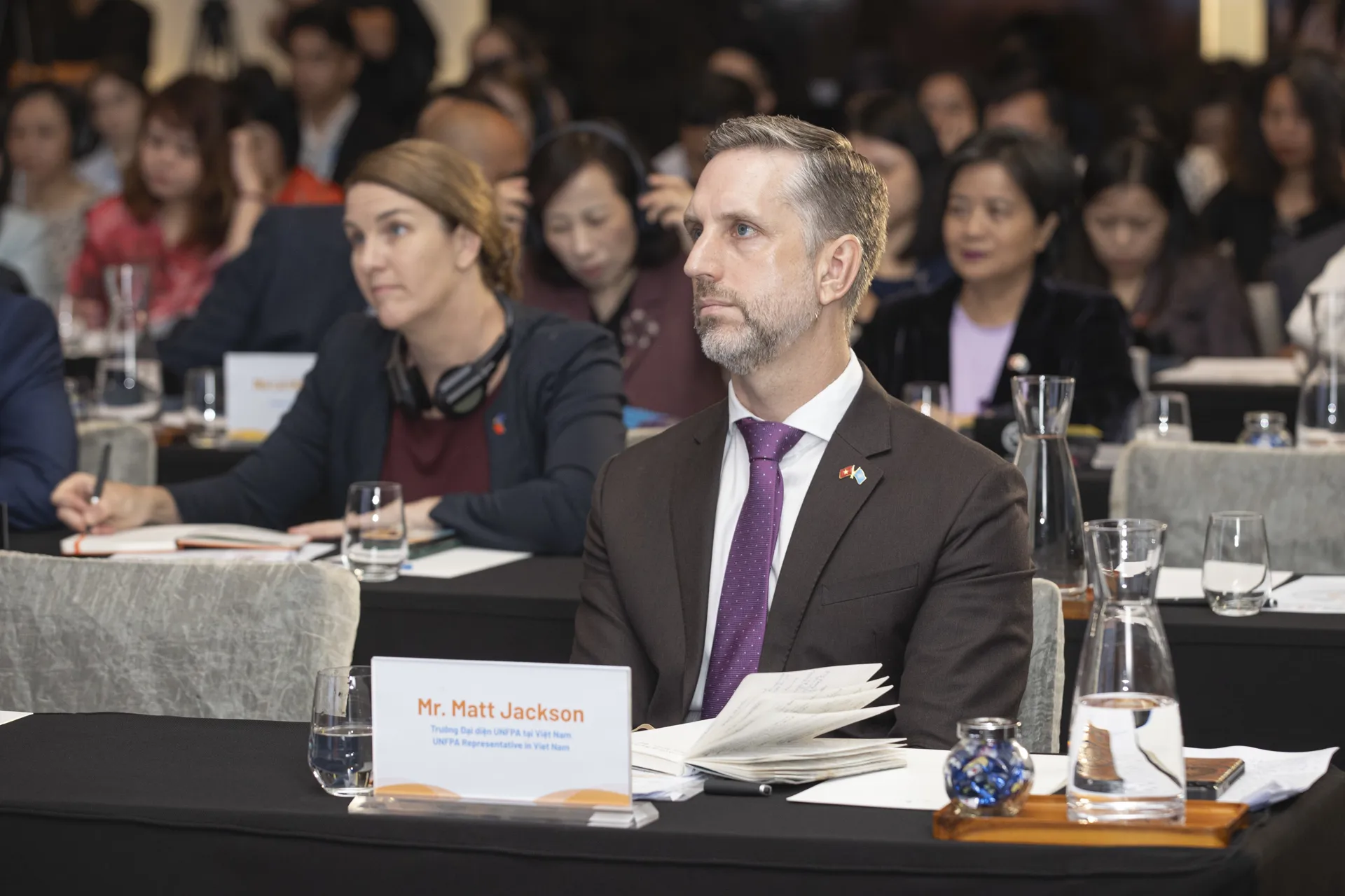
UNFPA Representative in Vietnam Matt Jackson.
At the event on October 22, key discussions focused on policy implementation, safety-by-design, evidence-based monitoring and cross-sector coordination, encouraging shared learning and innovation in online safety.
Participants discussed how online exploitation and technology-facilitated gender-based violence are interconnected, often sharing platforms, perpetrators and coercive patterns, highlighting the need for coordinated, cross-sector responses.
The initiative aligns with the broader Australia–Vietnam partnership on inclusive, rights-based and people-centered digital transformation that ensures no one is left behind.
It also demonstrates Vietnam’s commitment to building integrated prevention and response systems against online abuse and gender-based violence, laying the groundwork for a national roadmap on digital protection and the effective implementation of the Hanoi Convention.

Pauline Tamesis, UN Resident Coordinator to Vietnam.
“Digital transformation opens up incredible opportunities for children, adolescent girls and boys and women, but only when it’s safe,” said Pauline Tamesis, UN Resident Coordinator to Vietnam.
A representative of the Ministry of Public Security said that ensuring a safe cyberspace is vital to Viet Nam’s digital transformation. “We are committed to strengthening laws, raising public awareness and enhancing law enforcement capacity to protect all citizens, especially women and children.”
The UN commends Vietnam for its commitment to this new Convention, and to the international treaties that underpin it, including the Convention on the Rights of the Child, the Elimination of All Forms of Discrimination against Women, the Convention on the Rights of Persons with Disabilities, and the International Covenant on Civil and Political Rights.

Children face risks of cybercrime. Photo: Nhu Hung