Hanoi intensifies check of agricultural and food quality
Hanoi seeks to reshape its food safety framework and develop a resilient agricultural system that meets the needs of its population while ensuring product quality.
Hanoi's production capacity meets up to 70% of its demand for agricultural and food products, with shortages filled by sourcing from other provinces and imports.
The landscape has raised required local authorities to tighten food quality controls to ensure safety and hygiene. The measures aim to reduce the risk of food poisoning while improving the quality of food and agricultural products.
Ongoing challenges
| Local authorities inspect safe vegetables in Thanh Tri District. Photos: Ha Linh/The Hanoi Times |
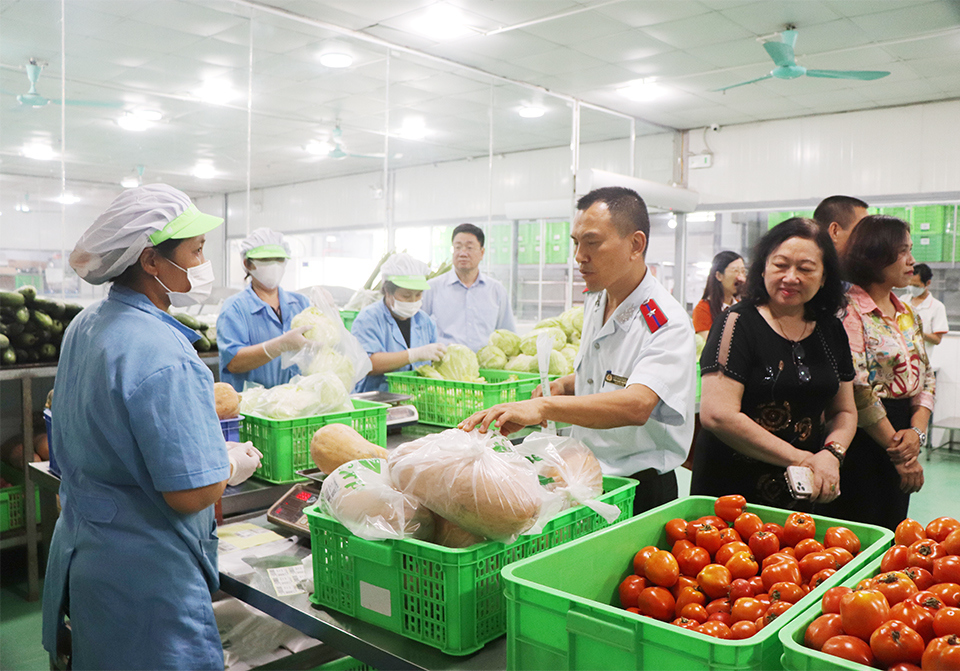
Nguyen Trung Thuan, Vice Chairman of the Hoai Duc District People's Committee, highlighted the difficulties in managing food safety within the agricultural sector, particularly due to the proximity of slaughterhouses to residential areas.
He noted that local markets primarily sell agricultural, forestry, and aquatic products, operating mainly in morning sessions, with vendors frequently moving between different markets. “This situation complicates the issuance of business registration permits, making it difficult to regulate food production and trading facilities effectively,” the Vice Chairman said.
Additionally, since most food is sold the same day and sourced from wholesale markets or local households, proper traceability record-keeping is often overlooked, Thuan pointed out. With various distribution channels, including air and road transport, the limited number of inspection staff poses challenges for quality control and product sourcing verification in retail stores.
Nguyen Thi Thu Hang, Director of the Hanoi Agro-Forestry and Fisheries Quality Management Sub-Department at Hanoi's Department of Agriculture and Rural Development said that since the beginning of 2024, the department has worked with local authorities to address several food safety incidents involving agricultural, forestry, and aquatic products.
A typical case involved a facility in Hoa Binh Commune, Thuong Tin District that was found collecting and processing foul-smelling beef tallow and animal by-products without proper hygiene measures. These products were then distributed for making processed foods like sausages and meat rolls in Hong Duong Commune in Thanh Oai District.
As a result, Thuong Tin authorities imposed a fine of VND5.5 million (US$230) on the facility and destroyed 473 kg of untraceable beef tallow.
Hang emphasized that managing food safety is challenging due to the large number of small-scale production and trading facilities. Furthermore, the personnel responsible for food safety at the district and commune levels frequently change, and their expertise is often insufficient, leading to ineffective support for local governments.
The Director added that post-commitment inspections of facilities are also lacking. Although awareness of food safety among producers and traders has improved, challenges remain. Consumer habits regarding food selection tend to be casual, which facilitates the circulation of unsafe products in the market, she said.
Proactive measures for improvement
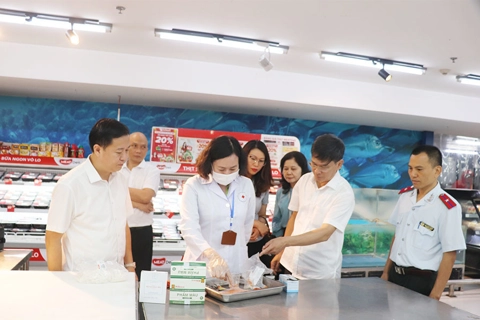
| The inter-sectoral food safety inspection team checks crispy rice products at a supermarket in Hanoi. |
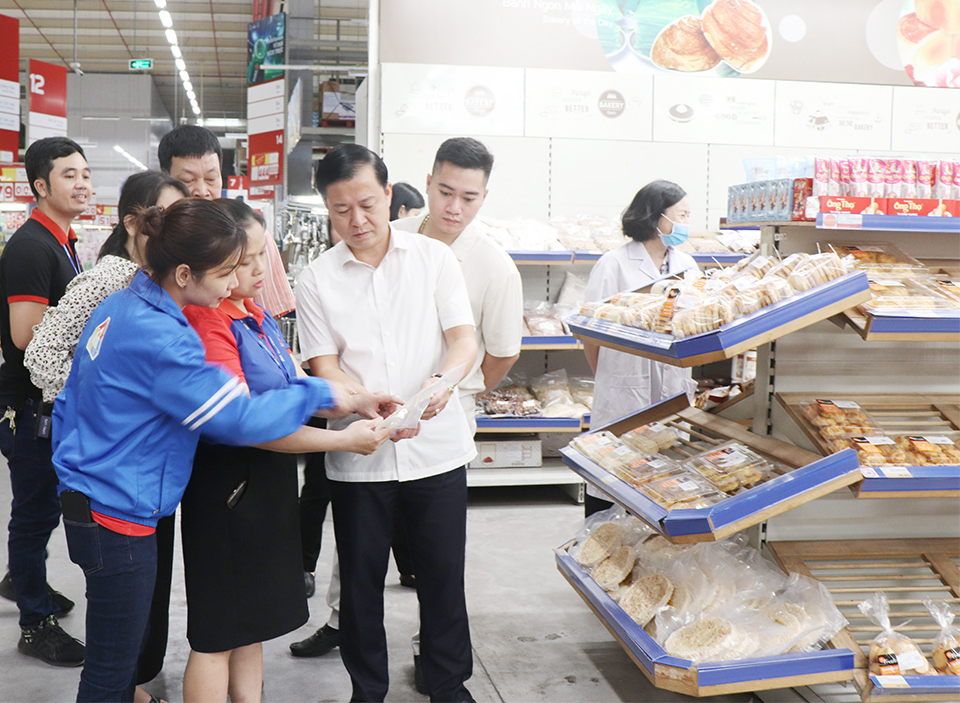
In response to these ongoing challenges, Nguyen Thi Tuyet Anh, Head of the Economic Division of Thanh Tri District, said the locality plans to expand organized agricultural production tied to high technology, ecological farming, and organic practices.
This initiative aims to establish advanced quality management systems to ensure clean agricultural and food products are available in the market.
She emphasized that the district will assist cooperatives and businesses in monitoring product quality, labeling safe agricultural products along the supply chain, and creating identifiable packaging for promotion and traceability.
Additionally, the district will conduct training sessions for farmers to transition from small-scale to larger operations, diversify their products, and expand supply chains to cater to canteens, schools, hotels, and restaurants, Tuyet Anh added.
“Efforts will also focus on educating producers, traders, and consumers about food safety. The district aims to establish safe agricultural product sales points in Van Dien Town, Tu Hiep, and Tan Trieu communes, ensuring residents can access safe products with clear origins,” she told Hanoimoi Newspaper.
Nguyen Dinh Hoa, Deputy Director of the Hanoi Department of Agriculture and Rural Development, said that the department will work closely with various agencies and local authorities to enhance inspections and promptly address violations related to food quality, hygiene, and safety.
He added the department plans to implement widespread sampling of agricultural, forestry, and aquatic products for monitoring purposes, enabling the identification, traceability, and thorough rectification of any violations.
“Additionally, proactive management of food safety incidents will be prioritized, with a focus on monitoring the quality of agricultural, forestry, and aquatic products, including those under the One Commune One Product (OCOP) program,” he underlined. The department aims to improve state management regarding the self-declaration of these products and enhance quality monitoring, risk warnings, and food traceability.
The department is also committed to encouraging and supporting businesses that invest in agriculture and the production of safe agricultural, forestry, and aquatic products. Upgrading equipment and innovating technology will be key factors in ensuring high-quality and safe food, Hoa stressed.
Local authorities will require all agricultural, forestry, and aquatic production facilities to obtain the necessary food safety certification. This certification will help ensure compliance with legal standards and bolster consumer confidence in the products being sold, the Deputy Director said.
Hoa urged the Ministry of Health and the Ministry of Agriculture and Rural Development to review and supplement the list of chemicals, antibiotics, veterinary drugs, and pesticides related to food products, facilitating better management, monitoring, and enforcement actions.
Hanoi's initiative to enhance oversight of agricultural and food quality highlights an increasing awareness of the critical role food safety plays in public health.
Continued collaboration among government agencies, local authorities, and producers is essential for establishing a safer and more dependable food supply.
A strong focus on education, technology, and thorough inspection protocols will lay the groundwork for elevating food safety standards in the capital, ultimately benefiting residents' health and well-being.
Through these concerted efforts, Hanoi seeks to reshape its food safety framework and develop a resilient agricultural system that meets the needs of its population while ensuring all products are safe and of high quality.
For the health sector’s mission, Dang Thanh Phong, Director of the Hanoi Department of Food Safety and Hygiene, stated that the health sector will continue regular and unannounced inspections, post-declaration audits, and food testing to address safety violations. He mentioned new projects on food safety, focusing on food services, street food, and safe food practices across 30 districts. Local authorities will enhance efforts to prevent food poisoning and improve surveillance systems at all levels. Phong highlighted the need for a dedicated team to manage foodborne disease incidents effectively. He also urged local authorities to actively monitor food quality, issue warnings, and trace sources of unsafe food. |