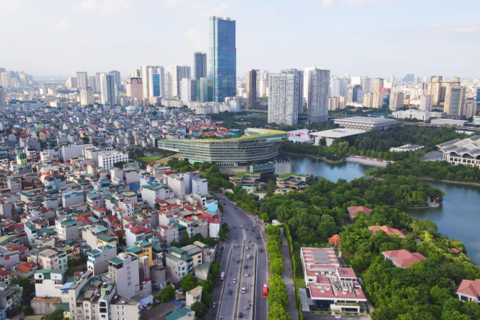
Hanoi moves closer to full shift to clean-fuel transport
With the current pace of progress, Hanoi’s public transport system, built around urban railways and buses, is set to form a green transport network that plays a leading role in the city’s mobility system.
THE HANOI TIMES — Hanoi is moving closer to a full transition to clean-fuel transport as it accelerates concrete measures to green its mobility system, a shift expected to cut emissions, curb pollution and improve urban living conditions.
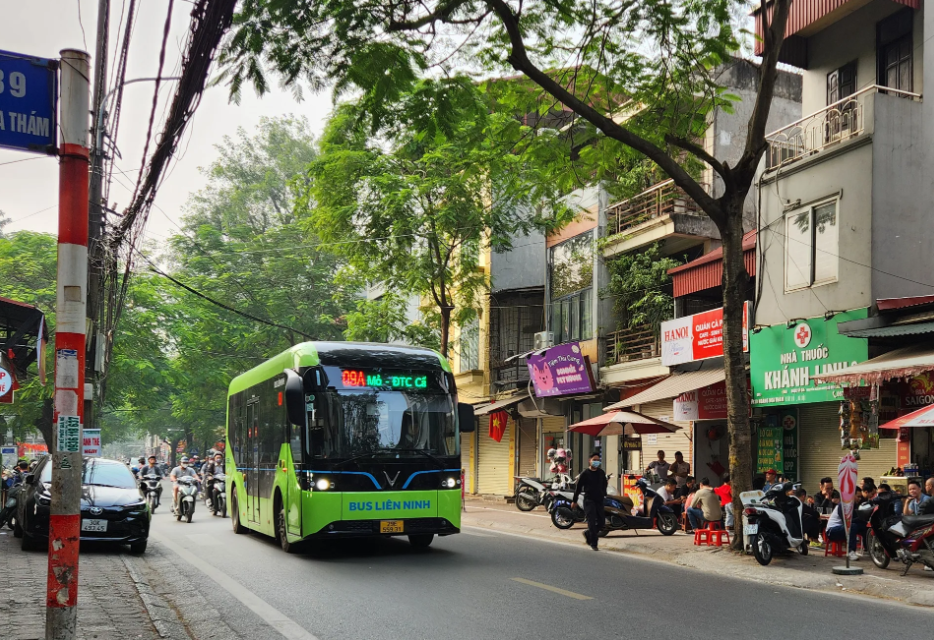
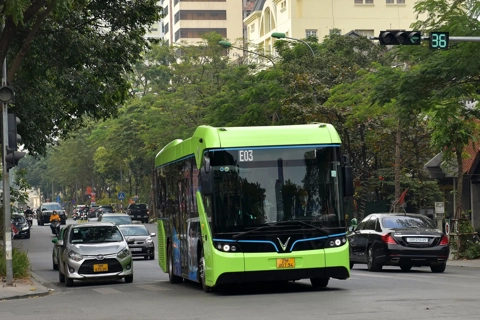
Electric buses in Hanoi are popular with residents thanks to their clean, quiet operation and modern amenities. Photos: Thanh Hai/The Hanoi Times
The push is anchored in the national action program on green energy transition and the reduction of carbon and methane emissions in the transport sector, approved by the Prime Minister under Decision No. 876 dated July 22, 2022.
To translate the strategy into practice, Hanoi has taken the lead nationwide by rolling out swift and coordinated measures, positioning the capital at the forefront of Vietnam’s clean-fuel transport transition.
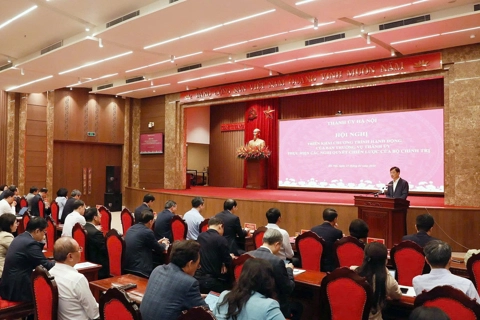
In July this year, the Hanoi People’s Committee set up an inter-agency task force to advise on the green transition of transport vehicles and the development of electric vehicle charging infrastructure across the city.
According to Dao Viet Long, Deputy Director of the Hanoi Department of Construction, after six months, the city had put into operation 12 bus routes with 506 buses powered entirely by clean energy, accounting for 26.6% of the total bus fleet.
By the end of 2025, the city had already met its full-year green bus conversion target for 2026, strengthening its path toward having 100% green buses by 2030, including all three City Tour bus routes.
Urban management expert Tran Tuan Anh said Hanoi made a strategic choice by prioritizing public passenger transport in its green transition. "The city’s public transport system, centered on urban railways and buses, is expected to form a backbone green network within Hanoi’s mobility ecosystem."
“As buses receive public subsidies, the city can integrate green requirements into service bidding conditions. Clear and appropriate pricing frameworks also encourage businesses to convert their fleets faster than in other transport segments,” Anh said.
Beyond buses, Hanoi has made strong progress in electrifying its taxi fleet. Of the 14,375 taxis currently operating in the city, 8,743 now run on electricity, accounting for 60.82 percent of the total.
By 2030, Hanoi is expected to have around 28,000 taxis fully powered by clean energy.
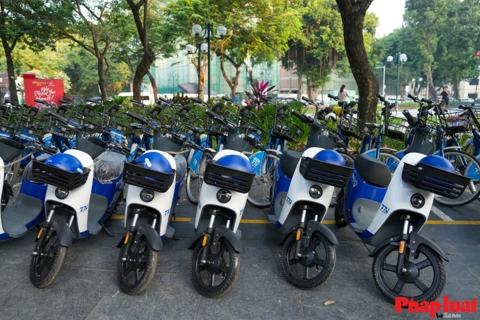
“Together with buses, urban railways, public bicycles and electric bicycles, these services are expected to form a public transport network that runs entirely on clean energy and produces no carbon or methane emissions,” Anh said.
In addition, 18,254 out of 45,529 contract passenger vehicles with fewer than nine seats have already been converted to electric power, representing 40.2% of the fleet, with the city targeting full conversion by 2030.
Meanwhile, transport expert Vu Tuan Linh said that though Hanoi's public transport accounts for a relatively small share of total vehicles, fully greening this system carries special significance.
Public transport vehicles operate at high frequency, and tens of thousands of buses and taxis can generate emissions equivalent to a much larger number of private vehicles.
"A greener and more efficient public transport system makes it easier to attract residents away from private vehicles, helping reduce emissions from personal transport as well," said Linh.
Electric buses in Hanoi have already gained strong public acceptance thanks to their cleanliness, smooth operation and modern amenities.
Linh also noted that public transport is largely supported by the state budget, making it easier to convert and allowing it to serve as a model for residents to experience the benefits of clean-energy vehicles. Once public transport has completed the transition, private vehicles are also expected to follow, albeit on a longer and more cautious timeline.
More solutions
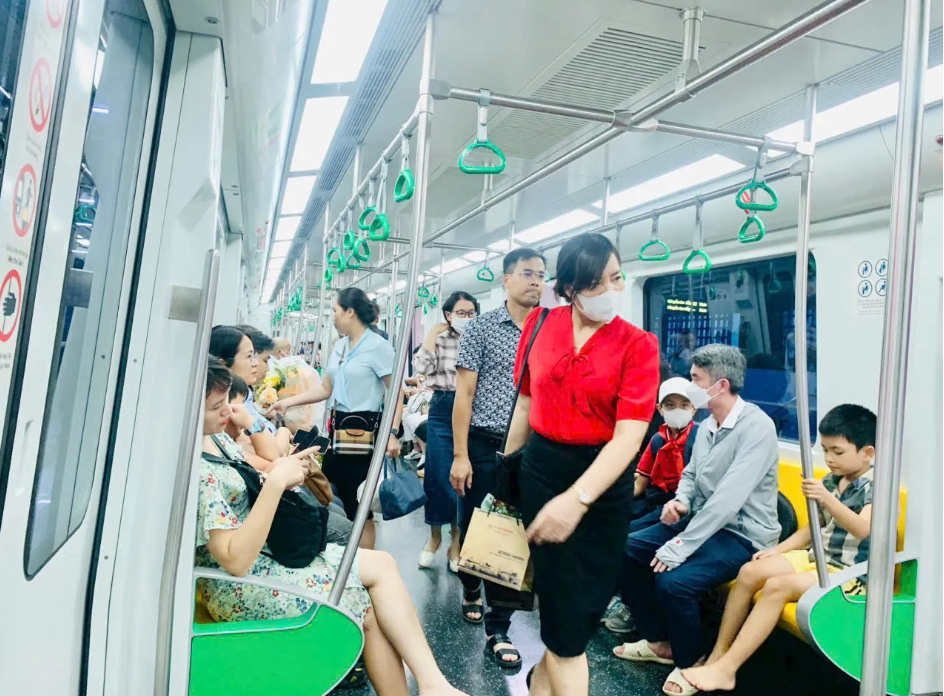
Large numbers of residents use the metro for their daily travel.
Linh said that the green transport transition is not only about replacing petrol and diesel vehicles with electric or gas-powered ones. It also involves gradually limiting private vehicle use, strengthening public transport capacity and reshaping urban development to reduce travel demand.
The city is accelerating urban railway projects and developing transit-oriented development zones to restructure the transport system and better manage travel demand. Combined with vehicle electrification, these efforts are expected to help create a greener and more sustainable capital within the next five to ten years.
Alongside converting public transport, Hanoi is encouraging residents to adopt green mobility through low-emission zones under Resolution No. 57 approved on November 26, 2025.
The zones will be piloted in selected areas within Ring Road 1 from mid-2026 to 2027, expanded to all of Ring Road 1 and parts of Ring Road 2 in 2028–2029 and applied to all areas inside Ring Road 3 from 2030, with wider rollout thereafter.
Residents will be encouraged to use green vehicles or public transport, a shift aligned with the expansion of urban rail, buses and transit-oriented development toward 2030, enabling lower travel demand and greater reliance on electric mobility.
The local officials said Hanoi’s approach remains cautious compared to stricter measures in other global cities and aims to limit disruption to daily life.
At the same time, the city is drafting a comprehensive plan under the Prime Minister’s Directive No. 20 dated July 12, 2025, to convert fossil-fuel vehicles to clean energy, streamline support policies, improve budget efficiency and expand safe, green spaces for pedestrians, cyclists and public transport users.