Hanoi retail market poised for continued growth
Major urban centers like Hanoi and Ho Chi Minh City stand out in Southeast Asia for their young populations and growing appetites for retail and experiential consumption.
THE HANOI TIMES — Hanoi’s retail market is poised for steady growth, driven by increasing demand for sustainable products and a growing middle class, according to a recent Savills report.
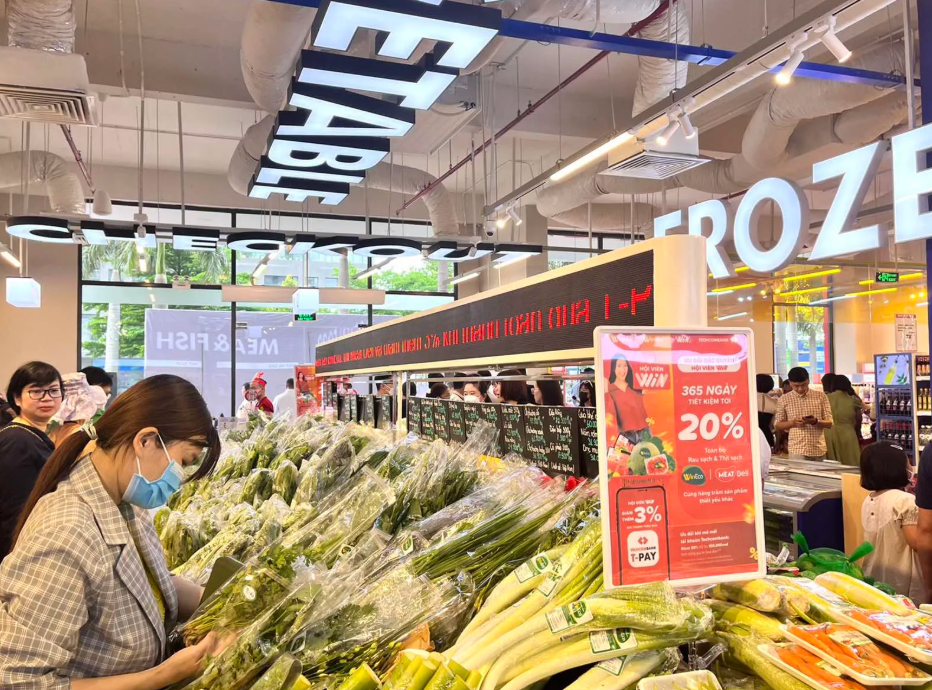
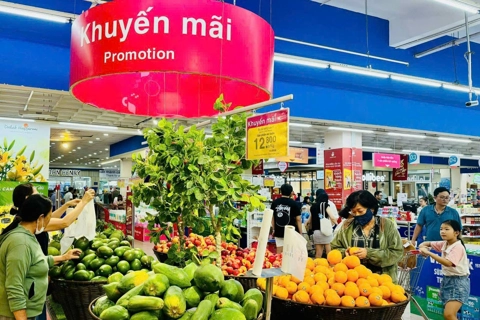
Shoppers at a supermarket in Hanoi. Photo: Hoai Nam/The Hanoi Times
In the first half of 2025, the retail market remained stable, with an average occupancy rate of 86%. Ground-floor rents rose to approximately VND1.3 million (US$53) per square meter per month, driven by persistently low vacancy rates and a limited pipeline of new supply, particularly in central Hanoi.
Only about 10,600 square meters of new leasable retail space are expected to be added over the next three years. The shortage of high-quality space has pushed rents in central areas even higher. Many shopping centers are already operating at or near full capacity, while upcoming projects have yet to fully meet rising expectations regarding location, design, and operational standards.
Leasing activity was dominated by food and beverage businesses and convenience stores. New entrants, such as Oh!Some and 7-Eleven, joined the market alongside ongoing expansion by established names like Muji, Starbucks, and Dzinh.
Tran Pham Phuong Quyen, Senior Manager of Retail Leasing at Savills, noted that Vietnam, particularly its major urban centers like Hanoi and Ho Chi Minh City, stands out in Southeast Asia due to its young population and growing appetite for retail and experiential consumption.
"Lower costs for labor, construction, and logistics compared to regional markets give brands greater operational efficiency and improved profitability," Quyen added.
In particular, international retailers are increasingly targeting well-managed properties that support omnichannel strategies. These range from large shopping malls in mature residential neighborhoods to newer suburban retail parks.
Meanwhile, the post-pandemic correction in property values has made retail assets more appealing to investors. Unlike residential or logistics assets, which have experienced price surges due to prior capital inflows, retail properties now offer more favorable yields, stated Savills report.
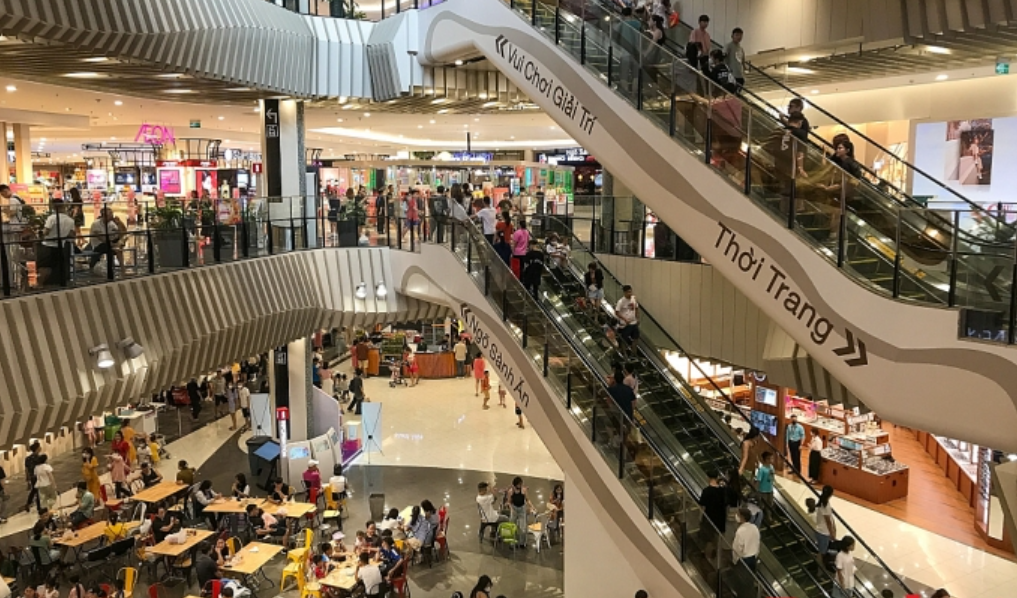
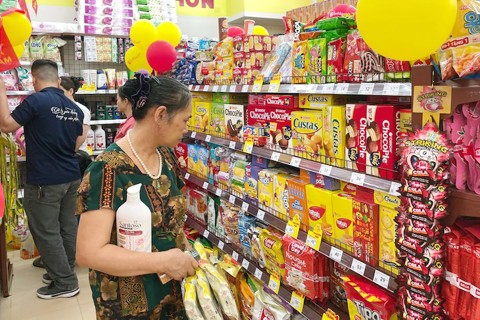
Locals at a shopping mall in Hanoi. Photo: Huy Pham/The Hanoi Times
Shift toward emerging retail hubs
Geographic dynamics in the retail market are evolving as retailers, particularly international brands, intensify their search for high-quality sites to support expansion.
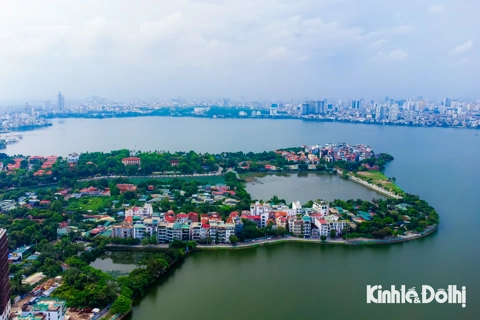
However, the limited availability of suitable space continues to hinder business growth and diminish the overall customer experience. Malls that fail to meet diverse consumer expectations risk lower engagement and declining foot traffic. Consequently, new growth corridors are emerging beyond traditional city centers. Areas like West Lake are attracting increased interest.
Nguyen Hoai An, Senior Director of CBRE Hanoi, predicted a significant increase in shopping mall development in outlying districts. "This trend is driven by rising demand for retail and leisure experiences in suburban areas. While various sectors are showing interest in retail space, the food and beverage segment continues to lead shopping center occupancy rates," she said.
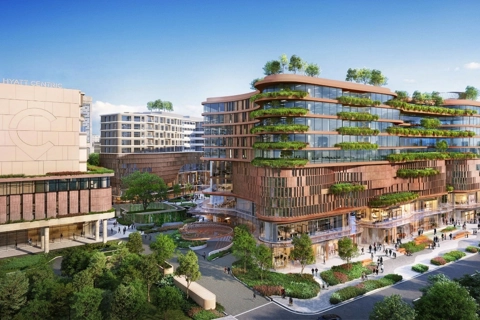
Lotte Mall’s success, coupled with the expected addition of nearly 172,000 square meters of new retail space by 2027, is helping shape this trend. In the Starlake area, major developers, including Toshin, CJ, Mapletree, and Thadico, are planning large-scale commercial projects. They aim to create a lifestyle and retail destination that rivals Hanoi’s historic Old Quarter.
To the east of the Red River, projects such as Vincom Mega Mall Ocean Park and Vinhomes Global Gate are benefiting from major infrastructure upgrades, including the Tu Lien Bridge and Ring Road 4. These improvements enhance accessibility and enable large, integrated retail developments with long-term tenant potential and consistent visitor traffic.
The Vietnam Association of Realtors attributed the positive outlook of the retail sector to the recovery of tourism and the sustained investment of international brands. According to the General Statistics Office, retail sales of goods and services reached approximately US$139.5 billion in the first half of 2025, marking a 9.3% year-on-year increase.
Goods alone accounted for $106.7 billion in retail sales, representing over three-quarters of total sales and growing 7.9% compared to the same period last year. Nationwide, total leasable retail space surpassed 1.85 million square meters, reflecting expansion in both scale and quality.
Tourism has also rebounded strongly. In the first six months of 2025, Vietnam welcomed nearly 10.6 million international arrivals, which is a 24% increase compared to the same period in 2019. Improvements in air connectivity and the steady return of key source markets are expected to support continued growth.
At a recent second-quarter meeting of the Domestic Market Management Task Force, Deputy Director General of the Domestic Market Department at the Ministry of Industry and Trade Phan Van Chinh said that further growth in the latter half of 2025 depends on how well retail businesses expand their reach and respond to evolving consumer preferences.