Hanoi set to become national development hub, lead new growth models
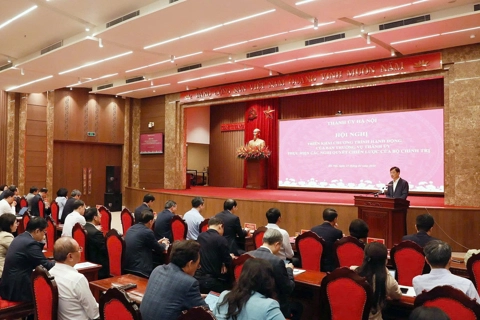
Hanoi Party Secretary Nguyen Duy Ngoc, together with other municipal leaders, chaired a conference to review strategic orientations aimed at positioning the capital as a national development hub and a pioneer of new growth models.
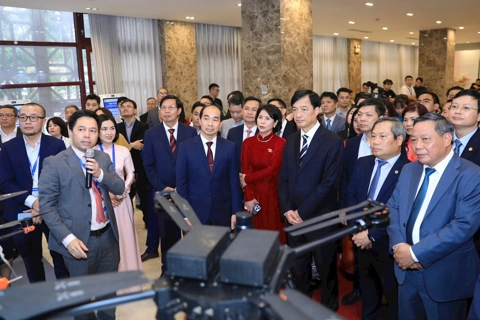
THE HANOI TIMES — The Hanoi Party Committee’s 18th-tenure Executive Board on January 14 convened its fourth plenary session to discuss major strategic issues aimed at positioning the capital as a national center for development creation and a leader in new growth models and development thinking.
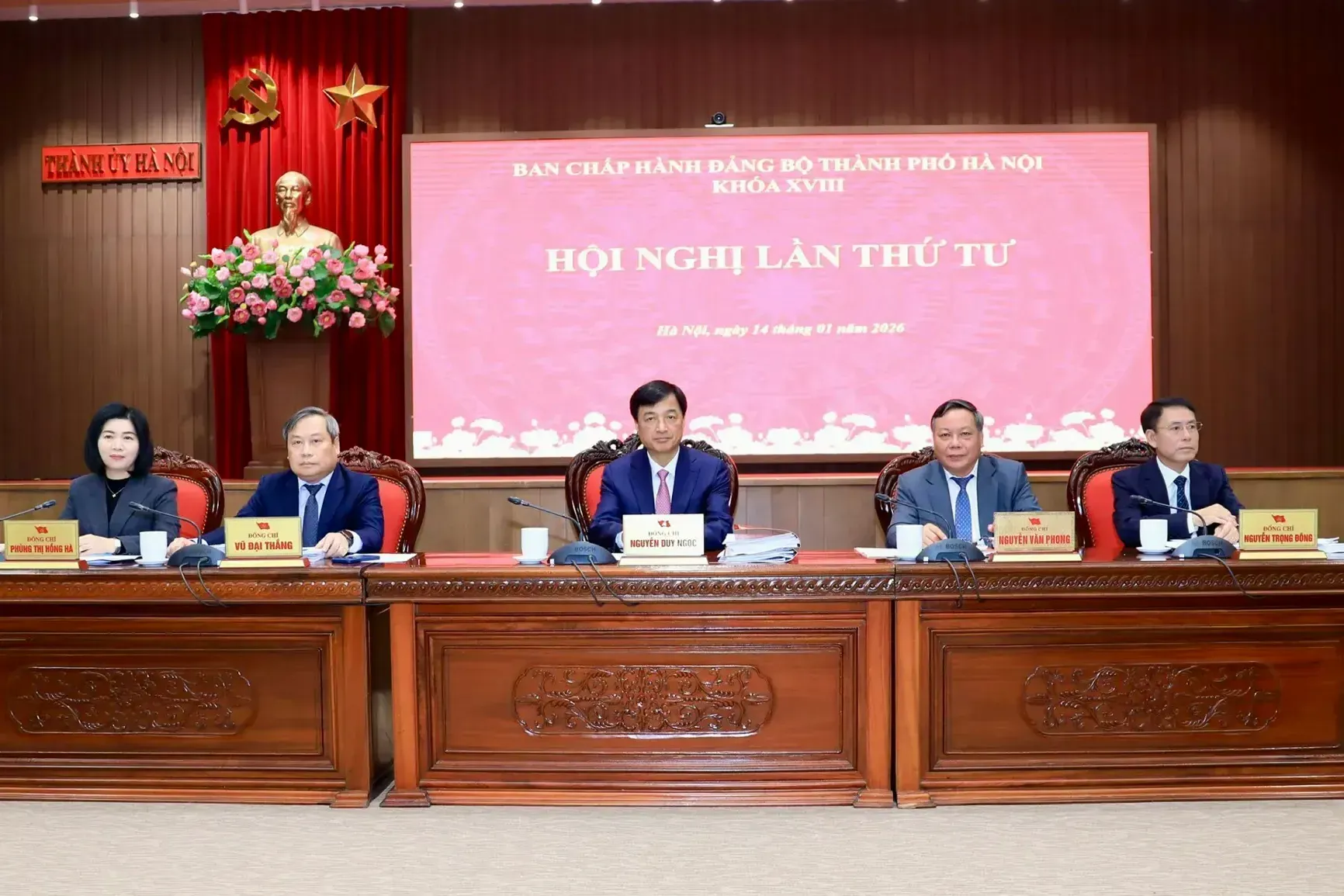
Hanoi Party Secretary Nguyen Duy Ngoc, together with other municipal leaders, chairs the conference. Photos: Pham Hung
Opening the meeting, Politburo member and Hanoi Party Secretary Nguyen Duy Ngoc said the discussions came at a pivotal moment, just days before the 14th National Party Congress, which marks the beginning of what Party leaders have described as a “new era of national rise.”
According to Ngoc, recent high-level working sessions with Party General Secretary To Lam, Prime Minister Pham Minh Chinh and National Assembly Chairman Tran Thanh Man on January 10 provided Hanoi with strategic guidance of long-term significance.
Ngoc quoted General Secretary To Lam as saying that Hanoi must be positioned as a national development creation hub, capable of shaping and leading new development models and mindsets while fully unlocking its distinctive potential.
“Each issue Hanoi resolves effectively can generate nationwide spillover effects, influencing policy thinking and governance practices across central agencies and localities,” Ngoc said, reiterating the General Secretary’s view.
Ngoc urged meeting participants to thoroughly grasp the General Secretary’s conclusions and incorporate them into draft documents at the highest possible level before submission to competent authorities and, ultimately, the Politburo, the Government and the National Assembly for review and approval.
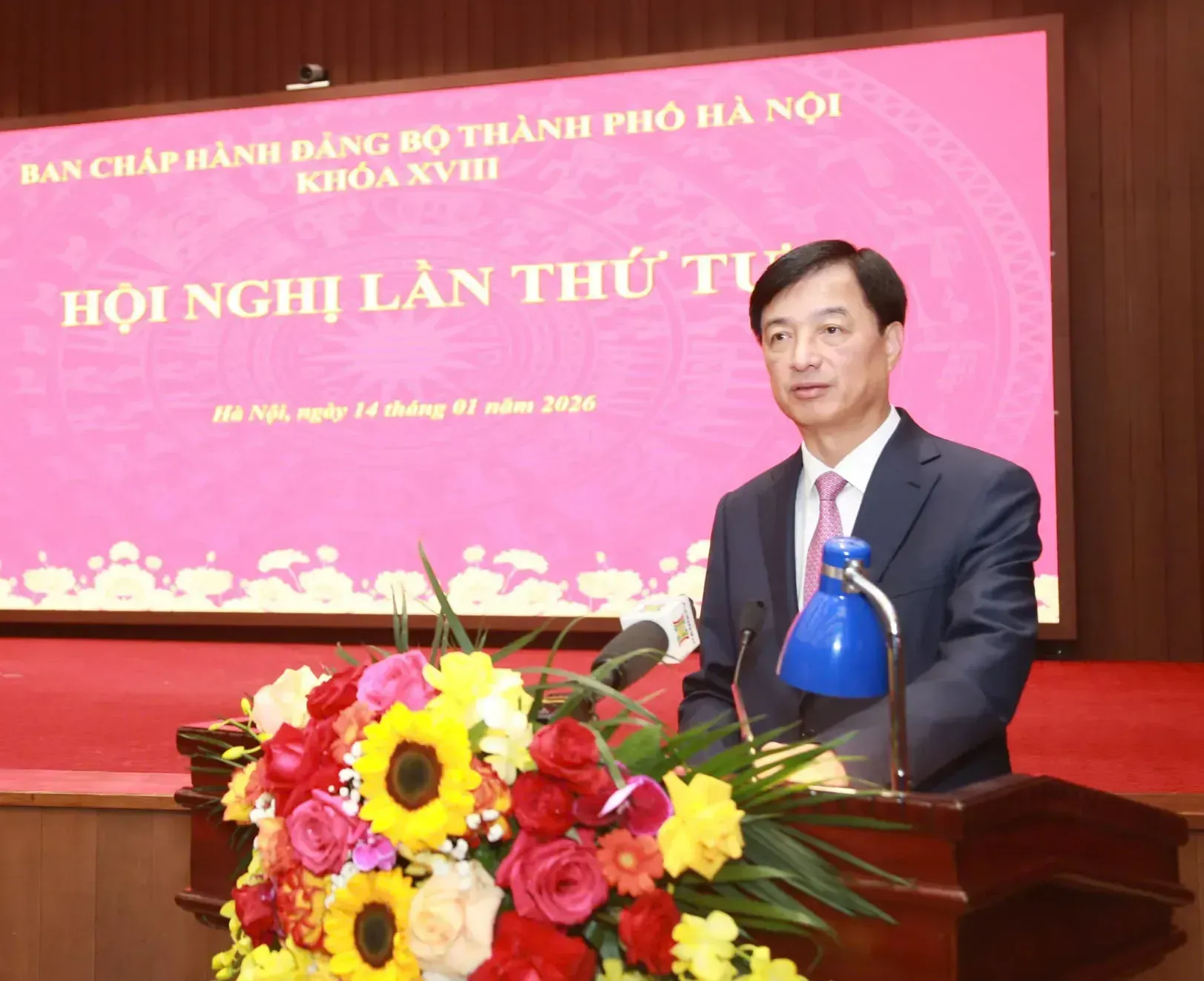
At the meeting, the Hanoi Party Executive Board discussed three key strategic reports.
The first proposes building a new resolution to replace Politburo Resolution No. 15-NQ/TW (May 5, 2022) on orientations and tasks for capital development to 2030, with a vision to 2045.
The second focuses on amending the Capital Law, aiming to create a stronger and more flexible legal framework tailored to Hanoi’s special role.
The third outlines the development of a master plan for Hanoi with a 100-year vision, integrating the Hanoi Capital Planning for 2021-2030 with a vision to 2050 and the adjusted Master Plan for Hanoi to 2045, with a vision to 2065.
Ngoc stressed that institutions, planning and development models form an organic and inseparable trio. Planning must play a guiding role, while resolutions and the Capital Law provide the legal and institutional foundation and development models serve as the mechanism for implementation and resource allocation.
"This trio is a critical condition for Hanoi to realize its development aspirations in the new era and to address five long-standing bottlenecks, including urban order, traffic congestion, environmental pollution, flooding and food safety," said Ngoc.
Growth model renewal and double-digit ambition
On growth orientation, Ngoc said that to achieve growth above 11% in 2026 and during the 2026-2030 period, Hanoi must fundamentally renew its development model.
The new growth model, centered on science and technology, innovation, digital transformation and high-quality human resources, must be capable of sustaining double-digit growth for up to two decades, while ensuring fast and sustainable development.
Based on forecasts and calculations, Hanoi would need a total social investment of about VND750 trillion (US$30 billion) in 2026, including state investment, private sector and public investment and foreign capital.
From there, he called on local authorities and sectors to assess feasibility, identify risks and bottlenecks and propose timely solutions.
The meeting also reviewed investment orientations under National Assembly Resolution No. 258/2025/QH15, which pilots special mechanisms and policies for major projects in the capital.
Two projects were highlighted for early implementation under urgent mechanisms, including a medical complex combining healthcare for the elderly and Hanoi Medical University facilities in Hoang Mai Ward and a digital technology park and mixed-use complex in Phu Dien and Tay Tuu wards.
Ngoc said these projects should apply streamlined procedures to accelerate groundbreaking and serve as pioneering efforts in implementing Politburo Resolution No. 57-NQ/TW, which aims to create breakthroughs in science, technology, innovation and national digital transformation, and Resolution No. 72-NQ/TW on several breakthrough solutions in protecting, caring for and improving public health.
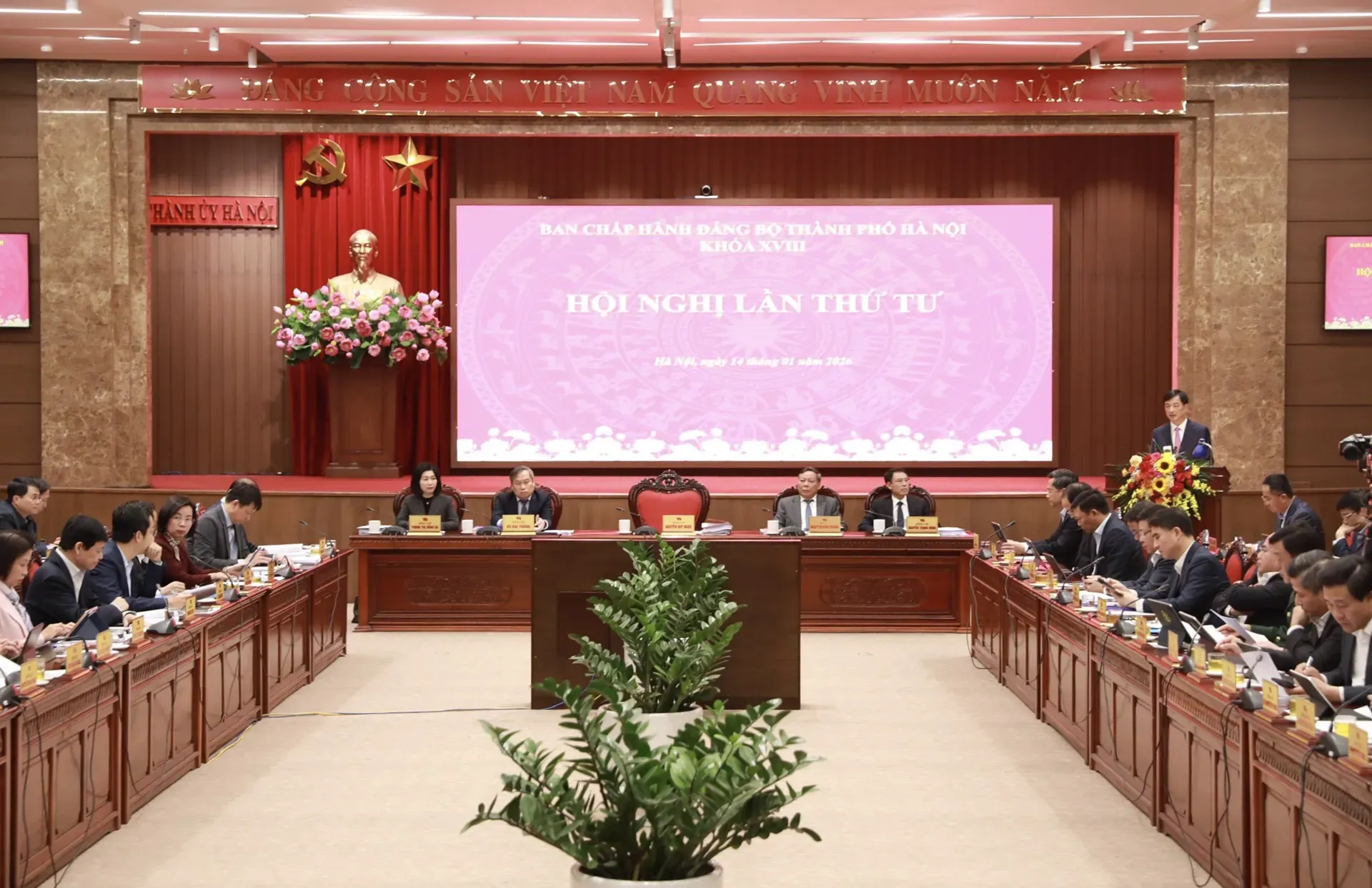
Regarding the action plan to implement Politburo Resolution No. 57-NQ/TW, Ngoc emphasized that all sectors and activities must strictly internalize and implement the resolution.
He called for synchronized implementation of three major transitions, including green transition, digital transformation and the circular economy, treating them as mandatory and cross-cutting requirements throughout the development process.
For ongoing projects, clear and feasible transition roadmaps with defined timelines are required. New projects must comply from the outset with standards on science, technology, digital transformation and innovation, ensuring measurability, feasibility and alignment with real conditions.
The meeting also reviewed routine but critical matters, including Party building in 2025, directions for 2026, leadership accountability reports and Party financial reports.
Ngoc stressed the need for unified and effective leadership across the entire political system, operating coherently along four axes, including Party Committees, People’s Councils, People’s Committees and the Vietnam Fatherland Front.
“Participants have to focus on renewing leadership methods, strengthening accountability of Party organizations and heads and using 2025 outcomes as a foundation for fulfilling targets in 2026 and beyond,” said Ngoc.