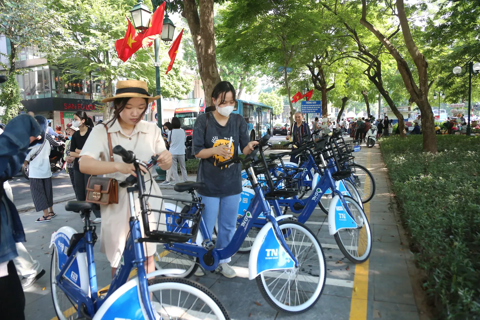
Hanoi set to roll out resolution supporting citizens’ green transition
These resolutions will provide financial and regulatory support for individuals and businesses that adopt green vehicles.
THE HANOI TIMES — The Hanoi authorities will soon issue resolutions to support residents in transitioning to a greener way of life, a key step toward tackling the city’s environmental challenges and reducing air pollution.
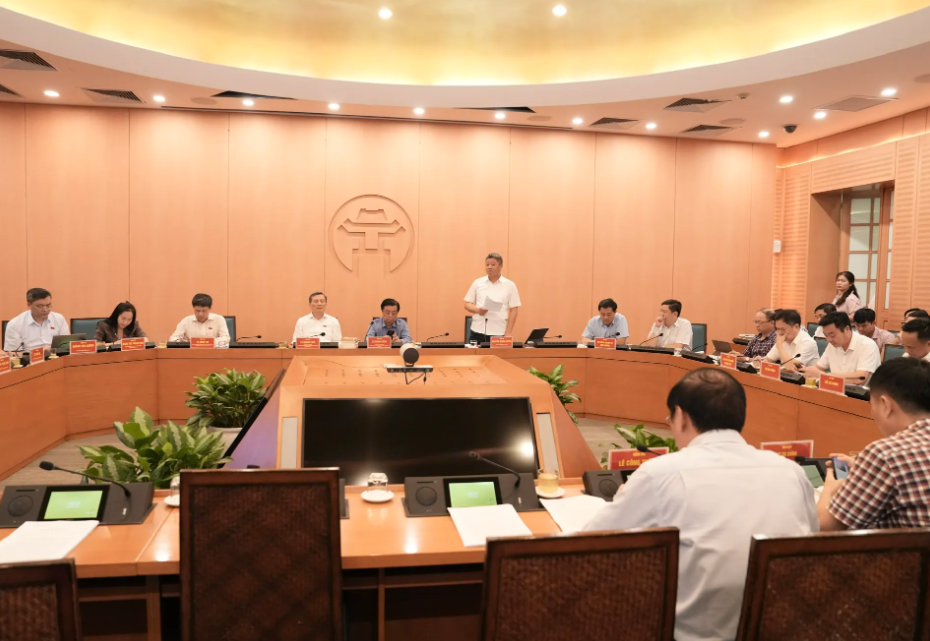
Overview of the meeting. Photos: Hong Thai/The Hanoi Times
Vice Chairman of the Hanoi People’s Committee Nguyen Manh Quyen raised the issue during a July 28 meeting with a National Assembly delegation, which reviewed the city’s environmental initiatives.
Quyen added that Hanoi is prioritizing the mechanization of waste collection and removing policy barriers to attract private-sector participation. “Hanoi also aims to meet the ‘bright, green, clean, beautiful, and fragrant’ standards in developing its industrial zones,” he said.
As part of efforts to implement the prime minister’s Directive No. 20/CT-TTg on urgent measures to prevent and address environmental pollution, Quyen said the city has proposed that the Ministry of Construction promptly issue guidelines for identifying clean and green energy vehicles.
Hanoi urged relevant ministries to work together in setting emission standards for motor vehicles, whether imported, manufactured locally, or already in use, while facilitating a shift toward electric, zero-emission, and environmentally friendly modes of transport.
“Promoting the use of public transportation remains a central part of this strategy,” Quyen said.
Dao Viet Long, Deputy Director of the Hanoi Department of Construction, added that, following government direction, Hanoi has developed a plan to convert its entire public bus fleet to green vehicles by 2030. Currently, 47.3% of taxis run on electric or clean-energy vehicles.
Given the urgency of Directive No. 20/CT-TTg, Long stated that the city is drafting two resolutions to submit to the Hanoi People’s Council for approval during its September 2025 session.
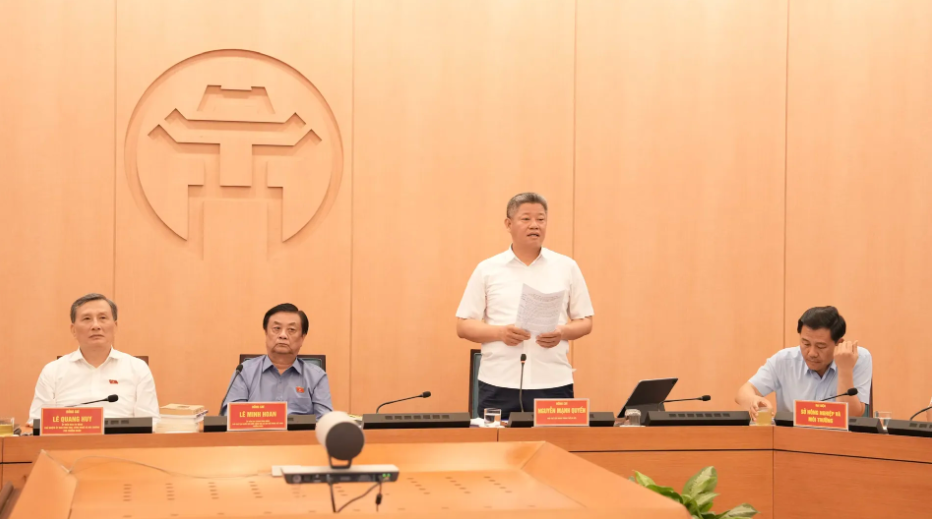
Vice Chairman of the Hanoi People's Committee Nguyen Manh Quyen.
"These resolutions will outline financial and regulatory support for individuals and businesses adopting green vehicles, including subsidies, fee reductions, and incentives from manufacturers and service providers," Long said.
During a supervisory session, National Assembly Deputy Chairman Le Minh Hoan noted that reducing pollution requires a fundamental change in public behavior and daily habits, including waste separation at the source, in addition to sustainable urban planning, public awareness, and modern technology in environmental management.
"Hanoi must take stronger and more decisive action to raise awareness and promote the central role of environmental protection in socio-economic development," Hoan said.
He urged the city to pilot new mechanisms under the Capital Law, such as low-emission zones, green financing, and emission trading, while addressing persistent environmental issues, accelerating wastewater treatment projects, and promoting circular economy models focused on waste sorting, recycling, and reuse.
In the short term, he advised prioritizing public communication campaigns to build awareness and compliance with environmental regulations ahead of the 80th anniversary of the August Revolution and National Day on September 2.
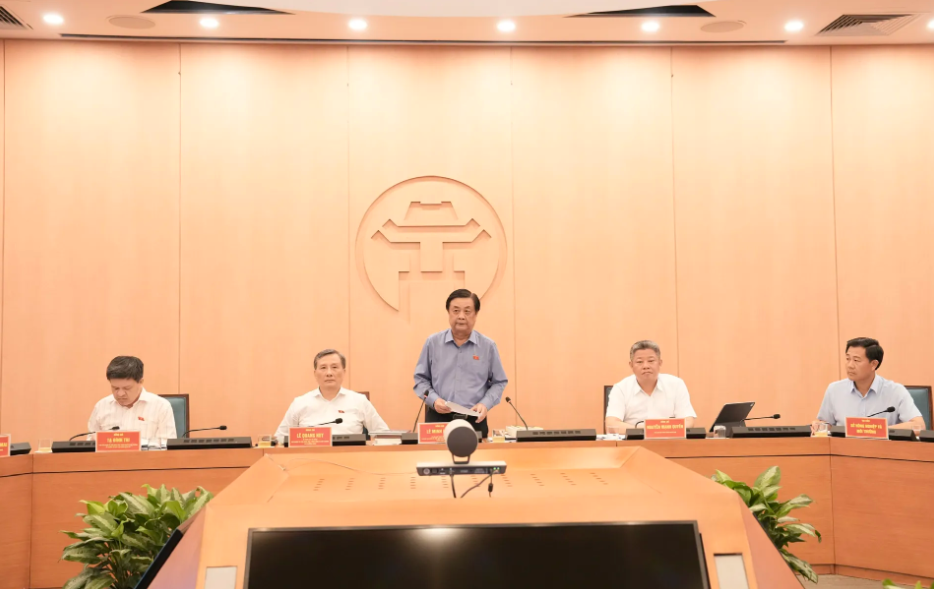
Vice Chairman of the National Assembly Le Minh Hoan.
Earlier in the session, Nguyen Xuan Dai, Director of the Department of Agriculture and Environment, reported that Hanoi has implemented a range of measures to reduce pollution and protect the environment, achieving notable results.
All waste in urban districts has been collected, and in rural areas, the collection rate ranges from 95% to 100%. Almost all hazardous medical waste is collected and treated, and approximately 99% of industrial and commercial hazardous waste is properly managed.
Currently, Hanoi operates six centralized wastewater treatment plants with a combined daily capacity of 414,300 cubic meters, treating 40.8% of the city's wastewater. It is expected to rise to 50–55% by 2025 thanks to upgrades to the Yen Xa wastewater treatment system, which is planned to have a capacity of 270,000 cubic meters per day.
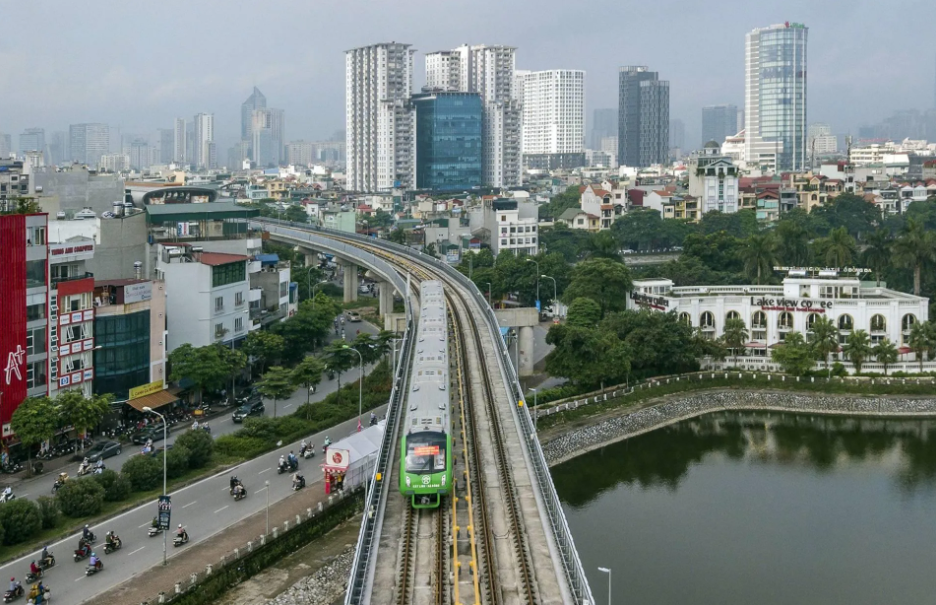
The Cat Linh - Ha Dong metro line. Photo: Pham Hung/The Hanoi Times
Dai added that Hanoi is pursuing a major undertaking to rehabilitate the environment of its four main urban rivers: To Lich, Kim Nguu, Lu, and Set. In addition, Plan No. 90/KH-UBND, issued on March 26, 2024, outlines measures to address water pollution in the Cua Bay River by 2030.
On March 2, 2024, the city issued Decision No. 1142/QD-UBND to manage air quality, establishing a roadmap through 2035. The plan outlines 14 tasks across four focus areas to strengthen air quality control.
However, progress in building solid waste and wastewater treatment plants in the urban core has been slow, and many industrial clusters have fallen behind schedule in upgrading existing wastewater facilities. Long-standing pollution in the To Lich, Tich, Nhue, and Day rivers also remains unresolved.
At the meeting, Ta Dinh Thi, Deputy Chair of the National Assembly’s Committee for Science, Technology and Environment, identified Hanoi’s main pollution sources as vehicle emissions, construction, industrial activity, and the open burning of agricultural waste on the city’s outskirts.
Despite some positive steps, Hanoi still faces significant gaps in its legal and regulatory framework.
"There are no formal interprovincial coordination mechanisms, emergency response protocols, or specific emission controls for motorbikes and scooters. Air quality monitoring infrastructure development is also behind schedule,” Thi added.
To address these legal shortcomings, Thi called on the Ministry of Agriculture and Environment to develop national technical standards for vehicle emissions and called on the government to set a timeline for applying standards to reduce transport-related emissions more effectively.