Hanoi steps up efforts to meet rising housing demand
During this period, Hanoi saw positive developments in its housing development plans, with nearly 50 million square meters of new residential floor space built and the housing needs of tens of thousands of households met.
The Housing Development Plan for 2023 was recently released by the Hanoi People's Committee, which aims to construct 6.9 million square meters of new floor space in various types of buildings. This initiative is viewed as a measure by the city administration to alleviate the housing shortages.
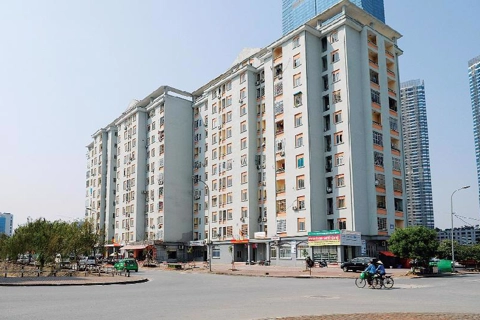
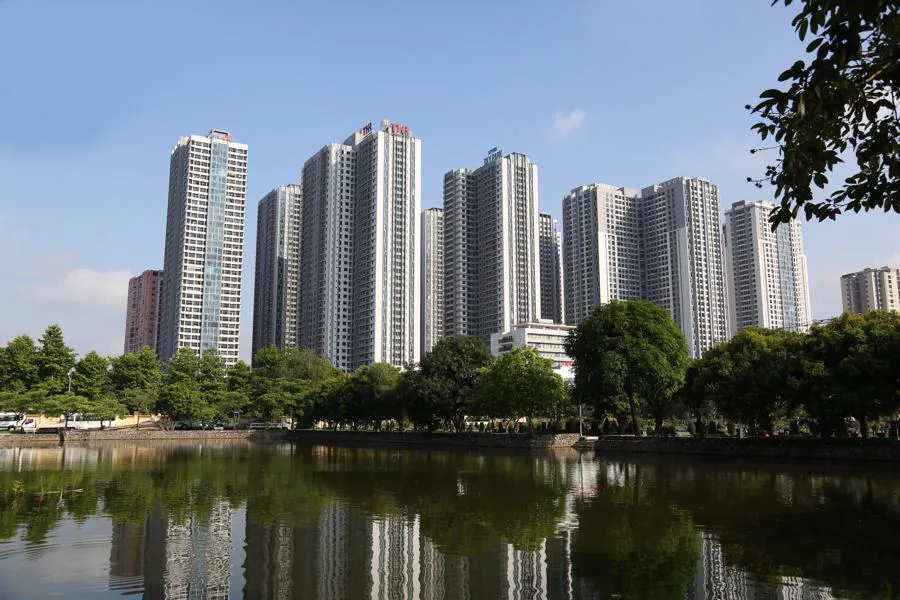
| A commercial housing project in Hanoi. Photo: Thanh Hai/The Hanoi Times |
In the last decade, the real estate market has not experienced such a shortage of new supply as it is facing now. In 2022, there are only 126 licensed commercial housing projects nationwide with 55,732 apartments (about 52.7% compared to 2021) and 466 projects with 228,029 apartments under construction (about 47.7% compared to 2021). However, only 91 projects with 18,206 apartments have completed construction (equivalent to 55.2%).
As for social housing projects, there are only nine newly approved projects with 5,526 apartments nationwide. On the other hand, 114 projects with 6,196 apartments have completed construction, and 27 projects with 8,245 apartments are eligible to sell ready-built homes in the future.
At the beginning of 2023, the market situation is expected to deteriorate, as there were only 17 newly licensed commercial housing projects in the first quarter of the year, a decrease of 77.3% compared to the fourth quarter of 2022 and 43.6% compared to the first quarter of 2022.
It is worth noting that in the first quarter of this year, only one social housing project consisting of 300 apartments was approved. As the market continues to decline, densely populated urban areas such as Hanoi, Ho Chi Minh City, and Da Nang are facing significant pressure due to the shortage of housing for citizens, which also puts pressure on local authorities to provide social security.
Around 25,000 new properties were listed in the market during the January-March period, 80% of which were apartments, representing a 63% increase compared to the same period last year. However, large urban areas such as Hanoi and Ho Chi Minh City accounted for only 29% and 30% of the total supply, respectively, while the Southwest region contributed 40%.
The high demand for housing is considered to be one of the main reasons for the continuous increase in property prices, especially in the apartment segment.
According to a market research report by the Vietnam Association of Real Estate Brokers (VAREB), residential prices in all 12 districts in Hanoi increased in the first quarter of 2023 compared to the end of 2022. The "hottest" areas were Hoang Mai District (up 24%), Gia Lam District (23%), Long Bien District (15%), Dong Anh District (12%), and Thanh Xuan District (11%), while other areas saw increases ranging from 4-6%.
Dr. Nguyen Huu Cuong, chairman of the Hanoi Real Estate Club, noted that the challenges facing Hanoi's housing market reflect the situation across the country.
"There are risks and legal issues that cause uncertainty among investors and people alike," Cuong said. One of the main reasons is the lack of low-cost housing projects in the 2016-2020 period, which has led to an imbalance between supply and demand and price fluctuations.
Efforts to address the crisis
Despite the shortage, Hanoi has seen positive developments in its housing development plans during this period, with nearly 50 million square meters of new residential floor area built and the housing needs of tens of thousands of households met, Cuong said. As a result, Hanoi currently has 224.73 million square meters of housing floor area, with an average per capita area of 27.25m2/person, exceeding the target set by the city's housing development program for 2012-2020.
The Covid-19 pandemic has led to a reduction in resources, resulting in many housing projects being unable to continue due to a lack of capital raising channels. In addition, several key business leaders in the real estate, securities and corporate sectors have been arrested for illegal activities, undermining public and investor confidence in the market.
To make matters worse, the legal framework is outdated and is currently undergoing revisions that have not yet been approved, leading to a "wait and see" attitude among business leaders and, consequently, a reduction in supply in the market.
To address the ongoing market crisis, the Hanoi People's Committee has released the Housing Development Plan for 2023, which is part of the city's overall housing master plan for 2021-2030. The plan sets a target for per capita housing area to reach 28.2m2/person and a total area of 6,965 million square meters to be built in 2023. This includes 4.5 million square meters for individual houses and 2.465 million square meters of houses in urban development projects, including 2.339 million square meters of commercial housing, 0.032 million square meters of social housing, and 0.094 million square meters of resettlement housing.
Urban planning expert Master Tran Tuan Anh believes that Hanoi is taking decisive measures to tackle the housing crisis by assigning specific tasks to departments and branches and implementing a housing development plan for 2023.
In addition, Chairman of the City People's Committee Tran Sy Thanh has been working directly with districts to address the slow implementation of 700 projects.
These efforts are considered significant in this difficult period, Anh said.
However, the lack of capital and vague legality are considered to be the biggest problems affecting the real estate market, despite the numerous guidelines, decrees and circulars issued by the government. The resolution of these issues will take time, at least 1-2 years, for the market to recover and grow again. Therefore, the achievement of Hanoi's goals depends not only on the state management agency, but also on the active participation of businesses and social organizations, said Nguyen The Diep, vice chairman of Hanoi Real Estate Club.
Diep added that to achieve these goals, the city should mobilize capital from private sources for housing development, including capital from enterprises, banks, credit institutions, local development investment funds, stocks, bonds, and other sources of legal capital, to create a stable and long-term housing financial system and reduce dependence on the State budget.