14TH NATIONAL CONGRESS OF THE COMMUNIST PARTY OF VIETNAM
Log in
Hanoi

Hanoi tasks 36 local hospitals to become self-financed

Experts have said that the biggest challenge for a financially autonomous hospital is raising enough revenue to cover its operating costs.

Thirty-six hospitals under the management of the Hanoi Department of Health will become financially autonomous in 2023-2025.

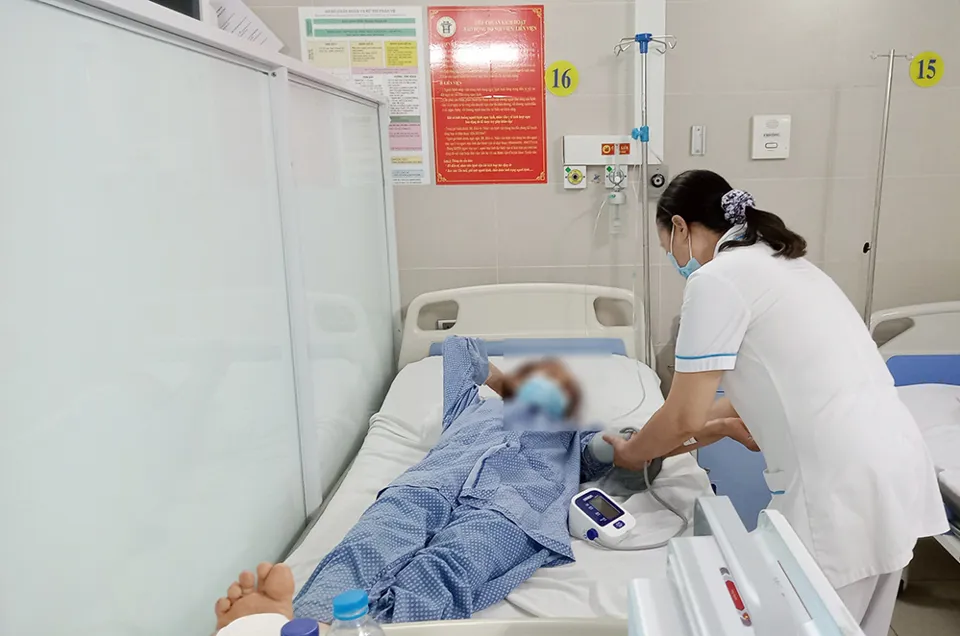
A patient under treatment at Thanh Nhan Hospital in Hanoi. Photo: Hoang Huy/The Hanoi Times

Under a plan released by the Health Ministry last week, these 36 hospitals will be financially autonomous.

These health facilities will not receive subsidies or budget support from any public agency or Government.

The Hanoi Department of Health has asked the hospitals to restructure their management and operational apparatus, ensure cost-effective payroll, and improve the quality of services.

As a result, the department asked the 36 hospitals to increase revenue from healthcare services and reduce costs to improve their financial autonomy.

In addition, all targeted hospitals must disclose their financial statements to the Ministry of Health, the auditing company, and the Government inspection agency as required.

In 2023-2025, the hospitals will be required to submit their financial statements and financial autonomy reports as required.

The list of 36 hospitals includes Saint Paul General Hospital, Dong Da Hospital, Thanh Nhan Hospital, Duc Giang General Hospital, and specialized hospitals for eye, heart, lung, and cancer.

The Hanoi Health Department aims to transform 37 local health facilities from State-funded to financially autonomous, including 30 district-level medical centers and hospitals, six specialized centers such as the Center for Disease Control, the Forensic Center, and the Hanoi Rehabilitation Hospital.

According to Dao Xuan Co, director of Bach Mai Hospital, the biggest challenge for a financially autonomous hospital is raising enough revenue to cover its operating costs.

He said that most patients' medical services are paid for by health insurance, which means that income is not enough to cover expenses.
Reactions:
Share:
Trending
Most Viewed
Related news
Hanoi health sector targets digital leap under new Party resolution

Hanoi health sector targets digital leap under new Party resolution

Hanoi sets 2026 as a breakthrough year for healthcare reform, accelerating digital transformation, restructuring hospital networks and tightening food safety management under Politburo Resolution 72.

Hanoi launches state-backed innovation hub to drive digital economy

Hanoi launches state-backed innovation hub to drive digital economy

The new innovation center is designed to connect policy, technology and talent, aiming to accelerate digital transformation, support startups and position the capital as a global testing hub for emerging technologies and creative industries.

ASEAN youth showcase climate innovations at Hanoi exhibition

ASEAN youth showcase climate innovations at Hanoi exhibition

Young innovators from Vietnam and across ASEAN presented practical climate solutions in Hanoi, highlighting grassroots initiatives tackling plastic waste, renewable energy and sustainable livelihoods.

Hanoi issues action plan to implement 14th Party Congress resolution

Hanoi issues action plan to implement 14th Party Congress resolution

The goal is to turn policies into outcomes under the principle of “less talk, more action, effective results to the end, all for the capital and its people.”

ASEAN youth chart next phase of climate action in Hanoi

ASEAN youth chart next phase of climate action in Hanoi

Home to more than 680 million people, many in vulnerable coastal and low-lying areas, ASEAN is on the front line of climate change, facing rising seas, fiercer storms, prolonged droughts and accelerating biodiversity loss that endanger the region’s economic resilience and social stability.

Hanoi launches sweeping overhaul to unlock state economy growth

Hanoi launches sweeping overhaul to unlock state economy growth

Hanoi has unveiled an ambitious five-year plan to reform governance, mobilize public assets and restructure state enterprises, aiming to turn the state economy into a powerful engine of sustainable growth.

Hanoi puts people first in implementing four strategic Party resolutions

Hanoi puts people first in implementing four strategic Party resolutions

Hanoi launches comprehensive action plans to implement Politburo Resolutions 71, 72, 79 and 80, prioritizing people-centered reforms in education, healthcare, culture and state economic development.

Vietnamese families blend Tet travel trends with enduring traditions

Vietnamese families blend Tet travel trends with enduring traditions

More young Vietnamese families choose travel over staying home during the Lunar New Year holiday, seeking fresh experiences while keeping core traditions intact.