Hanoi
Hanoi urban railway: Awaiting breakthrough from social resources
According to Hanoi transport master plan, which has been approved by the Prime Minister, until 2030, the capital will have completed 10 urban railway routes with total investment of 40 billion USD.
Expert said, it would be difficult to realize this objective, if Hanoi solely depends on state budget and Official Development Assistance (ODA).
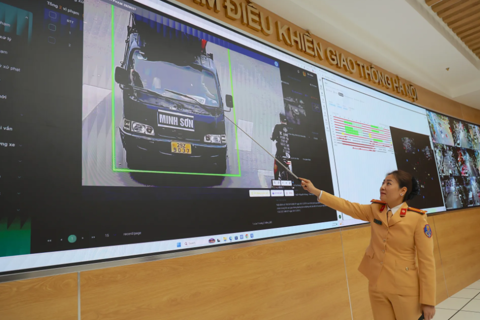
Director of Hanoi transport management and control center Nguyen Hoang Hai said: “urban railway is the spine of public transport network. If the urban railway is not completed, other public transport model will be ineffective and fragmented”. Meanwhile, Hanoi is facing serious traffic congestion, as one of the reasons is that public transport only meet the 10% transport demand of citizens. As such, the urgent demand of Hanoi is to form a system of urban railways, so that when put into operation, there will be a close linkage between models of public transport.
In reality, Hanoi has just constructed 2 routes of urban railway: No. 2A Cat Linh – Ha dong (invested by Ministry of Transport) and No. 3, Nhon – Hanoi station. Deputy Head of Finance & Planning Office of the Hanoi Transport Department Phan Truong Thanh said, the biggest difficulty of Hanoi is the lack of investment fund for urban railway projects. As the state budget for public investment has been limited for both Ministry of Transport and provinces; while ODA fund is managed based on the public debt ceiling, which cannot go further than the current level. Thanh said: ”In the current context, social resources are the only feasible way to continue implementing urban railway projects in accordance with the plan. Hanoi is determined to overcome difficulties to complete urban railway projects, but due to the mechanism barrier, Hanoi is looking for support from the government”.
As such, the Prime Minister Nguyen Xuan Phuc suggested to look for private funds in the meeting with Hanoi leaders on September 29. The Prime Minister considered Hanoi still has large potential, abundant land resources, favorable conditions to attract social resources, the Prime Minister requested: “improving socialized investment fund, creating mechanism to attract and mobilize private funds to carry out projects in general, especially important transport infrastructure projects such as urban railway system”.
Transport expert Nguyen Manh Thang said: ”Mobilizing private resources, even foreign direct investment (FDI) is an effective solution for Hanoi at the moment”. Citing the urban railway route Cat Linh – Ha Dong, Thang said, we lent ODA fund from other countries, which is then limited by conditions, so that we cannot speed up the progress on our own, as well as with regard to control the fund; in other way of saying, we have to accept even the delay and the additional cost. Recently, Hanoi People’s Committee has reported to the Prime Minister to consider some private enterprises, both in Vietnam and abroad to carry out urban railway projects in form of public – private partnership (PPP). Experts said, if urban railway projects can be done in this way, Hanoi can avoid risks and difficulties similar to what happened to the No.2A urban railway road.
With this being said, the Prime Minister Nguyen Xuan Phuc expected Hanoi to encourage and attract social resources to invest in transport infrastructure projects, especially for urban railway projects. The Prime Minister emphasize: “If we can call on the social resources and efficient manage projects, we will in control of the implementation plan and be more effective. This is a win win situation for both parties”.

Elevated urban railway Cat Linh - Ha Dong.
|
In reality, Hanoi has just constructed 2 routes of urban railway: No. 2A Cat Linh – Ha dong (invested by Ministry of Transport) and No. 3, Nhon – Hanoi station. Deputy Head of Finance & Planning Office of the Hanoi Transport Department Phan Truong Thanh said, the biggest difficulty of Hanoi is the lack of investment fund for urban railway projects. As the state budget for public investment has been limited for both Ministry of Transport and provinces; while ODA fund is managed based on the public debt ceiling, which cannot go further than the current level. Thanh said: ”In the current context, social resources are the only feasible way to continue implementing urban railway projects in accordance with the plan. Hanoi is determined to overcome difficulties to complete urban railway projects, but due to the mechanism barrier, Hanoi is looking for support from the government”.
As such, the Prime Minister Nguyen Xuan Phuc suggested to look for private funds in the meeting with Hanoi leaders on September 29. The Prime Minister considered Hanoi still has large potential, abundant land resources, favorable conditions to attract social resources, the Prime Minister requested: “improving socialized investment fund, creating mechanism to attract and mobilize private funds to carry out projects in general, especially important transport infrastructure projects such as urban railway system”.
Transport expert Nguyen Manh Thang said: ”Mobilizing private resources, even foreign direct investment (FDI) is an effective solution for Hanoi at the moment”. Citing the urban railway route Cat Linh – Ha Dong, Thang said, we lent ODA fund from other countries, which is then limited by conditions, so that we cannot speed up the progress on our own, as well as with regard to control the fund; in other way of saying, we have to accept even the delay and the additional cost. Recently, Hanoi People’s Committee has reported to the Prime Minister to consider some private enterprises, both in Vietnam and abroad to carry out urban railway projects in form of public – private partnership (PPP). Experts said, if urban railway projects can be done in this way, Hanoi can avoid risks and difficulties similar to what happened to the No.2A urban railway road.
With this being said, the Prime Minister Nguyen Xuan Phuc expected Hanoi to encourage and attract social resources to invest in transport infrastructure projects, especially for urban railway projects. The Prime Minister emphasize: “If we can call on the social resources and efficient manage projects, we will in control of the implementation plan and be more effective. This is a win win situation for both parties”.