Hanoi’s traffic landscape expected to major transformation in 2024
In 2024, the focus will be on the topic of minimizing congestion, ensuring order, and road safety.
Entering 2024, experts hope the capital's urban transport network will have undergone significant changes and become a positive force for socio-economic development.
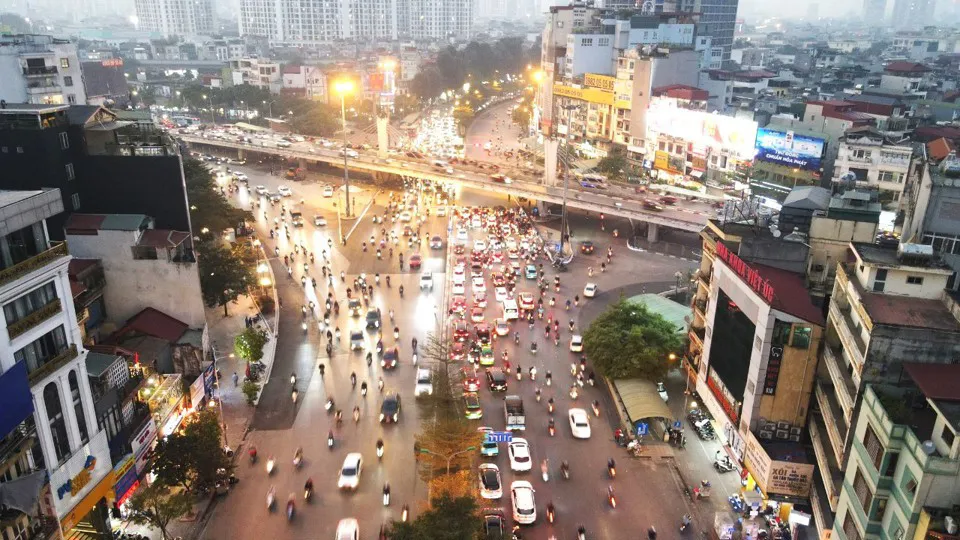
| Nga Tu So intersection during rush hour. Photo: The Hanoi Times |
Transportation expert Le Trung Hieu noted that in 2023, Hanoi witnessed significant reforms in traffic management and operation, with positive results.
“However, there are still persistent challenges and difficulties," he said.
Tuan added that Hanoi faces four major transport challenges: inadequate transport infrastructure, prolonged road construction projects causing traffic bottlenecks, the effectiveness of public passenger transport systems, and the increasing number of private vehicles violating traffic laws, along with the prevalence of illegal taxi services and unregistered buses causing disorder and road safety issues.
"These are issues that cannot be completely solved overnight, but the city needs both long-term and immediate measures to gradually address these four challenges," said Hieu.
With around 10 million inhabitants and nearly 8 million vehicles concentrated mainly in the central urban area, traffic pressure is a significant burden on Hanoi, leading to complex traffic situations. Major roads like Nguyen Trai, To Hieu - Le Van Luong, Ring Road 3, Nguyen Xien - Khuat Duy Tien, Giai Phong, and Phan Trong Tue have become persistent traffic hotspots, causing difficulties for citizens and resulting in environmental issues and social waste.
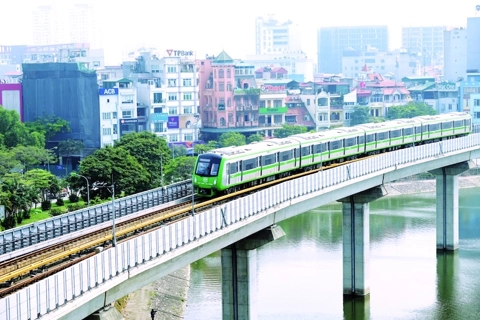
CEO of Hanoi Metro Vu Hong Truong emphasized the need to develop the public transportation system, particularly the crucial role of urban railways.
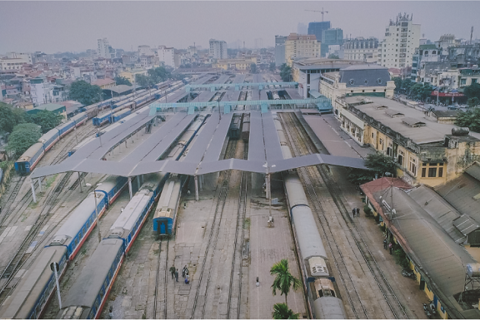
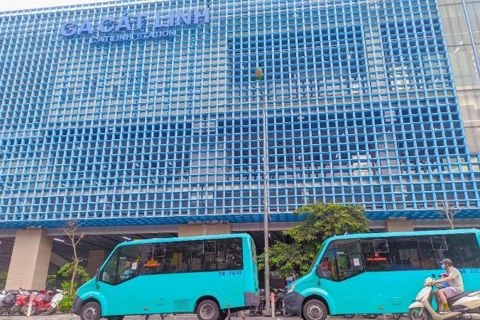
"In 2024, Hanoi will continue to put the elevated urban railway section Nhon - Hanoi Station into operation. Together with the Cat Linh - Ha Dong urban railway, these two lines will significantly contribute to relieving traffic congestion in the city," said Truong.
Meanwhile, the Hanoi Department of Transport has begun to streamline and reallocate the bus network to make it more efficient.
This marks the first major adjustment of the bus network scale based on a comprehensive evaluation of each route.
Thai Ho Phuong, Deputy Director of the Hanoi Public Transportation Management and Operation Center, mentioned that in 2023, public passenger transport met over 19% of the people's travel demand, with the goal for 2024 being to ensure 20-25%.
“As the public transport network improves, more people are expected to switch to using trains, buses, and bicycles, thereby reducing the number of private vehicles and minimizing congestion and traffic accidents. However, greater emphasis needs to be placed on traffic control and the handling of traffic violations,” said Phuong.
In reality, traffic offenses are widespread across all age groups and social segments. This long-standing issue has caused significant difficulties in traffic management and has been a source of public frustration.
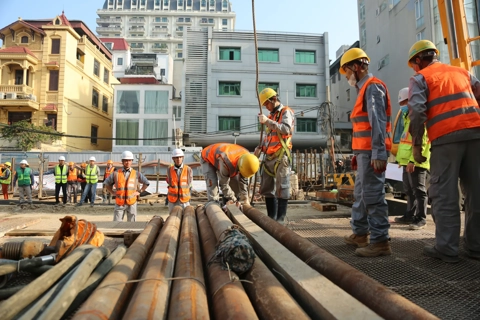
In addition, the issues of illegal taxis, unregistered coaches operating in the city center, and poorly managed construction barriers obstructing traffic flow also require stronger and more effective actions.
Deputy Director of the Hanoi Department of Transport Dao Viet Long said that in 2023, the department submitted a special report to the city on the management and handling of violations by commercial vehicles.
In 2024, the city's Traffic Safety Committee will lead the establishment of special task forces to deal with these issues, Long said.
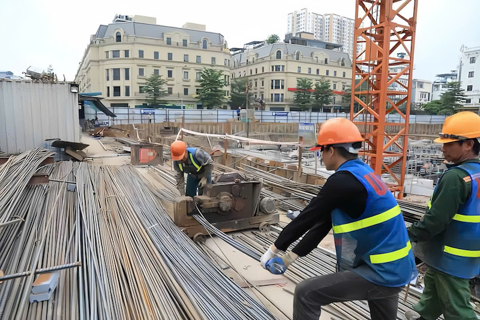
In terms of infrastructure development investment, many experts believe that 2024 will be a critical year for Hanoi. Most of the major projects such as Ring Road 4, National Highway 6, Kim Dong Underpass, and Thang Long Avenue are still under construction and cannot be completed and put into use yet. Therefore, organizing traffic plays an extremely important role.
Director of the Hanoi Department of Transport, Nguyen Phi Thuong, shared that in 2023, the department implemented eight specialized tasks to enhance the efficiency of traffic management and operation. In 2024, the focus will be on the topic of minimizing congestion, ensuring order, and traffic safety. This will involve detailed efforts to address difficulties in each specific area of the city.
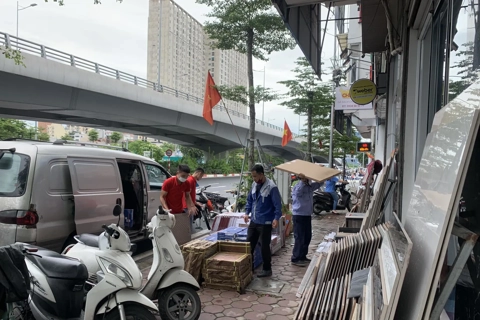
Recently, Hanoi's Party Secretary Dinh Tien Dung called for early pilot programs for renting sidewalk space to make a positive contribution to maintaining urban order, road safety, and minimizing traffic congestion.
This pioneering solution could help restore order on the streets and reduce traffic congestion, he noted.