"Horses in the city" exhibition highlights Vietnam’s enduring spirit ahead of Tet
In the space of Temple of Literature, artistic creations of the horse represent physical strength, the spirit of self-reliance, career building and the will to strive for success through knowledge, persistent training and the process of self-improvement for each individual.
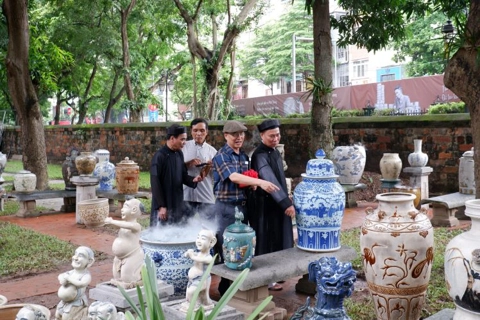
THE HANOI TIMES — An exhibition titled “Horses in the City” is now running at the Temple of Literature in Hanoi, highlighting the cultural and spiritual meaning of the horse, the zodiac animal of the Lunar New Year 2026.
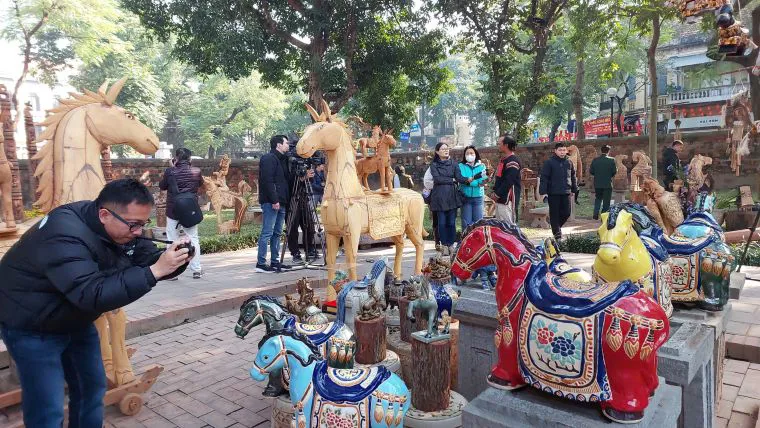
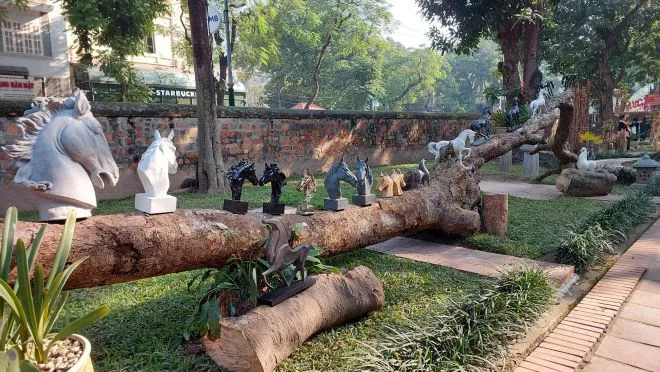
The exhibition includes collections of Central Highlands wooden horse statues and Lam Phong Studio's lacquered horse statues. Photos: Ngo Minh/The Hanoi Times
In Vietnamese culture, the horse has long played a central role in daily life, trade and history. It represents strength, loyalty, perseverance and an enduring drive for progress.
The image of the horse appears widely in legends, folk beliefs, architecture, fine arts and literature.
As the Year of the Horse approaches, a year associated with action, movement and breakthroughs, the symbol takes on deeper significance. It evokes inner strength, ambition and a spirit of continuous learning toward the future.
The exhibition features wooden works by Central Highlands cultural researcher Dang Minh Tam, artist Le Huy and the Lamphong Studio group, alongside horse-related images and artifacts that leave a strong impression on local and international visitors.
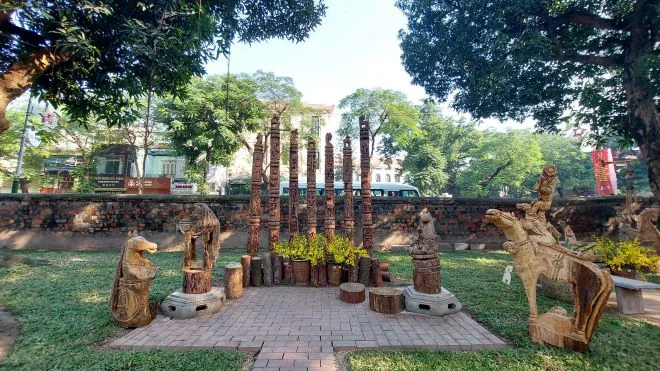
A space of Central Highlands wooden horse statues.
The wooden sculptures from the Central Highlands stand out for their diversity and rustic beauty, reflecting the character of the region’s people, Tam said as he observed the collection of wooden horses.
“Each sculpture is unique. You will never find two identical Central Highlands wooden carvings,” he said. “That originality gives them lasting appeal.”
Tam noted that the natural, unpolished chisel marks created by Central Highlands artisans carry the region’s rich cultural identity and give the works their distinctive charm.
He added that wood carving in the Central Highlands has recently been revived, marked by the establishment of a traditional village devoted to the craft. In the past, artisans mainly carved statues for tombs.
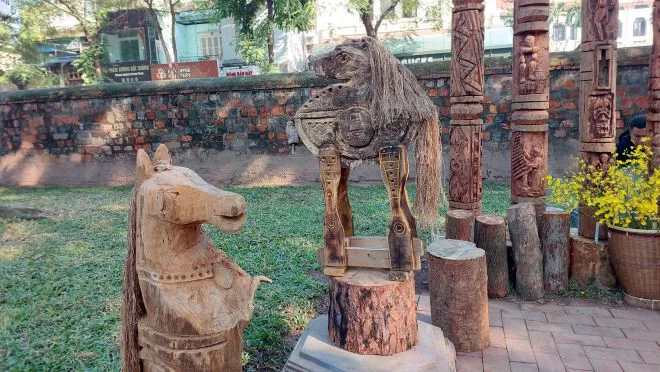
Each one bears the mark of the skillful hands and the soul of Central Highlands artisans.
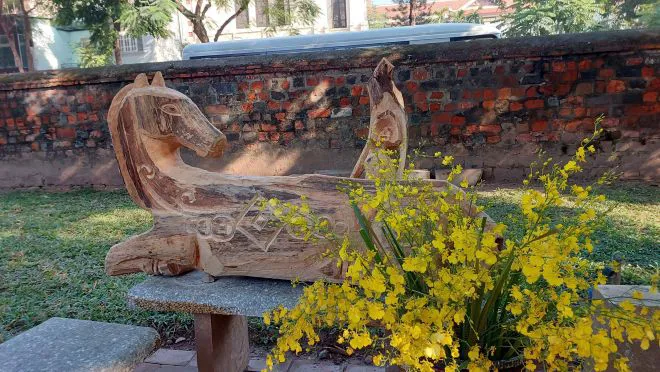
It's impossible to find two identical Central Highlands wooden sculptures.
Using irregular pieces of wood and simple tools, artisans shape figures guided by imagination rather than fixed measurements. They rely on hand spans and arm lengths instead of rulers.
Central Highlands woodcarvers do not receive formal academic training. The craft passes from generation to generation through hands-on teaching.
“Central Highlands wood carvings show remarkable variety in form and style. No two statues are ever the same,” Tam said.
“They carve directly, without polishing or painting. The result feels raw and honest, much like the people of the Central Highlands. Foreign visitors, especially from France and South Korea, show strong interest in these works.”
Through approaches that range from cultural research and contemporary painting to creative installation art, artists reinterpret the image of the horse in vivid and layered ways. The works feel rooted in tradition while reflecting the rhythm of modern life.
The exhibition runs until the end of March.
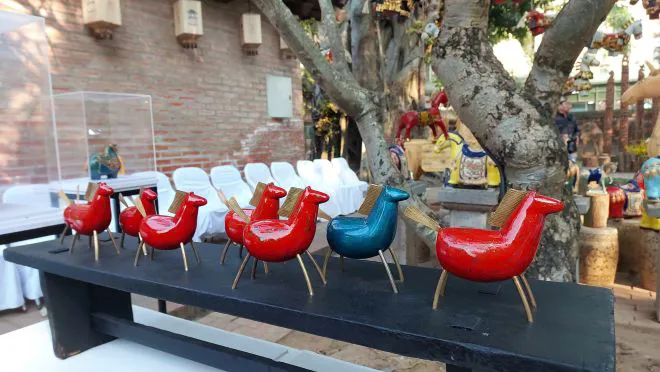
Lacquered horse statues displayed by Lam Phong Studio.
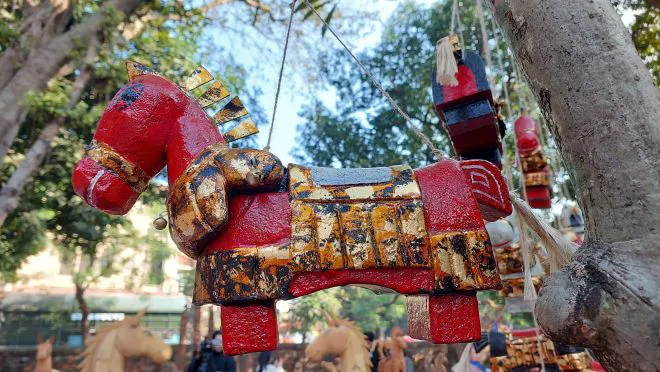
Red horse symbolizes good fortune in the new year.
Horse installation art by painter Le Huy.