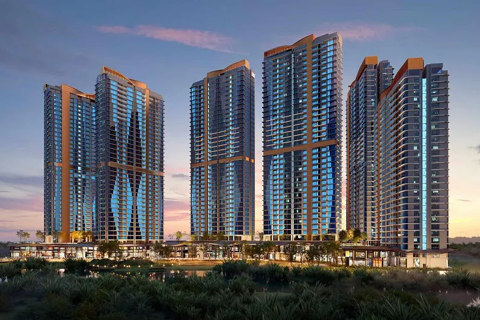
Housing prices in Hanoi suburbs predicted to hike by year-end
Strong inflows in investment capital help improve the suburban landscape and narrow the gap in housing prices between the metropolitan and outskirt areas.
Demand for properties in Hanoi suburban areas was surprisingly on the rise when the fourth Covid-19 outbreak was wreaking havoc in the capital city, and the trend is expected to continue until the year-end period.
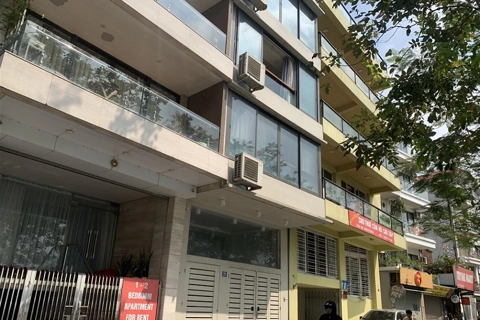
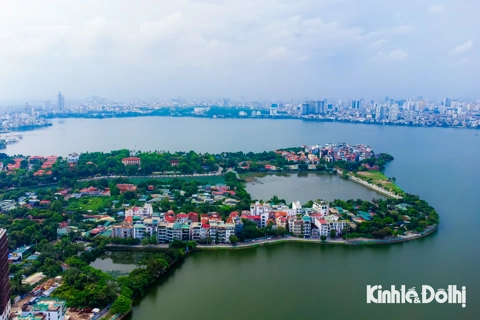
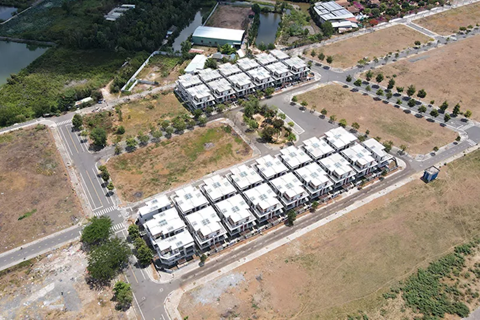
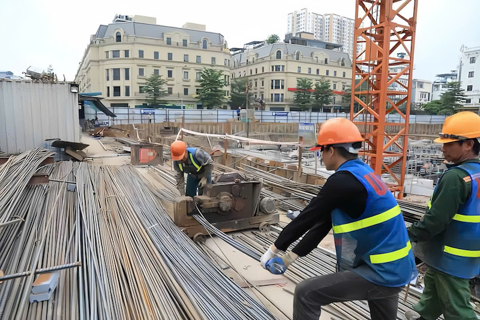
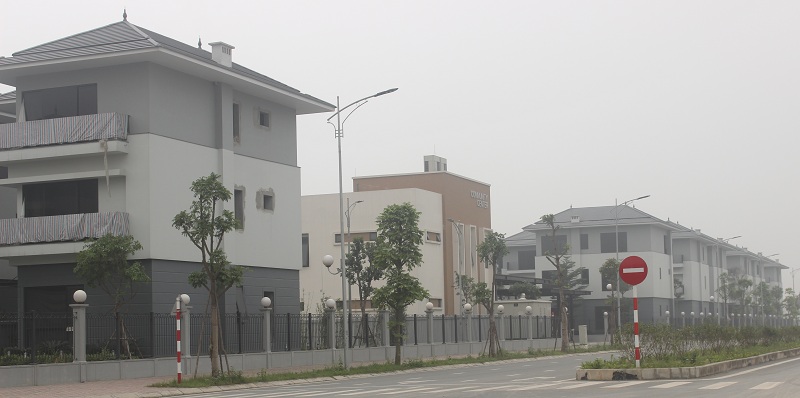
| Hanoi suburban areas benefit from strong inflows of investment capital. Photo: Doan Thanh |
Do Thu Hang, senior director of Advisory Services at Savills Hanoi, explained the high demands for suburban properties are owing to major improvements in infrastructure systems, including the emergence of new shopping malls or office buildings.
Along with a better infrastructure network, new urban areas are forming in districts such as Gia Lam, Thanh Tri, Dong Anh, Hoai Duc, or even in areas bordering with Hung Yen or Bac Ninh provinces.
“Strong inflows in investment capital help improve the suburban landscape and narrow the gap in housing prices between the metropolitan and outskirt areas, along with providing higher living conditions for locals,” Hang told The Hanoi Times.
According to Hang, in parallel with the expansion of Hanoi, suburban areas have become important housing supply sources and serve as a new growth driving force for the real estate market.
“Despite the Covid-19 impacts, high-quality projects would continue to attract attention, or even subject to higher prices in the coming time,” she noted.
A report from the Vietnam Association of Realtors (VARS) revealed total real estate products on offer in Hanoi during the third quarter was nearly 6,000, of which the absorption rate was around 30%.
Upon breaking down, the segment of middle-class apartments led the pack as it made up 53% of total transactions, while low-rise buildings and houses accounted for 14.2%, and budget apartments 2.1%.
The report also noted transactions of luxury apartments sharply rose during the third quarter, making up 30.8% of total transactions.
Vice General Director of real estate developer Dat Xanh Mien Bac Nguyen Chi Nghia noted the absorption rate of 30% was a positive result taking into consideration the stay-at-home order being imposed in Hanoi at that time, noting the focus was on suburban areas in districts of Hoang Mai, Nam Tu Liem, Bac Tu Liem or Cau Giay.
“However, the supplies remain the lowest for many years, in which apartments account for a lion’s share of 87.3%,” Nghia told The Hanoi Times.
Meanwhile, the high sale number of luxury apartments was due to steep discounts offered by property firms, he added.
For the remainder of the year, real estate experts suggested the suburban areas would hold the key role in boosting the recovery of the real estate market, but there could be fierce competition from luxury projects with further sale promotion programs by year-end.
VARS’s General Secretary Nguyen Van Dinh told The Hanoi Times that at a time of economic difficulties and in a low-interest-rate environment, the real estate market along with securities continues to be attractive investment options in a foreseeable future.
Dinh, however, suggested investors should be clear of legal status in any project before making a purchase decision. “The uncertainty of the economy as a result of the pandemic means investors should refrain from using financial leverage to minimize risks,” he added.
In long term, Director of Savills Vietnam Matthew Powell said the key factor to accelerate market recovery would be to speed up vaccination programs and contain the pandemic.
Once the pandemic is under control, not only domestic but also foreign investors would return, with major markets such as Hanoi, Ho Chi Minh City, or Danang being the key targets, Powell suggested.
Cau Giay District, identified as the future administrative center of Hanoi, has seen rapid growth in infrastructure development thanks to the presence of major real estates developers such as Sun Group, Tan Hoang Minh, or Vinaconex, with the latest project being the US Embassy worth over US$1.2 billion. “Cau Giay and other districts in the west of Hanoi would continue to attract new residents and real estate investors, especially foreigners,” Vice Director of IP Land Tran Quoc Viet told The Hanoi Times. Do Thu Hang, senior director of Advisory Services at Savills Hanoi, said projects of major scale such as the US Embassy would turn the district into the seat of multinationals and agencies. “No doubt that housing prices in Cau Giay are more affordable compared to downtown areas, and therefore, would attract more investors,” Hang said. Director of Savills Hanoi Matthew Powell said foreigners are turning to Cau Giay and other districts in the west of Hanoi due to the concentration of high-quality housing projects. |
![[Longform] Renovation of old apartment buildings must keep social cohesion: experts](https://cdn-media.hanoitimes.vn/2022/07/30/rsz_ddffcover1.jpg?w=480&h=320&q=100)