Korean company eyes Hanoi battery-swapping segment, targets 100,000 e-motorbike users
South Korean firm LG Energy Solution has outlined a two-phase project, beginning with pilot stations at the Hoa Lac Hi-Tech Park and later expanding to plant construction.
THE HANOI TIMES — South Korea’s LG Energy Solution (LG ENSOL) has proposed a project to install battery-swapping cabinets for two-wheeled electric motorbikes in Hanoi, with the capacity to serve around 100,000 users.
The information was shared during a meeting between Brandon Kim, the company’s Executive Director and Vice Chairman of the Hanoi People's Committee Nguyen Manh Quyen on October 1.
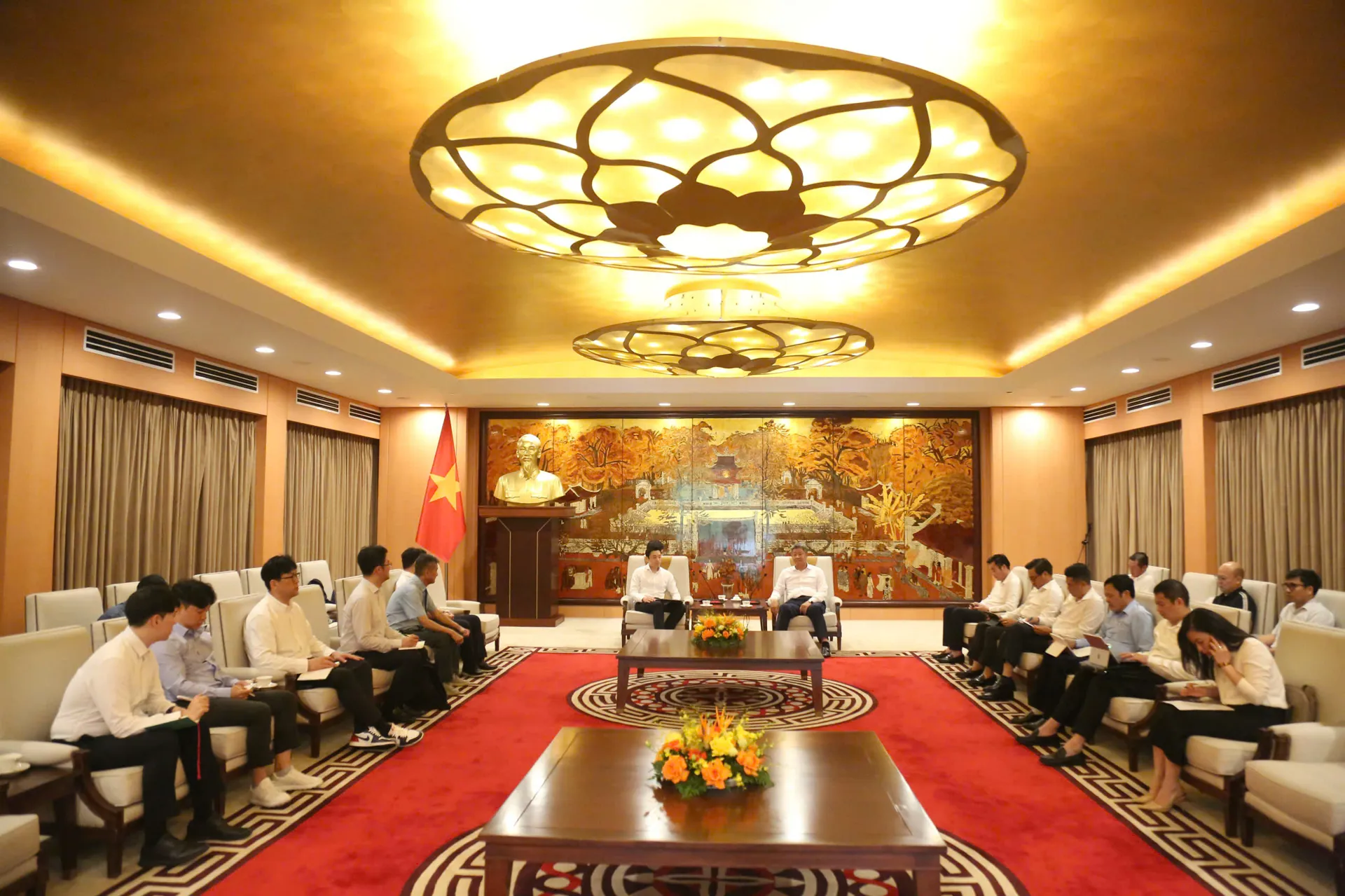
Vice Chairman of Hanoi People's Committee Nguyen Manh Quyen and leaders of South Korea’s LG Energy Solution at the meeting. Photo: The Hanoi Times
Kim said that the company is collaborating with Honda to develop the model, which enables users to replace batteries quickly instead of waiting for charging, thereby promoting the use of green transport.
He added that the system will incorporate artificial intelligence (AI) to monitor and manage battery quality, analyze operational data and enhance efficiency.
Staff will also receive specialized training in operations and maintenance to ensure long-term sustainability, Kim said.
According to him, the Hoa Lac Hi-Tech Park is a suitable site to establish the operation center and pilot battery-swapping stations.
He noted that once the project reaches scale, the company will consider building a battery manufacturing plant in Hanoi to supply electric motorbikes and related equipment.
In the pilot phase, the company will rely entirely on its own capital, while in the expansion phase it plans to combine that investment with official development assistance (ODA) from the South Korean government.
Kim expressed hope that Hanoi would support the project’s implementation and proposed that Hanoi introduce a reputable local enterprise to help operate the plant and the system.
According to Nguyen Manh Quyen, Vice Chairman of the Hanoi People’s Committee, the city is building a roadmap to expand public transport and shift from gasoline-powered to electric vehicles.
This effort aligns with Vietnam’s commitment at the 26th United Nations Climate Change Conference (COP26) to achieve net-zero emissions by 2050.
Quyen said that Hanoi aims to convert all buses to electric vehicles by 2030. The city now has 3,000 buses and 24,000 taxis.
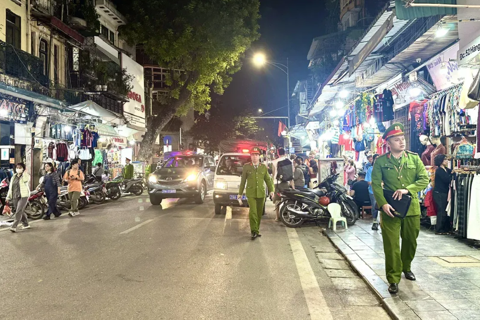
He also pointed out that with about eight million motorbikes and one million cars, the city will promote conversion to electric models while gradually restricting two-wheeled vehicles in urban areas.
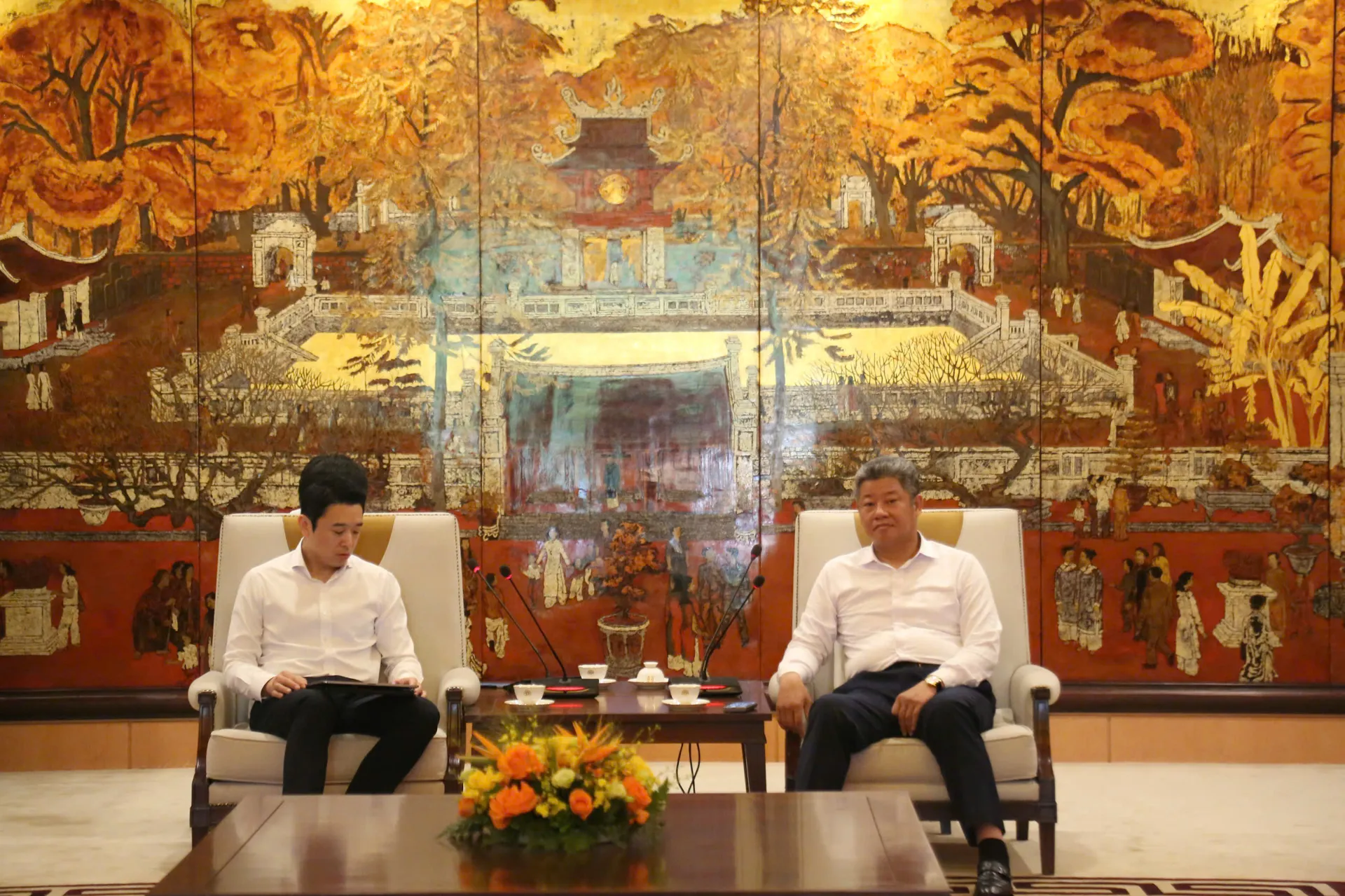
Vice Chairman of Hanoi People's Committee Nguyen Manh Quyen (right) and Brandon Kim, Executive Director of LG Energy Solution. Photo: The Hanoi Times
According to Quyen, a special task force is now studying potential locations for charging and swapping stations. This team will finalize reports in October and November as a basis for selecting suitable investors.
He noted that Hanoi will combine the development of private electric vehicles with public transport, including the metro system. Quyen highlighted that the city aims to have 14 metro lines in total by 2035.
Agreeing with LG ENSOL’s two-phase project, the Hanoi vice chairman highlighted the model’s feasibility and AI as a modern tool to optimize battery-swapping operations.
“Hanoi promises the best conditions for the pilot project at the Hoa Lac Hi-Tech Park. The city government will recommend suitable Vietnamese partners to collaborate,” Quyen said.