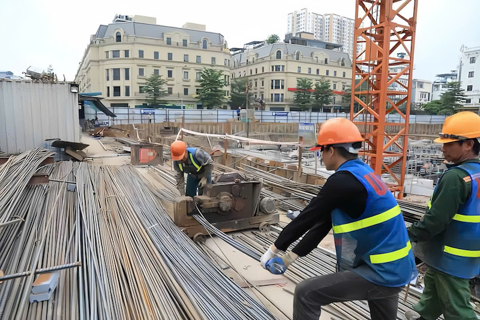
PM identifies anti-corruption a key in public investment
State fund should be channeled into key projects of national priority, which has high spillover effects and create room for development.
Wiping out the “ask-give” mechanism and corruption in allocating state budget to public investment projects is a priority task in the next five years.
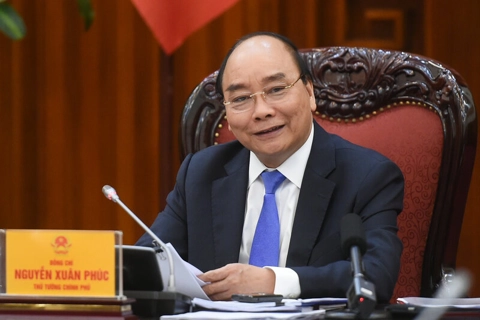
| Prime Minister Pham Minh Chinh at the meeting. Photo: Nhat Bac |
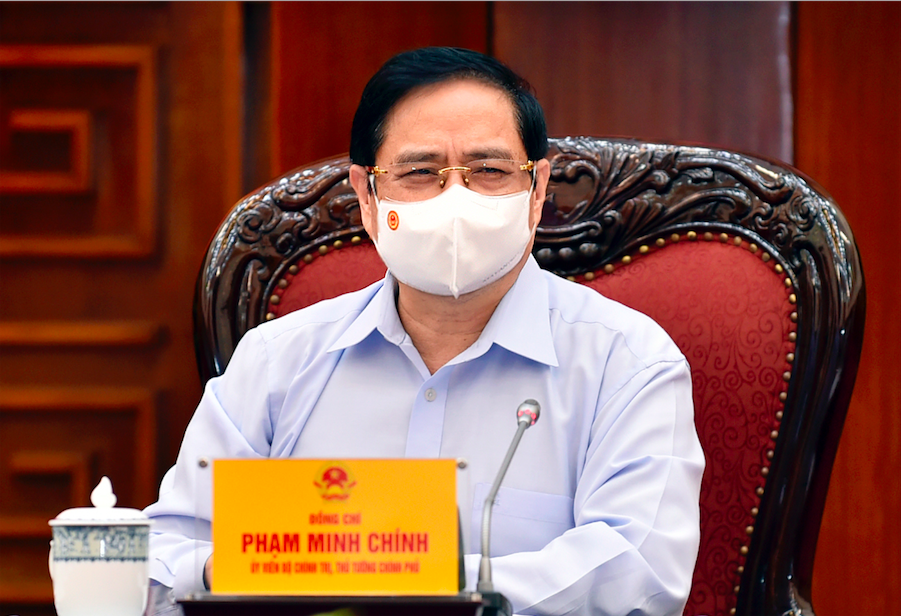
Prime Minister Pham Minh Chinh stressed the view in a meeting on May 20 with the Ministry of Planning and Investment (MPI) on public investment for the 2021-2026 period.
“The MPI is tasked with mapping out measures to tighten discipline and supervision of public projects,” he added.
Meanwhile, Chinh noted state fund should be channeled into key projects of national priority, which has high spillover effects and create room for development, along with those that ensure social security and improving people’s life.
At the meeting, Minister of Planning and Investment Nguyen Chi Dung said current regulations on public investment have defined clear responsibilities of leaders for enhancing efficiency in the use of state capital.
“The rate of public projects completed reaches 66.2%, while they have contributed 33.7% to the GDP, or VND9,200 trillion (US$400 billion),” Dung informed.
According to Dung, the number of public projects in the past five years was 11,000, a reduction by half compared to the previous period.
“For the 2021-2026 period, the number would further decline to 6,400,” he added.
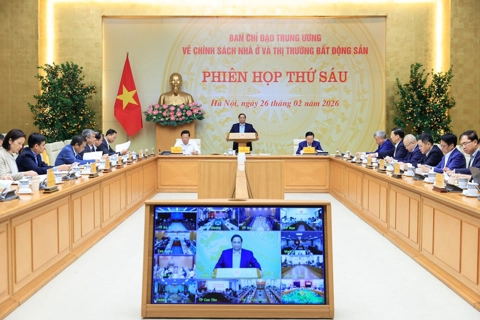
| Overview of the meeting. Photo: Nhat Bac |
.png)
For the coming time, the MPI would continue to push for greater decentralization with clear tasks and responsibilities, aiming to boost the efficiency and quality of public projects in cities/provinces.
Regarding the processing of allocating funds for public funds, the PM urged the ministry to raise its responsibility to act for the common goal and address the lack of flexibility in carrying out investment projects.
“For methods or issues that have not been regulated, government agencies could first work on a pilot program before gradually shifting to large-scale implementation,” Chinh suggested.
Chinh also identified slow progress in transportation infrastructure development as one of the bottlenecks for growth.
“Local authorities should be responsible for funds and site clearance works for public projects in their areas. Based on a certain situation, the government would provide a part of the capital,” Chinh noted, saying state capital should be used to draw other investment sources.
In fact, many projects only became attractive to investors after they had completed the site clearance process, said Chinh.
The government allocated VND2,000 trillion (US$87 billion) for mid-term investment plan in the 2016-2020 period to 11,100 projects, nearly half of the number of the previous five years.
The average disbursement rate was estimated at 83.4% during the five-year period, the highest being 97.46% in 2020.