Red Rain: an epic from the memories of ancient citadel soldiers
THE HANOI TIMES — Veteran Nguyen Thanh Binh’s hands trembled slightly as he left the cinema in Hanoi, eyes still wet after two hours of reliving scenes that for him were not fiction but memory. Watching Red Rain, Vietnam’s newest war epic, felt like returning to the muddy battlefields of Quang Tri where he fought more than five decades ago.
“It was like I was back there, among my comrades. The noise, the smoke, the fear, some moments I had to close my eyes. But I could still hear their voices," Binh told The Hanoi Times.
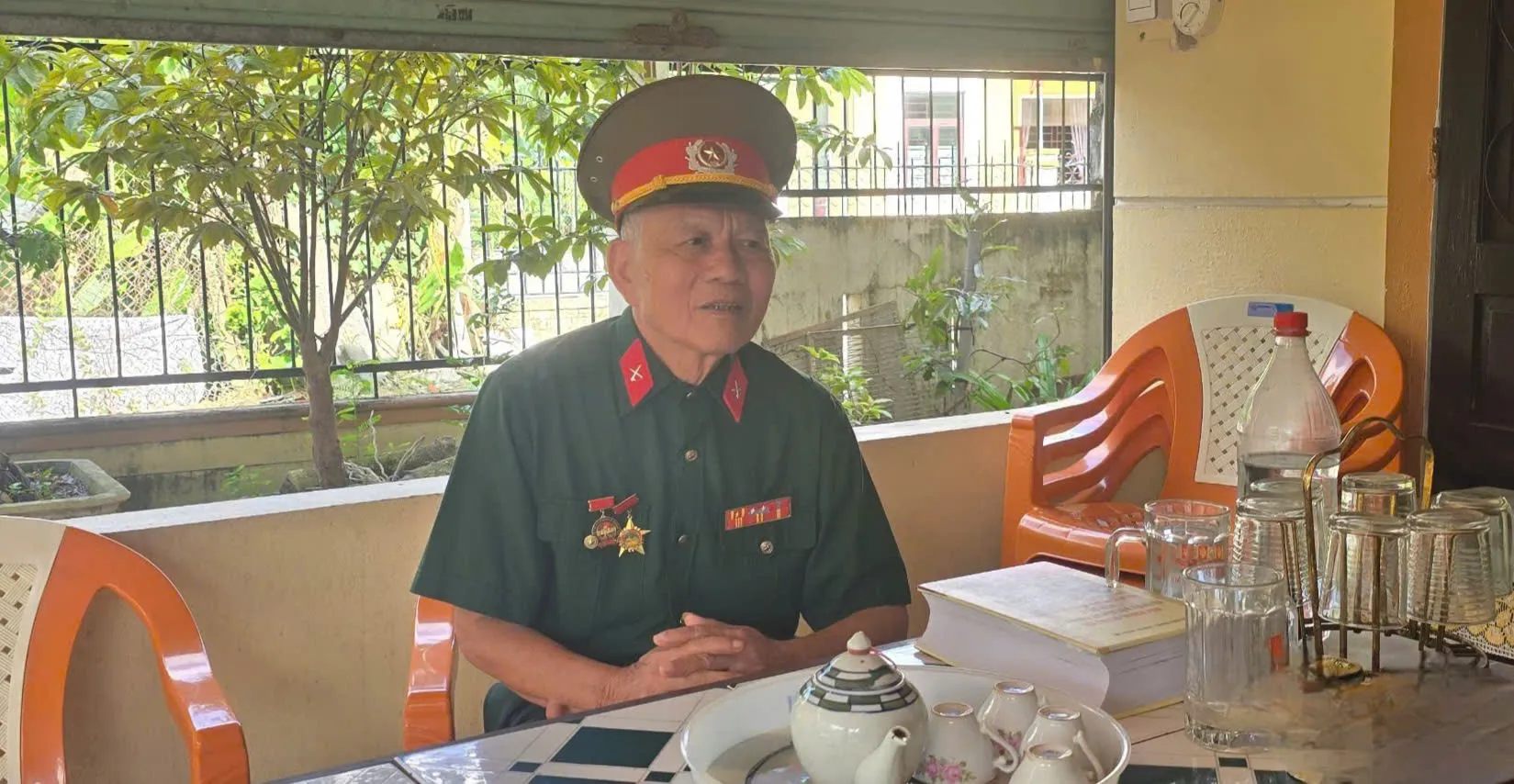
Nguyen Thanh Binh, veteran of Quang Tri Citadel. Photo: Tung Lam/The Hanoi Times.
Recalling the brutal year of 1972, Binh said that although he had prepared himself for certain death, he was still stunned by the battlefield reality. Under the relentless shelling, even soldiers hiding in dirt bunkers could hardly escape the scythe of death.
“Death came swifter than I could comprehend. Comrades fell, one upon another, and it all happened so fast I had no time to take it in,” he recalled.
For him, survival was nothing short of a miracle. “I never believed I would make it out alive. It was sheer luck,” he admitted.
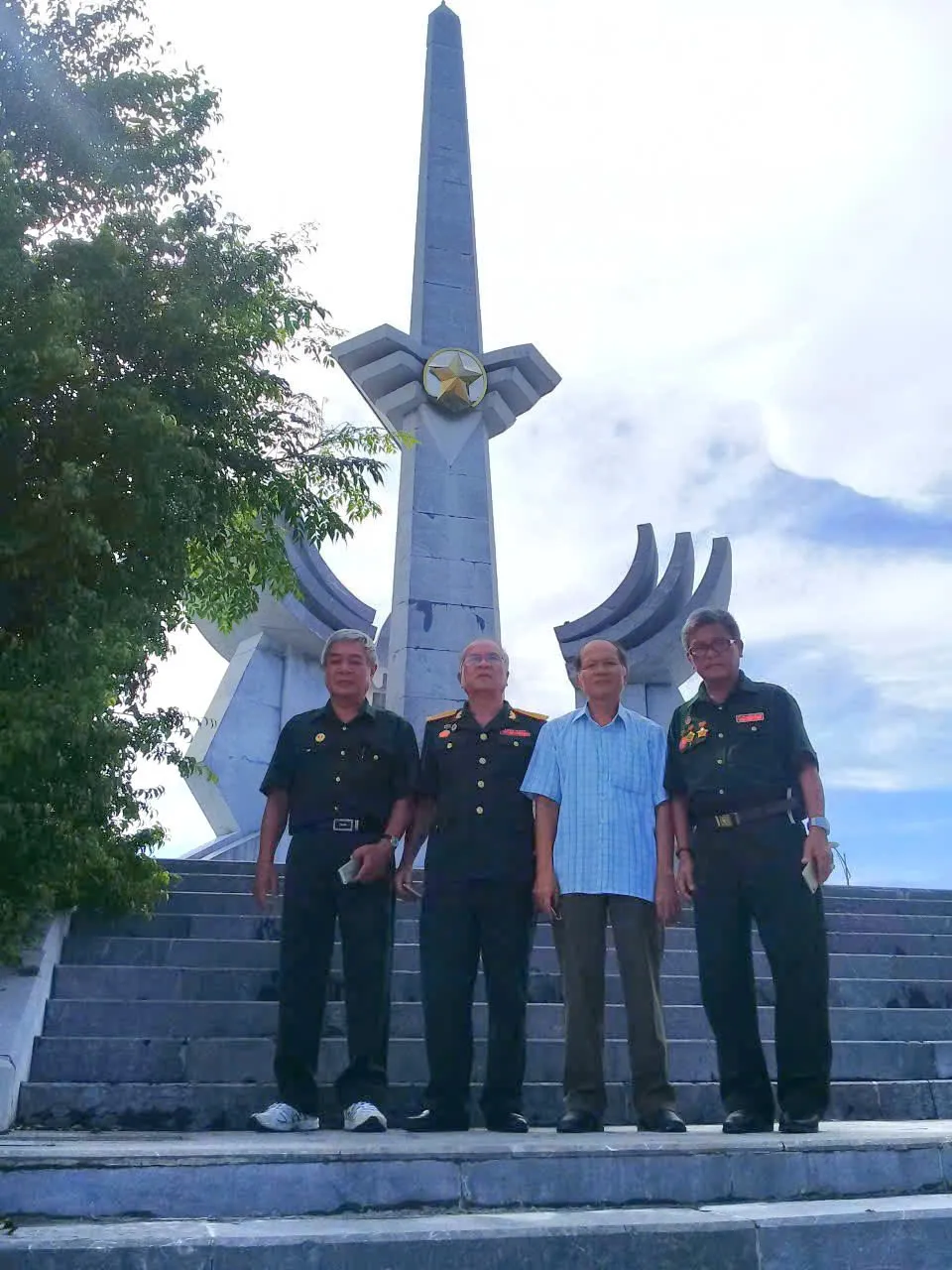
Nguyen Thanh Binh (second from right) with comrades who once fought alongside him at Quang Tri Ancient Citadel.
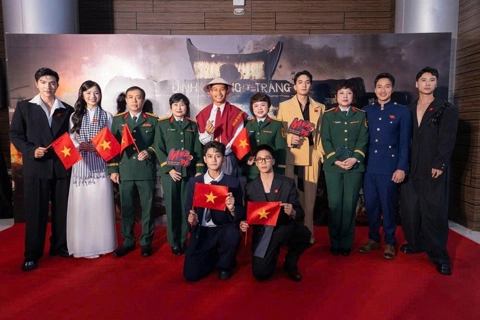
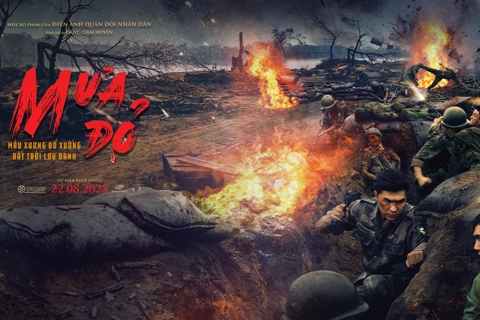
Binh shared these reflections with The Hanoi Times after watching Red Rain directed by Lieutenant Colonel Dang Thai Huyen.
The film depicts the 81-day struggle of the Liberation forces staunchly defending Quang Tri Ancient Citadel against fierce assaults from US troops and the Saigon regime.
Red Rain quickly became a box-office sensation, grossing VND600 billion (US$22.7 million) as of September 11, the highest revenue in the history of Vietnamese cinema.
Beyond its box-office success, the film also attracted visitors to Quang Tri. From August 30 to September 2, the Citadel welcomed nearly 10,000 people, including more than 3,800 on September 2 alone who came to pay tribute to those fallen for the nation.
From September 4 to 6, the People’s Army Cinema, under the Ministry of National Defense, in cooperation with Quang Tri’s Department of Culture, Sports and Tourism, hosted free screenings of Red Rain to honor fallen heroes, veterans, and thank residents.
Audiences were struck by the film’s authenticity, with muddy trenches, shattered ruins, and a desolate citadel battered by relentless shelling, bombs from tanks, aircraft, and modern US weaponry.
Scenes of bloodied bodies, dismembered corpses, and pools of blood unfolded like a grim tableau of war’s brutality.
On the battlefield, clashes between Liberation forces and South Vietnamese troops raged without pause, from suffocating hand-to-hand combat to long-range gun battles, all vividly portrayed.
“Red Rain reflected part of the ferocity of defending the citadel. Those close combats truly happened, as both sides fought for every inch of ground,” Binh recalled.
Yet he stressed the film captured about 40 percent of the wartime reality he had lived through, as the actual events were far more devastatin
Before reinforcements from the North could arrive, Quang Tri’s soldiers and civilians fought alone against tens of thousands of enemy troops.
“Every day, the enemy shelled our frontline posts without pause,” he remembered.
In August and September 1972 alone, enemy forces rained 30,000 - 40,000 shells daily on the town, not counting aerial bombs. Both sides unleashed their most advanced weapons to wear down the other.
“There were days when the casualties couldn’t even be counted. Many companies dwindled from dozens of men to just 5 - 7 rifles. When one fell, another immediately charged forward, determined to defend each house and each patch of land,” said Binh said with a choked voice.
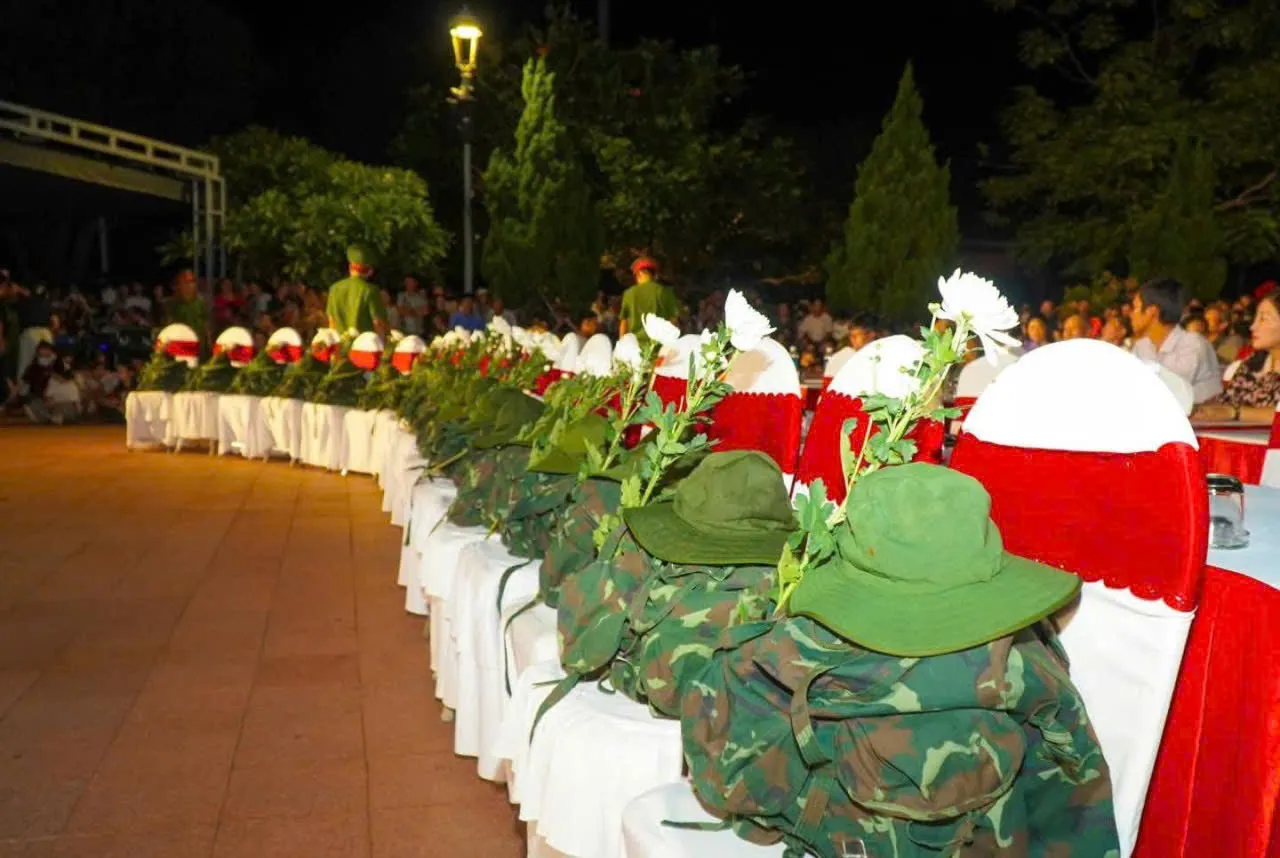
Hats placed on seats to honor fallen soldiers during the free screening of Red Rain at Quang Tri Ancient Citadel on the evening of September 4.
Despite the carnage, the soldiers’ resilience was vividly portrayed.
Amid the bombardment, the image of Squad 1 of Battalion K3 Tam Son, seven members inspired by K3 Tam Dao, stood out as a symbol of beauty.
They were not seasoned soldiers but students, farmers, even high schoolers. Instead of a peaceful life, they chose to enter the fire to defend the citadel, leaving their families behind.
“Scared of nothing, we’ll fight with however many men we have,” declared squad leader Ta, a farmer from the central province of Thanh Hoa. His rustic words rang like a vow of sacrifice, embodying courage and determination to fight to the end.
That spirit shone through soldier Hai, who, even when captured, hung upside down and threatened with being burned alive, remained defiant and unbowed.
Amid such stirring images, Binh recalled his own squad’s motto: “As long as we live, Quang Tri Town lives.”
Those words echoed through each combat unit, becoming a source of spiritual strength.
Not only soldiers at the front, but also medics and civilian porters endured hardships. In scarcity, nurses and doctors stayed in bunkers, treating the wounded by any means, from rough cloths to stanching bleeding to rationing out meager medicine.
Binh recalled times when soldiers stood their ground in flooded trenches without leaving their posts. The transport of the wounded, the fallen, and supplies relied solely on manpower, makeshift rafts, and small boats under relentless shellfire. Yet all were prepared to sacrifice, determined never to let the citadel fall.
Alongside bravery, Red Rain also portrays moments of weakness in the face of death.
Sen, a commando thought to be steady, went mad, dancing before enemy guns after witnessing too much loss.
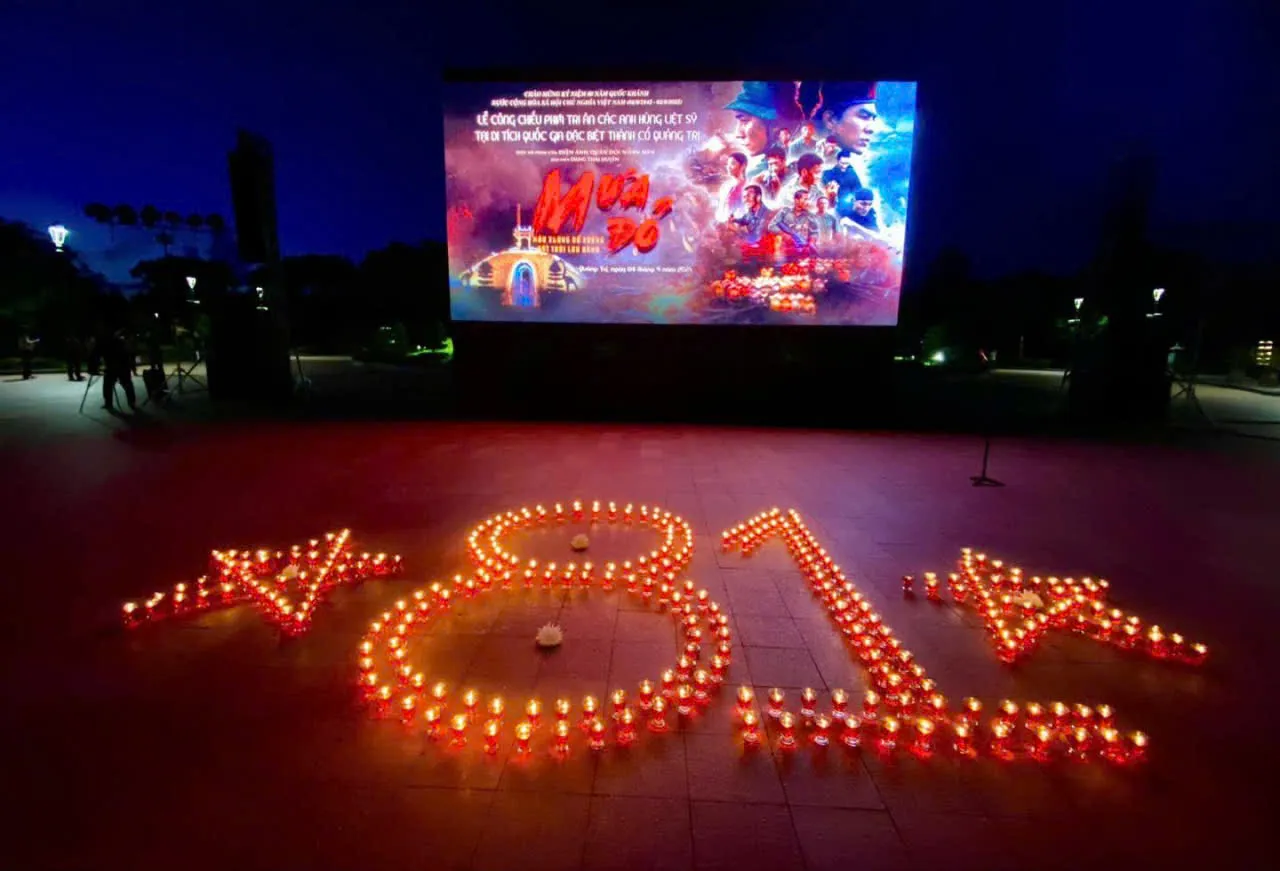
The free screening of Red Rain at Quang Tri Ancient Citadel on the evening of September 4.
Interwoven were scenes of young soldiers panicking, writhing in grief as comrades fell beside them. Their screams pierced the smoke and fire, like a tragic slice exposing war’s psychological wounds.
Binh admitted that under overwhelming enemy strength, some soldiers wavered, even thought of desertion. But love of the Fatherland and a spirit of sacrifice anchored them to stand firm.
Beyond the brutal battles, Red Rain highlights profoundly humane details, such as Ta aiming at an enemy only to halt when a family photo fell from the man’s pocket.
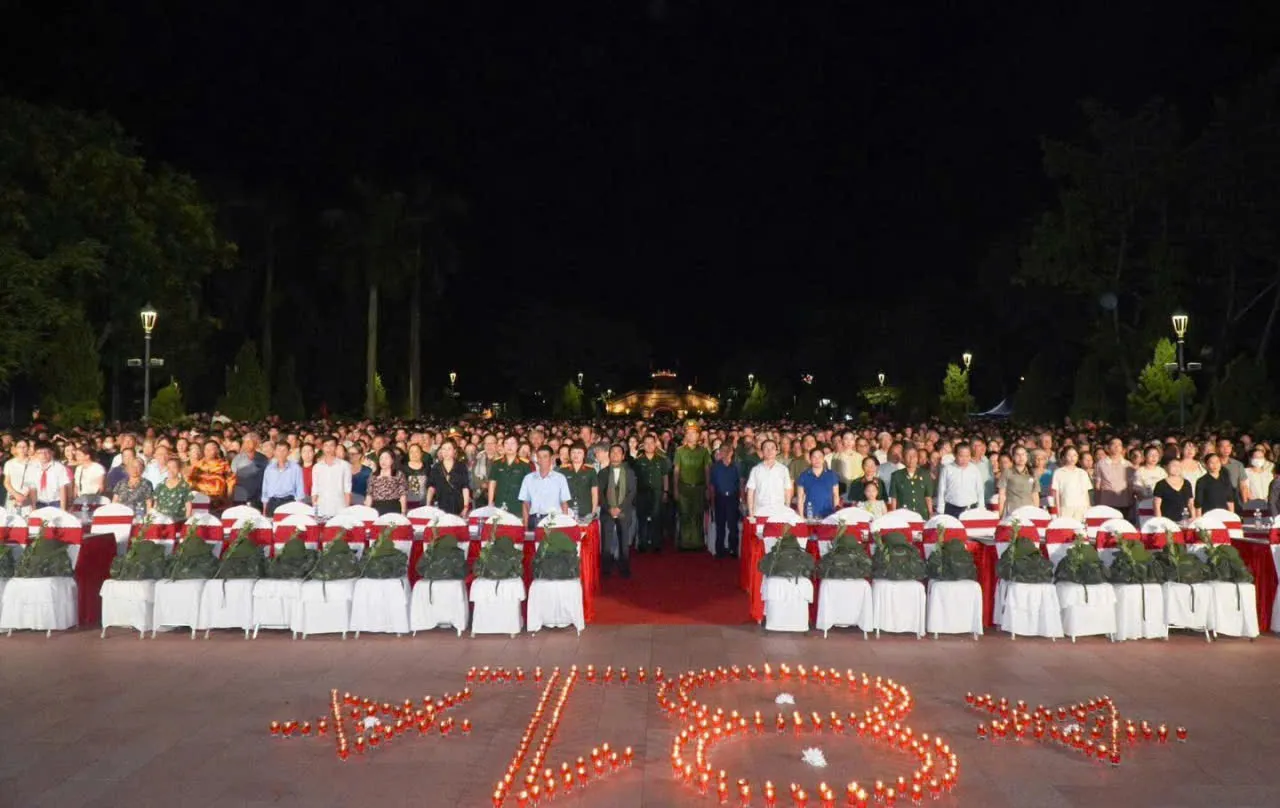
Audience members observed a moment of remembrance during the screening of Red Rain.
In that moment, he saw himself as a husband, a father, a son and wept. The enemy was no longer a target to kill but a human being with loved ones waiting behind.
This detail is profoundly humane, reflecting the liberator’s compassion. Had that soldier been killed, his family would have borne great loss,” said Pham Thi Binh, a Quang Tri resident after watching the film.
Luong To Uyen, a literature lecturer at Quang Tri Teachers’ College, said the film not only depicted a devastating war but also highlighted comradeship and love amidst the flames.
“The lighthearted moments of teasing between comrades eased viewers’ emotions after the grueling battles,” she said.

Luong To Uyen, a literature lecturer at Quang Tri Teachers’ College, said the film not only depicted a devastating war but also highlighted comradeship and love amidst the flames.
She cited the love story of soldier Cuong and Hong, a nurse who also rowed a ferry across the Thach Han River, as a tender pause amid the war’s fury.
Overall, Red Rain is a work rich in meaning, especially for today’s younger generation.
Thanh Binh hopes the youth will study, train, and live worthy of their forebears’ sacrifices, contributing to a strong and prosperous nation.
For him, gratitude and respect are the essential baggage to move forward.
After watching the film, Nguyen Long Hai, a young man from Quang Tri, shared that Red Rain was like a soul-stirring epic, helping today’s generation better grasp the ferocity and sacrifices of their forefathers.
“I was impressed by the soldiers’ courage and resilience, both in combat and when captured and tortured,” Hai said.
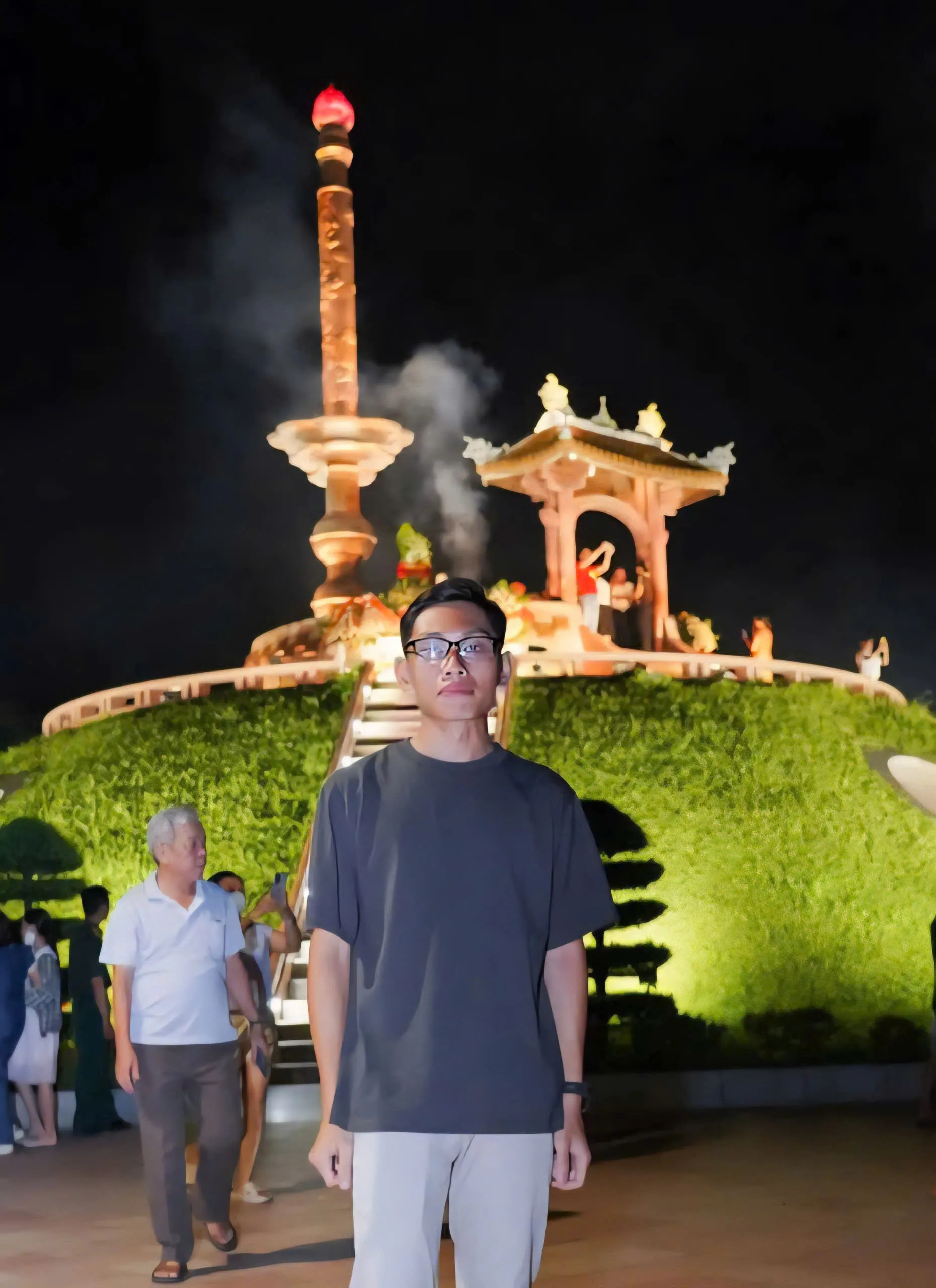
Hai said the film reminds young people to honor those sacrifices by studying, training, and contributing to building a prosperous nation.