Hanoi
Startups and innovation as Hanoi's priority in development: Mayor
It`s among the five recommendations made by Hanoi Mayor Nguyen Duc Chung for the sustainable development of the city as it is thriving to catch up the global technology wheel.
Chairman of the Hanoi People's Committee Nguyen Duc Chung spent last minutes of the 6th session of Hanoi People’s Council’s on July 6 briefing about Hanoi socio-economic performance and phasing out some plans for the city in the time ahead, in which it should focus on building ecosystem for startup, innovation and techonology application.
Hanoi facing challenges
The mayor mentioned lateness in disbursement of public investment in Hanoi as well as shortcomings in policies and mechanisms. The city's economic development still lacks sustainability amid low labor productivity and potential risks in some markets, according to Chung.
He also highlighted the big challenges the city is facing such as climate change and environmental pollution. Especially, some bad actors make use of online platform to revoke frustration and erode the trust in the government and municipal leadership, etc.
Basing on such the context, Chung proposed some solutions. Among them, the city would proactively build some plans to handle several pressing issues of residential-use lands and environment, etc.
The city authority would foster the classification in missions assigned to agencies, so that achy problems found in some areas like land compensation, land clearance, garbage collection, etc. would be solved more effectively and promptly. Meanwhile, some tasks should be attributed to be one agency’s responsibility such as the tree logging, road maintenance, drainage infrastructure, etc.
The transparency in financial activities, public assets is about to be reinforced, Chung said, stressing that the city also heads to optimize the state-budget sources, avoid the ineffective public spending as well as build some programs on sustainable urban planning.
To nurture ecosystem for startup and innovation
The Hanoi leader also draw out five suggestions for the growth of Hanoi in the future.
Firstly, he affirmed Hanoi should add more energy-saving solutions. Electricity consumption in Hanoi reached 17.319 billion kWh in 2017, Chung noted. “Some cities in the world have conducted numerous solutions to save some 15-20% of its energy consumption. Doing the same and Hanoi can develop more sustainably while reducing the risk of energy shortage in the future”, Chung specified.
Secondly, the Chairman of Hanoi emphasized the role of renewable materials and energy sources for the city development. For example, he suggested all the debris generated in construction work should be grinded to ensure enviroment-friendliness.
Thirdly, Chung said, Hanoi will establish the policy for facilitating startups and innovation.
Fourthly, the city should increasingly apply information technology in education, especially the 3D and virtual reality into training and educating. “Once applied those technologies in education, the city in 10-15 years ahead would generate a new generation absorbing the key of the fourth industry revolution,” Chung said. The Hanoi official also encouraged to bring the spirit of startup and innovation soon into schools.
Last but not least, the Hanoi leader proposed the prompt construction of concentrated slaughter houses with the view to improve the agriculture and grocery supply chains, fostering the city's exports to picky international markets.
Hanoi facing challenges
The mayor mentioned lateness in disbursement of public investment in Hanoi as well as shortcomings in policies and mechanisms. The city's economic development still lacks sustainability amid low labor productivity and potential risks in some markets, according to Chung.

Chairman of the Hanoi People's Committee Nguyen Duc Chung. Photo: Thanh Hai
|
Basing on such the context, Chung proposed some solutions. Among them, the city would proactively build some plans to handle several pressing issues of residential-use lands and environment, etc.
The city authority would foster the classification in missions assigned to agencies, so that achy problems found in some areas like land compensation, land clearance, garbage collection, etc. would be solved more effectively and promptly. Meanwhile, some tasks should be attributed to be one agency’s responsibility such as the tree logging, road maintenance, drainage infrastructure, etc.
The transparency in financial activities, public assets is about to be reinforced, Chung said, stressing that the city also heads to optimize the state-budget sources, avoid the ineffective public spending as well as build some programs on sustainable urban planning.
To nurture ecosystem for startup and innovation
The Hanoi leader also draw out five suggestions for the growth of Hanoi in the future.

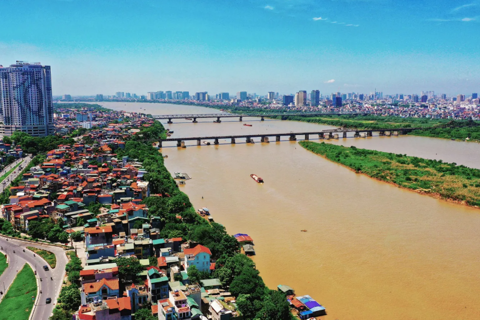
Illustrative photo
|
Secondly, the Chairman of Hanoi emphasized the role of renewable materials and energy sources for the city development. For example, he suggested all the debris generated in construction work should be grinded to ensure enviroment-friendliness.
Thirdly, Chung said, Hanoi will establish the policy for facilitating startups and innovation.
Fourthly, the city should increasingly apply information technology in education, especially the 3D and virtual reality into training and educating. “Once applied those technologies in education, the city in 10-15 years ahead would generate a new generation absorbing the key of the fourth industry revolution,” Chung said. The Hanoi official also encouraged to bring the spirit of startup and innovation soon into schools.
Last but not least, the Hanoi leader proposed the prompt construction of concentrated slaughter houses with the view to improve the agriculture and grocery supply chains, fostering the city's exports to picky international markets.